A build-your-own burrito bowl looks simple at first glance, which is exactly why it can be tricky to track. The ingredients are visible, the container is open, and the meal feels like it should be obvious. But the calorie total is often hiding in the parts people scoop without thinking. Rice, beans, cheese, guacamole, sour cream, queso, chips, and sauces can turn a neat-looking bowl into a much bigger meal than it first appears.
The goal is not to turn lunch into a math test. The goal is to make the bowl visible enough that you can estimate it honestly, repeat it later, and still feel good about eating it. Once you know which parts carry most of the calories, the order becomes much easier to manage.
Start with the base, not the toppings
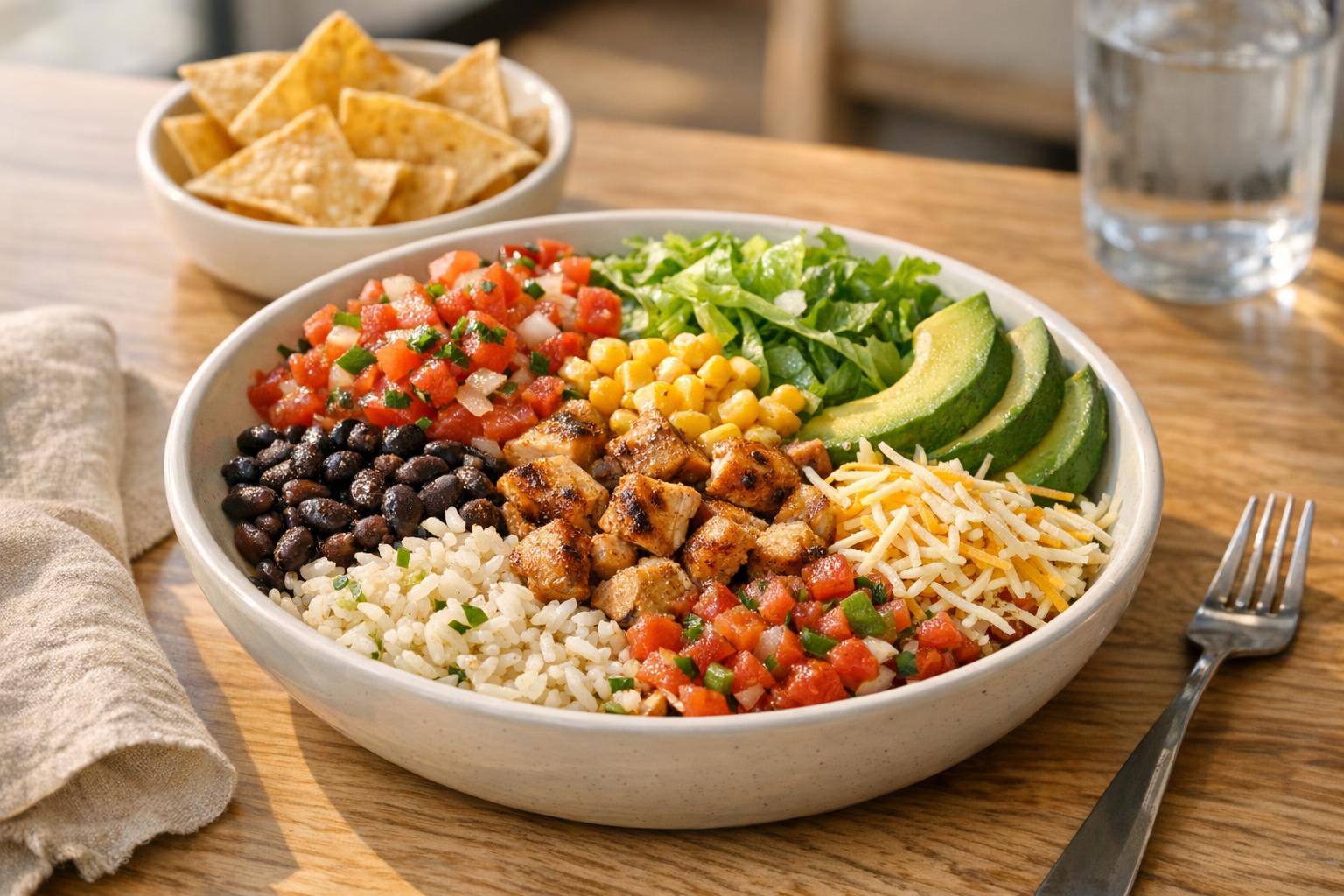
Before you think about guacamole or cheese, identify the base. Most burrito bowls start with rice, beans, or both, and those two ingredients do a lot of the calorie heavy lifting. A bowl that starts with a double scoop of rice will feel very different from one built around lettuce with a smaller scoop of rice and more vegetables.
That base matters because it sets the shape of the meal. Rice makes the bowl more filling and usually more calorie dense. Beans add fiber and protein, but they still count. If the bowl came with both rice and beans, do not flatten them into one vague estimate. Treat them like two real parts of the order.
Once the base is clear, the rest of the estimate gets easier. A lean protein on top of a modest base is one type of meal. A loaded base with rich toppings is another.
Count the toppings that actually move the number
Not every topping matters equally. Lettuce, tomato, onion, and salsa usually help the bowl feel bigger without adding a dramatic number of calories. Cheese, sour cream, guacamole, queso, oily sautéed vegetables, and creamy sauces are the toppings that can move the total quickly. If the bowl has all of them, it is no longer a light lunch just because it came in a bowl.
A good rule is to ask whether the topping makes the meal fresher, richer, or more indulgent. If the answer is richer or more indulgent, log it like it matters. That does not mean skipping it. It just means recognizing that a scoop of guac is not the same thing as a scoop of lettuce.
It also helps to remember that fast casual bowls are often built to feel balanced while still being fairly dense. They can look healthy and still land high. The visual trick is part of the appeal, so the visual trick should not be part of the calorie estimate.
Choose the protein with the estimate in mind
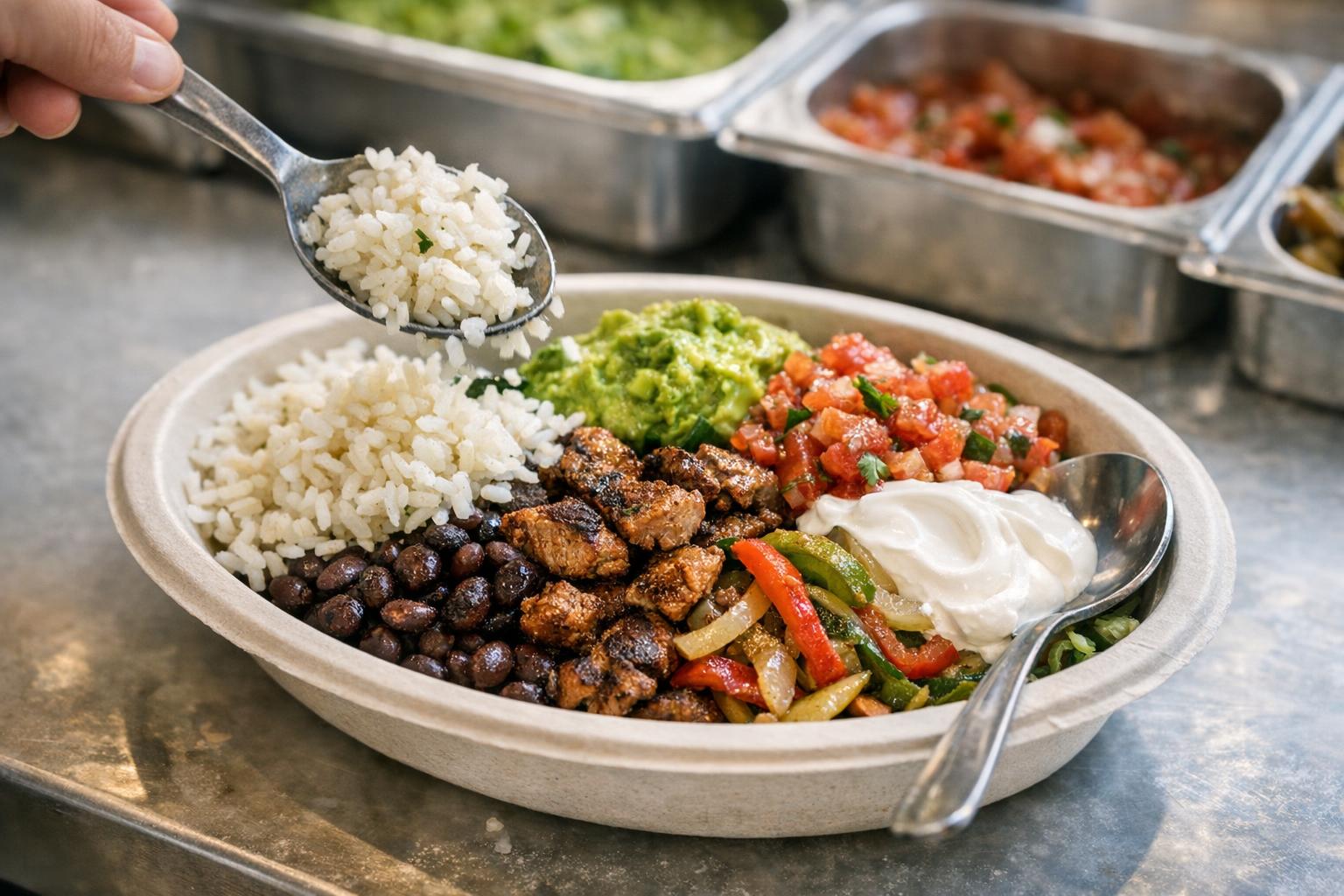
The protein choice changes the meal more than people expect. Grilled chicken, steak, carnitas, barbacoa, tofu, and sofritas are not all interchangeable. Some are leaner. Some bring more fat or oil. Some are sitting in a sauce that adds extra calories even before the toppings show up.
If you already know what you usually order, save that as your baseline. A repeatable protein choice is one of the easiest ways to keep burrito bowl lunches honest. If you mix it up every time, the estimate gets fuzzier and the meal becomes harder to compare from week to week.
When in doubt, think about what the protein looked like. Was it grilled and simple, or was it saucy and rich? That clue is usually more useful than the menu name alone.
Watch the extras that sneak in quietly
The hardest part of a burrito bowl is often not the bowl itself. It is the side stuff that turns one lunch into a bigger lunch. Chips are a common example. They feel optional, but once they are on the table, they can disappear quickly. Tortilla strips, queso cups, extra dressing, and sweet drinks can all stack on top of the bowl without feeling like much in the moment.
That is why it helps to decide in advance whether the bowl is the main event or whether you also want the extras. If you want chips, count chips. If you want a drink, count the drink. Do not let a side portion ride along in the meal unnoticed just because it was easy to grab.
Small extras are fine. Unnoticed extras are what usually create the gap between the meal you thought you had and the meal you actually ate.
Make a repeatable default bowl
The easiest burrito bowl to track is the one you order the same way most of the time. Maybe it is rice, beans, chicken, salsa, lettuce, and a light amount of cheese. Maybe it is a smaller rice portion with extra vegetables and guacamole on the side. Maybe it is a higher-calorie bowl you only eat when you know it is worth it.
Repeatability matters because burrito bowls are a common lunch for a reason. They are fast, customizable, and usually satisfying. If you build a default version you genuinely like, you do not have to negotiate the meal from scratch every single time. That makes calorie tracking easier and less annoying.
When your usual bowl is predictable, logging it in Calory becomes fast. That is the win. Not perfection. Just a lunch you can repeat and recognize.
How Calory helps
Calory is useful when you want to save the burrito bowl you keep buying and pull it up next time instead of guessing again. If your default bowl changes by one or two ingredients, save those versions too. The point is to build a real pattern you can trust.
That makes fast casual lunch less random. You stop pretending the bowl is a mystery and start treating it like a familiar order with a known shape.
FAQ
What should I count first in a burrito bowl?
Start with the base, usually rice and beans, then add the protein, cheese, guacamole, sour cream, and chips if you had them.
Is a burrito bowl always healthier than a burrito?
Not automatically. It depends on the portions and toppings. A loaded bowl can be just as calorie dense as a wrapped version.
What is the easiest way to avoid undercounting?
Log the rich parts separately. Rice, beans, guac, cheese, sour cream, queso, chips, and drinks are usually the biggest sources of surprise.
How can Calory help with repeat bowls?
Calory lets you save the bowl you order most often, so the next lunch is faster to log and easier to keep honest.