Birthday parties are supposed to be easy. That is part of the appeal. You show up, talk to people, watch the kids bounce around, and eat whatever is on the table. The problem is that the relaxed structure makes calorie tracking slippery. A slice of pizza here, a handful of chips there, a piece of cake later, and suddenly the party has become a full meal plus snacks, even if it never felt that way.
The trick is not to turn the party into a food audit. It is to give yourself a simple plan so you can enjoy the event and still have a believable calorie estimate afterward.
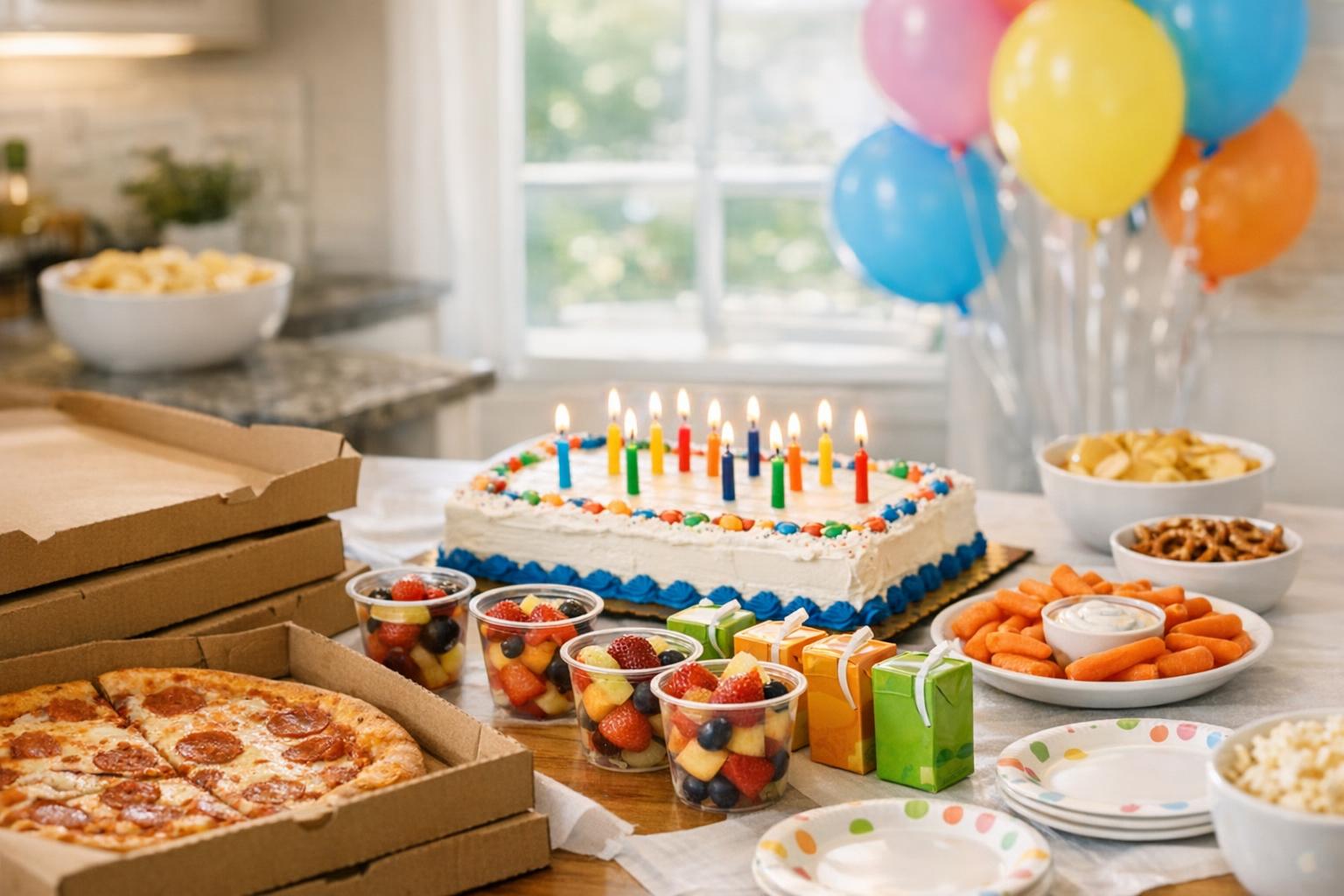
Choose your real treat before you start grazing
Most people do better at parties when they decide ahead of time what they actually care about eating. If the cake is the thing you want, let the cake be the thing. If pizza matters more, start there and keep the rest lighter. If you want both, that is fine too, but name that choice clearly so the estimate matches reality.
The point is to avoid the vague version of party eating where everything feels optional and therefore somehow free. It is not free. It is just easy to overlook because the food comes in small bursts while you are busy talking. Once you choose the main item, the rest of the table becomes easier to ignore or portion more carefully.
A simple question helps: if you could only have one thing from the party table, what would you pick? That answer is usually the best anchor for your calories.
Watch the pizza math, because slices add up fast
Pizza is one of the easiest party foods to underestimate because a slice looks harmless compared with a giant dinner plate. But birthday slices are often cut generously, and people tend to reach for a second piece without thinking about it. Add crust, cheese, pepperoni, ranch, or garlic dip, and the total moves even more.
If pizza is part of the party, count it as the main meal and not just a quick snack. Two slices can be completely reasonable for some people, but the important part is to log the slice size you actually ate. If the pizza is thick crust or heavily topped, do not log it like a thin slice from a plain pie.
When the party has both pizza and cake, one good approach is to choose the smaller pizza portion and save room for dessert. That keeps the night feeling normal without stacking every available calorie in one sitting.
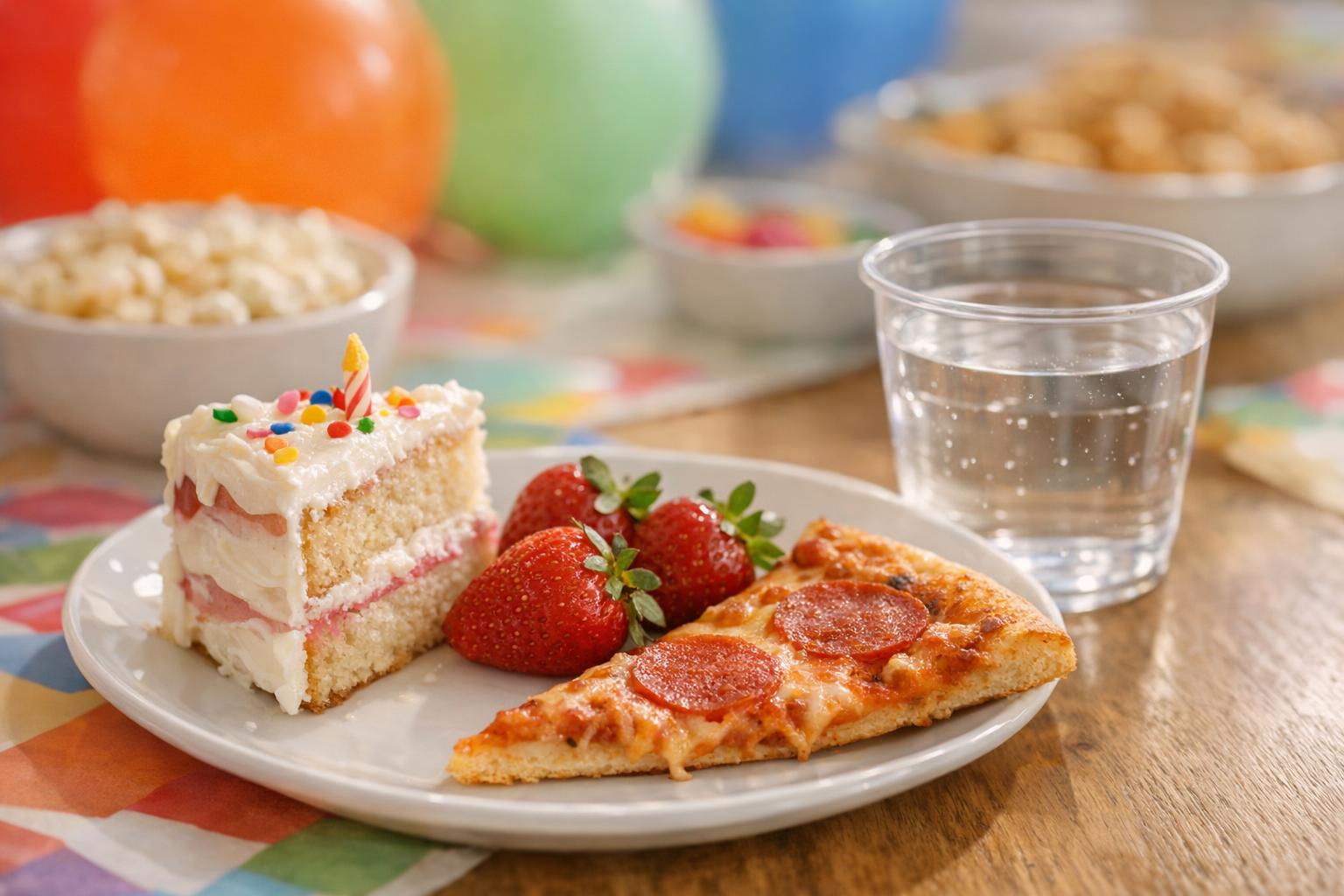
Treat cake like a real serving, not a tiny bonus
Cake is the part people often undercount most. A slice of birthday cake can be much more calorie-dense than it looks, especially if the frosting is thick, the slice is large, or the cake is layered. Add ice cream or extra frosting and the number climbs again.
That does not mean you should skip cake. It just means you should log cake as an actual dessert serving, not a decorative afterthought. If you are eating a smaller slice because you already had pizza, that is still cake. If you are having cake and ice cream together, that is still a normal party dessert combo. The more honest the estimate, the less annoying the tracking feels later.
If you are the kind of person who likes a little of everything, consider taking a smaller slice and letting that be enough. Most birthday parties are not about eating until you are full. They are about joining the moment and not overthinking it.
Do not forget the drink, because it changes the total more than you think
Party drinks are sneaky. Juice boxes feel harmless. Soda feels normal. Lemonade feels festive. But drinks can quietly turn a small plate into a much bigger calorie total, especially when nobody is measuring pours. If you want the rest of the food to stay manageable, water is the easiest default.
If you want soda or juice, that is fine. Just count it. A sweet drink plus cake plus pizza is a real meal. Once you call it what it is, the numbers stop being mysterious.
For most parties, the best compromise is simple. Drink water first, then decide whether you still want the sweet drink. Often the answer is yes, but at least the choice is deliberate.
How Calory helps
Birthday parties are much easier to log when you already have a repeatable estimate saved. If your usual party plate is two slices of pizza, one slice of cake, and water, save that combo in Calory. If your kid's birthday routine always includes a small plate of chips plus dessert, save that too.
That way, the next party does not require a fresh debate. You just reuse the same estimate and move on with your day.