Party tables are tricky because they do not behave like a normal meal. Nobody sits down for one clean plate and moves on. People drift in and out, snack while talking, refill drinks, and keep circling the table because the food is still there. That is what makes the calories easy to underestimate. It never feels like one obvious eating moment.
The solution is not to turn into the person who refuses everything. It is to decide what your plate looks like before the grazing starts. Once you know your plan, social eating gets much easier to manage and much easier to remember later.
Why party snack tables add up so fast
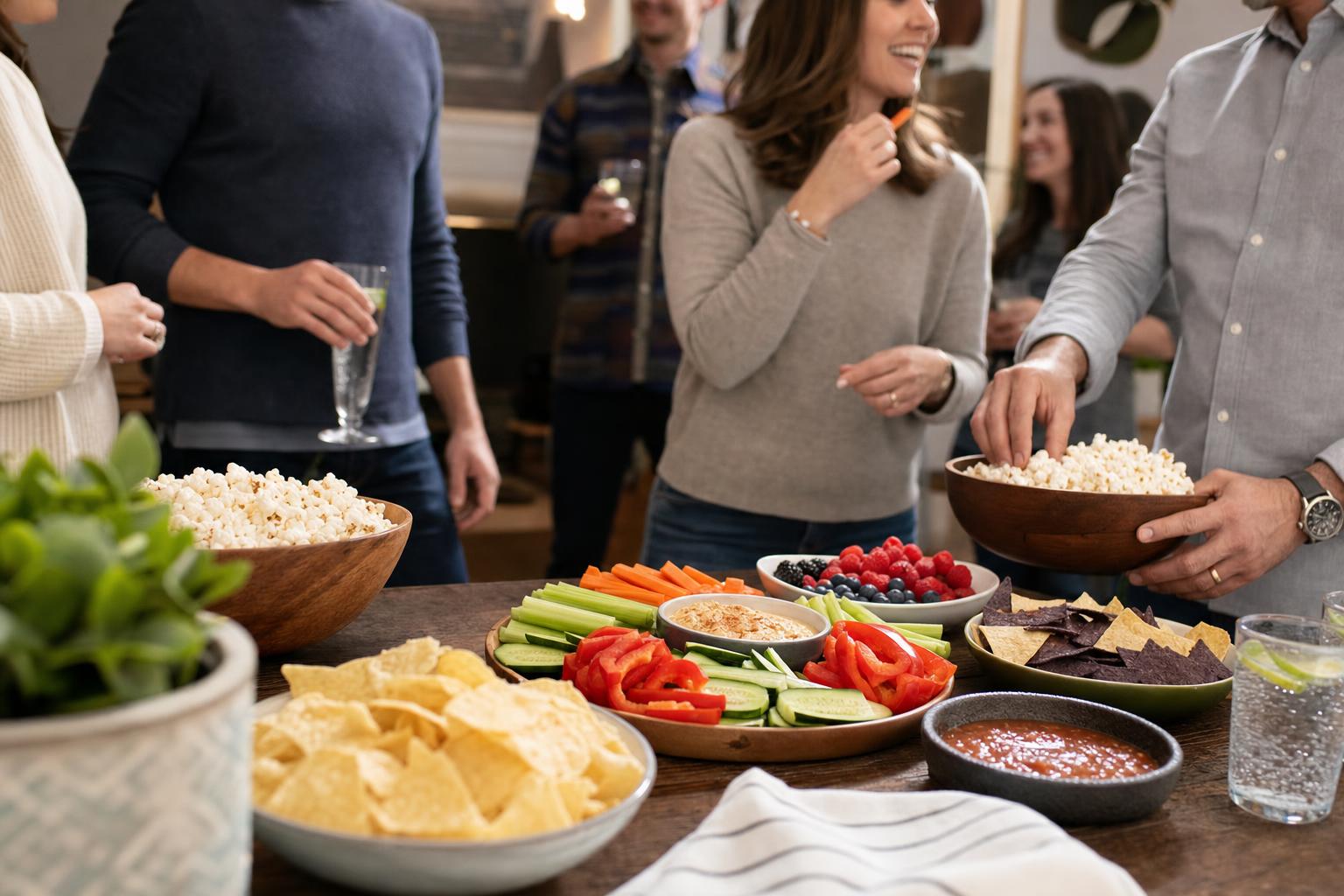
The first problem is time. A party snack table is rarely a single sit-down snack. It hangs around for hours. That means every small grab feels harmless in the moment, even if the total is starting to move. A few chips, a spoonful of dip, a square of cheese, and a quick drink refill do not feel dramatic on their own.
The second problem is that party food is designed to look inviting, not measured. Bowls stay open. Plates stay full. Drinks get refilled. Dessert usually appears later. There is no natural stopping point unless you create one. That is why people often leave parties feeling like they barely ate, even when the calories say otherwise.
A useful party question
Ask yourself what you actually want most from the table. If the answer is chips and guacamole, make that the plan. If it is dessert, save room for it. One clear favorite usually beats five random snacks you barely remember.
Make one plate first and treat it like the plan
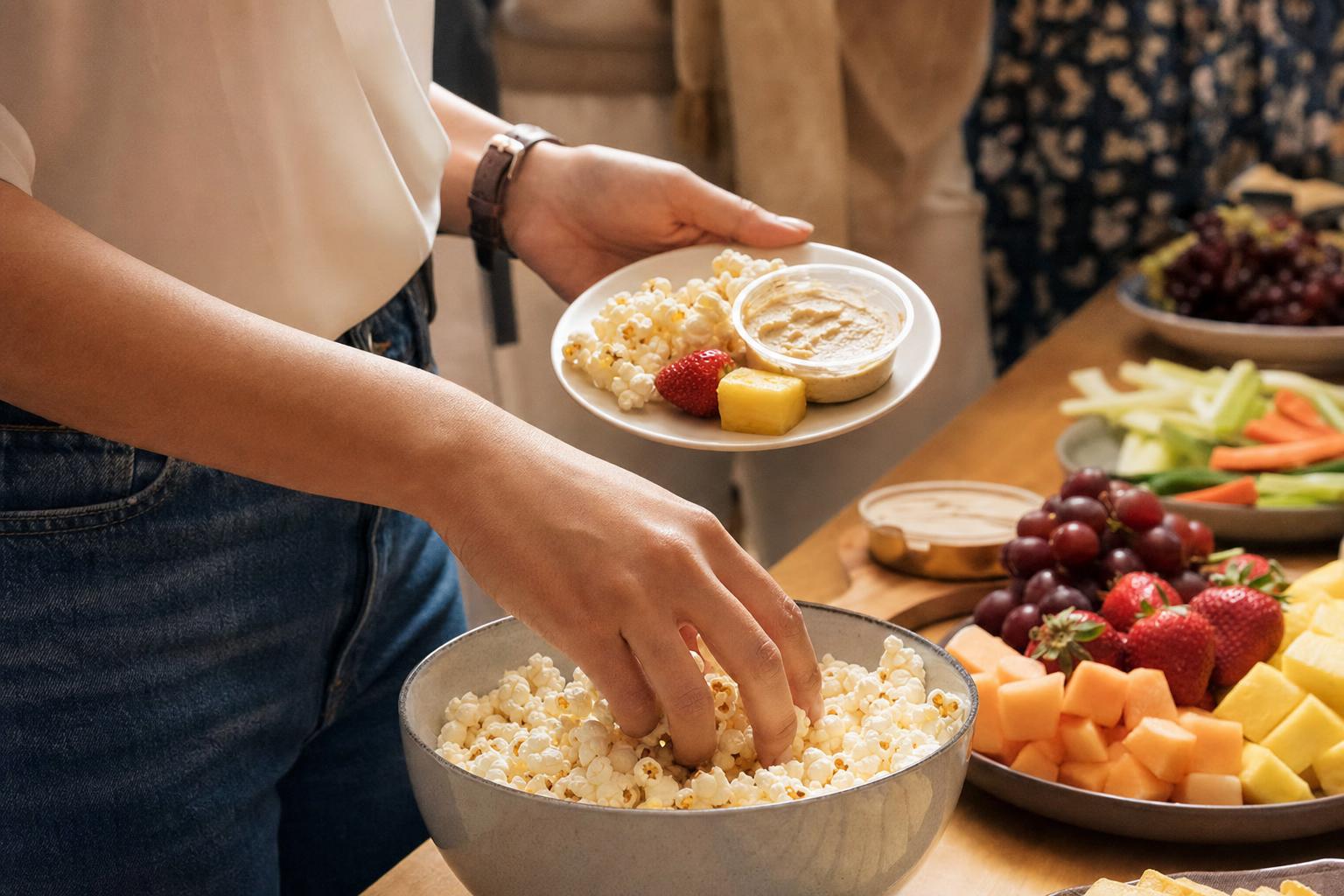
The easiest way to stay honest is to build one plate right away. Not a giant plate, just one deliberate plate. That gives the evening a shape. You can still go back later if you genuinely want more, but the first plate is no longer a blur of random reaching. It is a real decision.
One plate also helps you compare options. If you want chips, pick a small portion. If you want veggies and dip, include them on purpose instead of treating them like background food. If you want both, great. Just make the portions visible. When the food is on the plate, the night gets much easier to remember and log later.
This is where people often overcomplicate things. They think better tracking means forbidding the fun foods. It usually does not. It just means the fun foods get a beginning and an end. That is a much better deal than grazing for three hours and trying to reconstruct the night from memory later.
Choose foods that actually satisfy
The biggest mistake at a party is choosing only the foods that are easiest to reach. Those are often the foods that disappear fast and do not keep you full. A few chips can be fun, but a plate that mixes something crunchy, something savory, something fresh, and something with protein usually works better.
That might look like chips plus salsa, some vegetables, a few cubes of cheese, a piece of fruit, and one thing you really want. The goal is not balance for its own sake. The goal is enough satisfaction that you are not back at the table every ten minutes. If the plate feels complete, you stop thinking about snacks so much.
It also helps to think about texture. A table full of crunchy snacks can disappear fast because it is easy to keep eating without noticing. Adding one slower, more satisfying item gives the plate more staying power. That makes the calories feel less random and the evening feel less like a blur of bites.
Watch dips, drinks, and second trips
The sneaky calories at parties are usually not the obvious ones. They are the dips, pours, and repeat trips. Chips feel manageable until they meet guacamole, queso, or ranch. Drinks feel harmless until there are several refills. Second trips feel tiny because each one is a little one, but they can double the total without much warning.
Dips are worth paying attention to because they are so easy to stack. A little extra on one chip does not matter. Repeating that pattern for a whole evening does. If you know you want a dip-heavy snack, keep the chip portion smaller and make the dip the deliberate part of the plate. That is a much cleaner way to think about it.
Drinks deserve the same honesty. Soda, cocktails, sweet punches, and creamy drinks can quietly matter more than the snacks if you keep sipping all night. If the drink is the treat, let it be the treat and simplify the food. If you want the food to be the highlight, choose a drink that does less calorie work.
Keep dessert separate instead of letting it blend in
One reason parties get slippery is that dessert does not always feel like dessert. It shows up after people have already been snacking, so a cookie or slice of cake can feel like a small finish instead of a real second serving. That is where the calorie count starts to drift farther than people expect.
It usually works better to decide in advance whether dessert is part of the night. If it is, leave room for it. If it is not, do not let it become a background bite that keeps getting revisited. Either choice is fine. The useful part is making it a real choice instead of a vague maybe.
That same mindset helps with party leftovers too. If you want another bite later, great, but make it a second serving you can recognize. Clear decisions are easier to track than unconscious nibbling. That is especially true in social settings where the whole room is built around food being present.
How Calory helps with party nights
Calory is useful here because party foods repeat more often than people think. The same chips, the same dip, the same canned drink, the same birthday cake slice. Once you have a few familiar party combinations logged, it becomes much easier to estimate the next one without starting from zero.
That is the real win. Not perfection. Just enough pattern recognition that social eating stops feeling like a mystery. You can enjoy the party, keep the night realistic, and still know what happened later. That is a much better place to be than guessing and hoping it all balanced out.
Frequently asked questions
Should I skip the snack table entirely?
No. It is usually easier to choose one plate on purpose and stop there than to try avoiding everything and then grazing later without noticing.
What is the best strategy for chips and dip?
Choose a portion of chips first, then decide how much dip you actually want. Dips are easier to manage when you treat them like part of the snack, not an unlimited side.
Do drinks really matter that much at parties?
Yes. Drinks can quietly change the total a lot, especially if the party has soda, alcohol, punch, or creamy mixed drinks.
How can I keep social eating from feeling restrictive?
Pick the foods you care about most, make one plate, and let that be enough for the first round. Structure helps without making the night feel rigid.