Portion control sounds simple until real life gets involved. Meals are not always made from labeled packages, serving spoons vary wildly, restaurants love oversized plates, and hunger is not perfectly consistent day to day. That is why so many people swing between two extremes. Either they ignore portions completely, or they feel like every meal needs a scale, a measuring cup, and a spreadsheet.
Neither extreme is very sustainable. A better middle ground is to build a few reliable habits that make normal portions easier to recognize. Once you can spot portion creep earlier, calorie tracking gets calmer and weight management gets more predictable.
Why portions get bigger without feeling bigger
Most portion problems do not start with one huge meal. They start with little upgrades that slowly become standard. A little more peanut butter. A second scoop of rice because the bowl is large. A pasta serving that looks normal on an oversized dinner plate. A restaurant entree that really feeds two people but arrives as one order. None of this feels dramatic in the moment, which is exactly why it is easy to miss.
Human beings are very visual eaters. Plate size, serving spoon size, packaging, and what people around us are eating all affect what feels reasonable. If your idea of a normal serving keeps moving upward, calorie intake can move upward with it even when food choices still seem pretty healthy.
What matters most
You do not need perfect serving math. You need a steady way to notice when a reasonable meal has quietly become a large meal.
Visual portion cues that actually help
Visual cues are not magic, but they are useful because they work anywhere. You can use them at home, at a friend’s house, or in a restaurant without pulling out equipment.
Use your plate as a guide
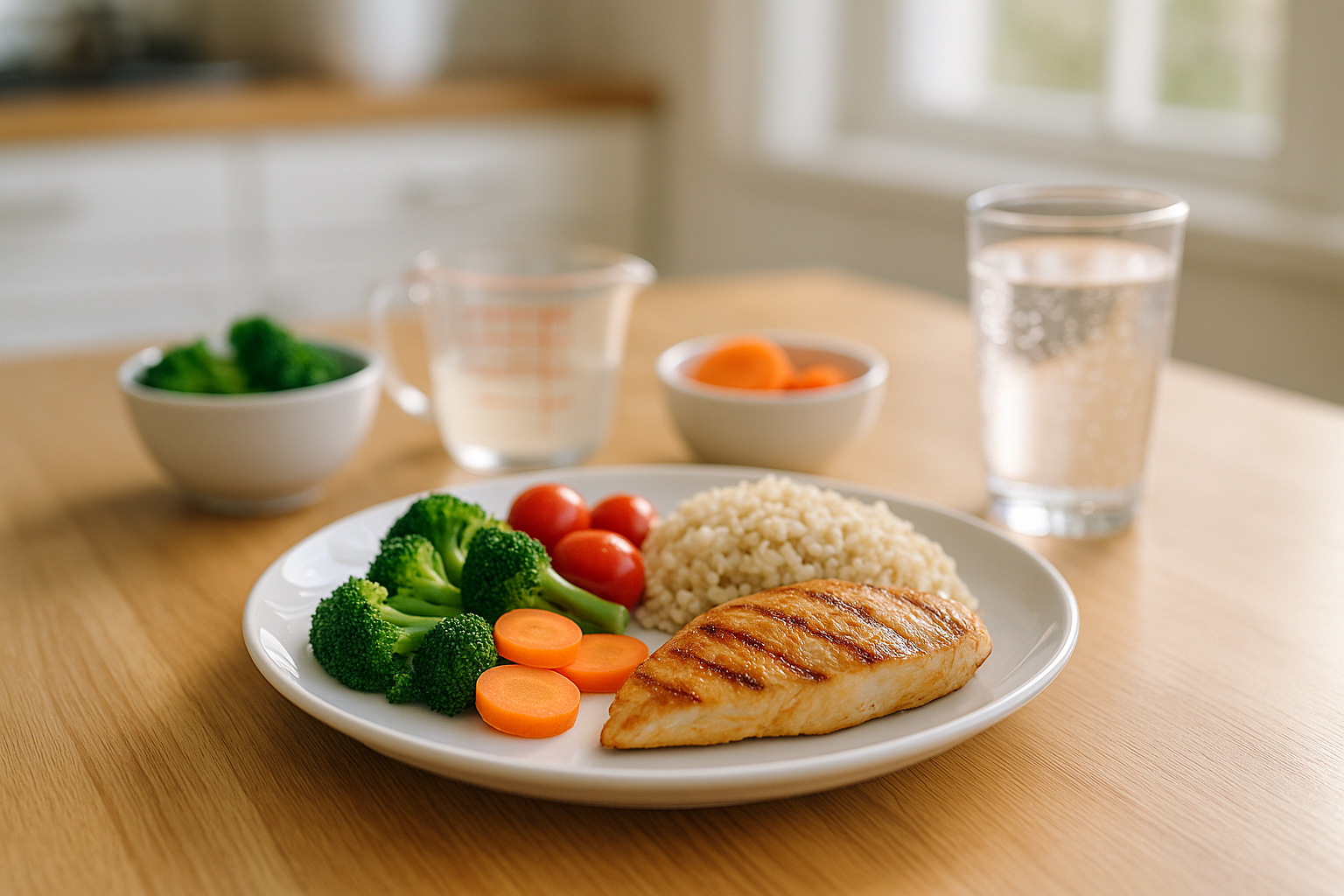
A solid default is half the plate from vegetables or fruit, around a palm-sized portion of protein, and a moderate section for starches or higher-calorie sides. This will not be exact every time, but it creates a balanced starting point that is easier to repeat.
Watch calorie-dense extras
Oils, dressings, cheese, sauces, nut butters, chips, desserts, and heavy toppings are usually where portions get sneaky. Even when the main meal is reasonable, the extras can double the energy density fast.
Compare servings to your recent norm
If your lunch today is noticeably larger than what you usually log, treat that as useful information. Portion control gets easier when you compare meals against your own normal instead of relying only on package labels.
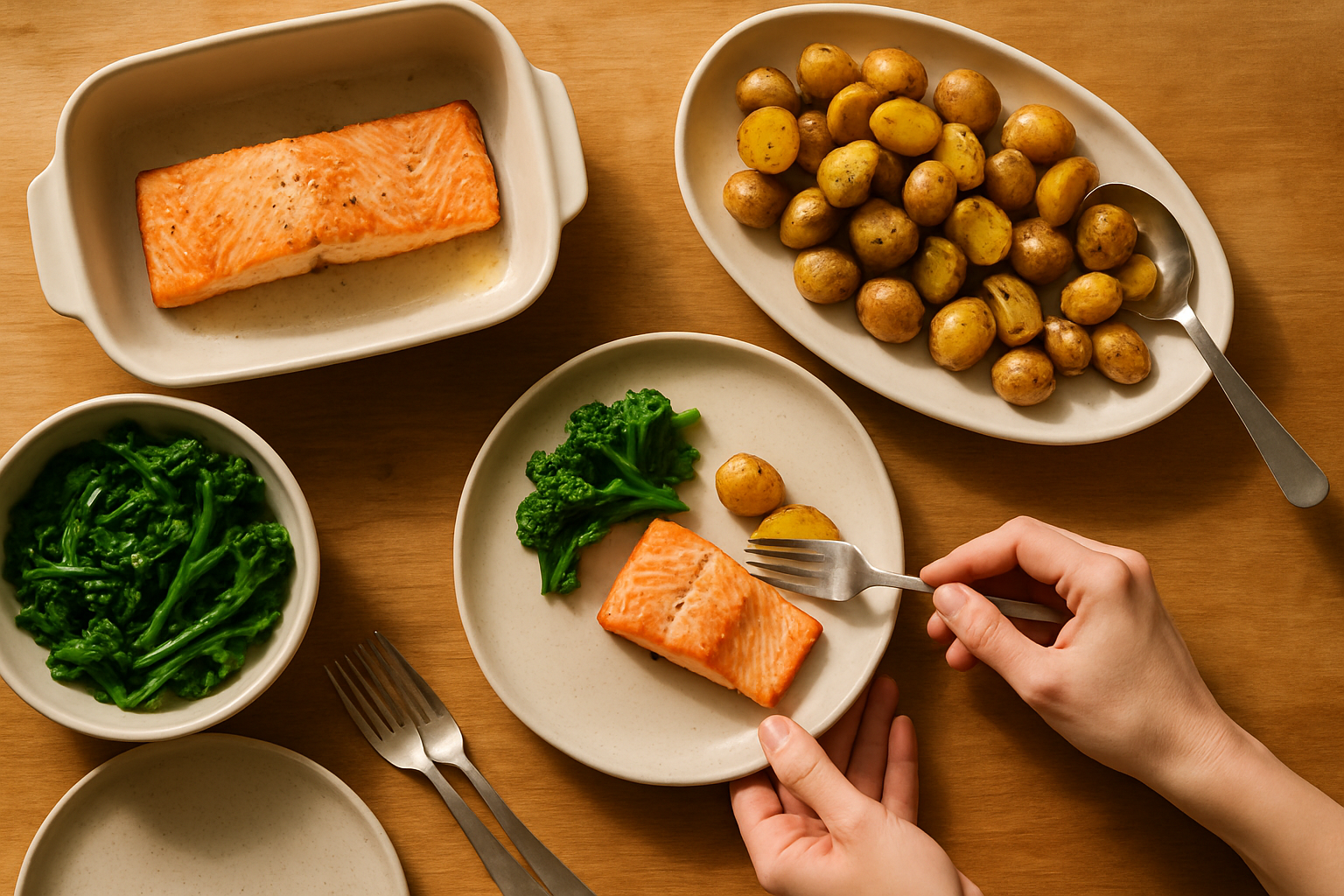
Plate setup and kitchen habits can do half the work
One of the easiest ways to improve portions is to change the setup before the meal starts. This matters because decisions made in the kitchen are usually easier than decisions made after the food is already in front of you.
Plate food in the kitchen when possible
Family-style meals can be great, but they also make second and third helpings effortless. Serving your plate in the kitchen first can create a useful pause before going back for more.
Use smaller bowls and plates for certain foods
This is not about tricking yourself with tiny dishes. It is about reducing the visual pressure to fill oversized containers. Cereal, pasta, snacks, ice cream, and calorie-dense sides often look more reasonable in smaller serving dishes.
Pause before automatic refills
Many extra calories come from topping off the plate before your body has caught up. If you finish a meal and still feel truly hungry after a short pause, have more. Just make the second serving a conscious choice.
How to handle portion control at restaurants
Restaurant meals are where portion awareness usually gets tested hardest. Large plates, rich sauces, baskets of extras, and social eating all make it easier to overshoot.
Decide your stopping point early
It is much easier to split, save, or slow down before you start eating than halfway through a big entree. If the dish looks oversized, choose a realistic target at the beginning.
Do not assume healthy-sounding meals are light
Bowls, wraps, salads, and grilled dishes can still be high calorie if the portions are large or the dressings and add-ons are generous. Honest estimating matters more than menu language.
Log the real meal, not the ideal version
If the portion was restaurant-sized, log it that way. Calory is most useful when it reflects reality, not the version of lunch you wish had arrived.
When estimation is good enough, and when precision helps
For many people, estimation is enough for most meals. That is especially true once you have built a decent feel for your regular foods. But there are moments when a little extra precision can still help.
- Use estimation for: routine home meals, familiar breakfasts, basic lunches, and most restaurant meals where exact numbers are impossible anyway.
- Use more precision for: very calorie-dense foods, foods that you consistently underestimate, and times when progress has stalled and you want better feedback.
This is why a flexible app is useful. You can stay quick most of the time and tighten up only where it actually matters. That tends to be more sustainable than trying to treat every meal like a science experiment.
- Pick one visual plate rule: half produce, one protein portion, one moderate starch portion.
- Build one serving pause: wait a minute before automatic seconds.
- Choose one tricky food to log more honestly: cereal, pasta, oil, takeout, snacks, or dessert.
- Use Calory to spot drift: if calories are climbing without obvious reason, portions are one of the first places to check.
FAQ
Can portion control work without weighing food?
What is the easiest visual portion control method?
How do I use portion control at restaurants?
How can Calory help with portion awareness?
Conclusion
Portion control gets a lot easier when you stop treating it like an all-or-nothing skill. You do not need perfect measurements at every meal. You need better defaults, honest logging, and a simple way to notice when servings are drifting upward.
If you can recognize a reasonable portion more often, you can stay more consistent without adding a ton of friction to your day. That is a much better long-term strategy than trying to be exact all the time and burning out on the process.