Movie night can be harder to manage than a restaurant meal because it lasts longer. Dinner happens and ends. Movie snacks often stay within arm’s reach for two hours, sometimes longer if a show turns into a binge. That creates a different problem than one large plate. You are not making one decision. You are making tiny repeat decisions the whole time, often while distracted.
That is why people walk away from movie night feeling like they barely ate anything serious while still blowing past what they meant to have. The cues are soft. A few handfuls of popcorn. A little candy between scenes. A refill because the first bowl disappeared. None of it feels dramatic, but the total matters more than any single grab.
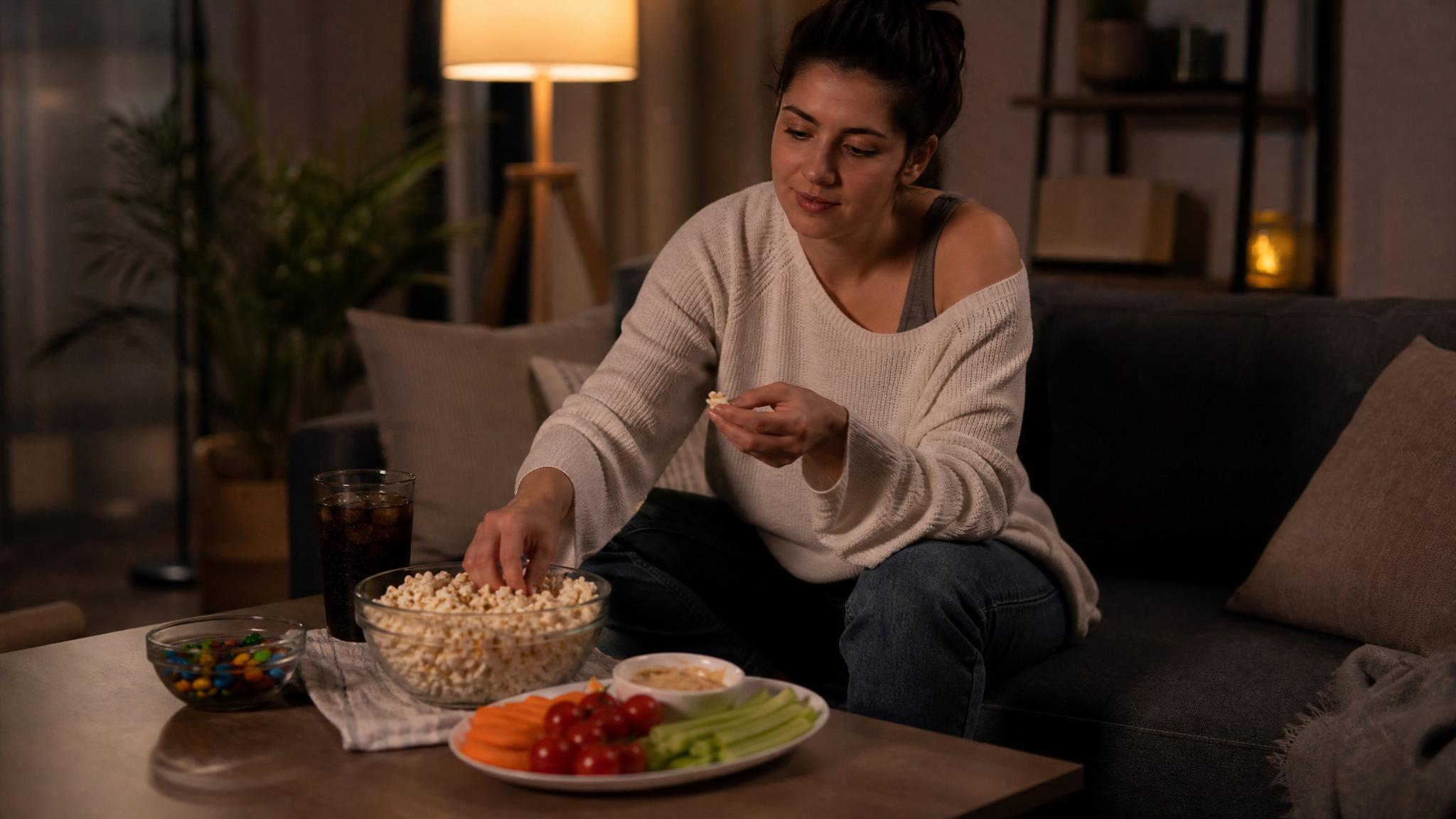
Why movie night snacks add up so fast
Part of the issue is timing. Snacks eaten slowly over two hours rarely feel as real as the same amount served on a plate at once. Your brain registers movie night as entertainment first and eating second. That makes it easy to miss the fact that you are still eating steadily the whole time.
The other issue is abundance. Open bags and oversized bowls create the feeling that snacks are just available, not chosen. Once food becomes background scenery, portion awareness gets weak. You stop noticing when the popcorn bowl gets topped off again or when the candy bag keeps coming back for one more handful during every slow scene.
A useful movie night question
Ask yourself what you actually want most tonight. Is it the popcorn, the candy, the fizzy drink, or just the cozy ritual of having snacks nearby? Knowing the answer helps you build the night around one real favorite instead of letting every category pile in.
How to make popcorn work better without making it sad
Popcorn is usually the easiest anchor for movie night because it feels like a real movie snack and gives more volume than dense snacks like candy or cookies. The problem is not popcorn itself. The problem is when the portion becomes vague. A giant bowl on the coffee table invites automatic eating because your hand keeps moving without a clear stop point.
A better setup is choosing the popcorn portion before the movie starts. That could mean one medium bowl per person, or one measured serving in a smaller bowl if you know the rest of the night also includes candy or another snack. If you want extra flavor, add it intentionally instead of drenching the whole batch and losing track of where the calories are coming from.
It also helps to think about texture balance. If popcorn is your main snack, you may not need chips too. If you really want a richer snack, keep the popcorn a little lighter and let the richer item be the deliberate add-on. Movie night gets easier when each snack has a role instead of all of them competing for attention.
Handling candy and drinks without turning the night into a free-for-all
Candy is rarely the problem because it exists. It becomes a problem when it turns into a side item that feels too small to count. A few gummies here, a few chocolates there, some extra bites from somebody else’s stash, and suddenly the sweet part of the night has no edges. Putting candy in a small bowl instead of leaving it in the full package makes a huge difference because it turns a drifting snack into a visible portion.
Drinks deserve the same attention. Soda, sweet cocktails, creamy lattes, milkshakes, and even repeated pours of juice can push the night higher than expected. If the snack table already has popcorn and candy, choosing a lower-calorie drink can be the easiest tradeoff in the whole setup. If the drink is the treat you care about most, then make room for it and simplify the food.
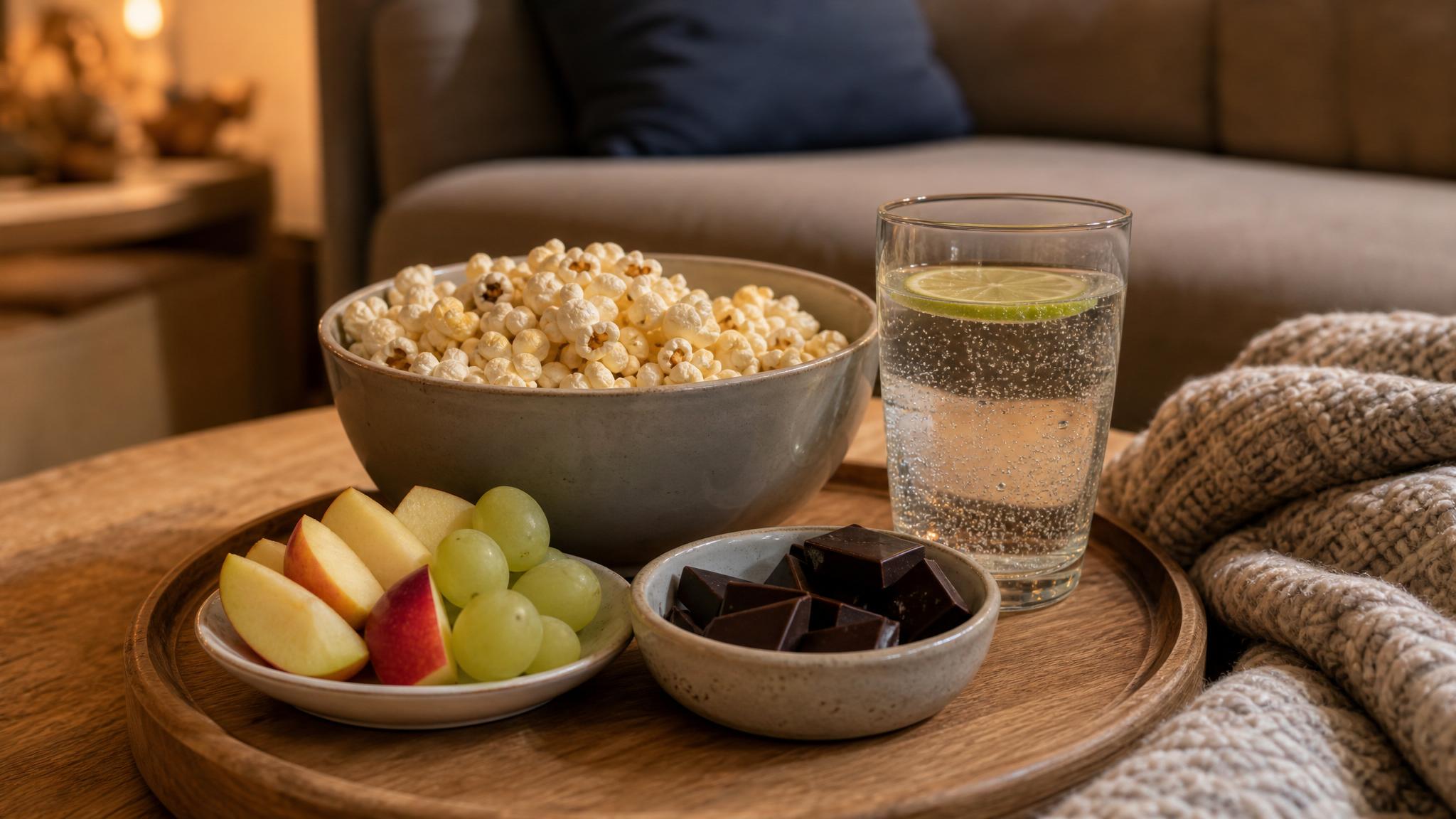
The helpful mindset is not asking how to make movie night perfect. It is asking where the indulgence lives tonight. Popcorn plus candy plus dessert plus sugary drinks often happens because nobody decides. One treat category chosen on purpose feels much better than four categories drifting in by default.
Build a better movie night snack board that still feels fun
One of the easiest wins is building a complete-looking snack board instead of setting out one giant high-calorie item and hoping you stop at the right time. A balanced board might include popcorn as the anchor, one small sweet choice, one crunchy or savory extra, and one fresh element like fruit. That mix makes the night feel abundant while giving you more control than a family-size candy bag and a buttery popcorn tub.
This also works well for families or couples because everyone can grab from the same setup without the whole night revolving around the most calorie-dense option on the table. The board looks generous, which matters. People feel more restricted when the snack plan looks sparse. A visually full tray with smarter portions often feels far more satisfying than one oversized treat eaten straight from the package.
If movie night happens every week, the bigger win is repeatability. Once you find a snack setup that feels fun and fits your routine, reuse it. Familiar patterns are easier to log in Calory, easier to estimate, and much less likely to surprise you later.
How Calory helps with movie night routines
Calory is especially useful when a habit repeats often enough to matter but still feels casual. Movie night snacks fit that perfectly. A recurring Friday or Saturday setup can quietly shape your weekly progress more than you think, not because it is bad, but because it is easy to underestimate.
Once you log your usual popcorn portion, favorite candy amount, or go-to drink, the whole night gets easier to manage. You can compare versions, see what actually feels worth it, and build a repeat routine that still feels like a treat. That is usually the goal with weight management anyway. Not removing the fun, just making the fun easier to keep honest.
Frequently asked questions
Is home movie night better than theater snacks for a calorie goal?
Usually it is easier because you control the portions and choices. The advantage only disappears when open packages and constant refills make the home setup feel endless.
What is the best snack to build around?
For many people, popcorn works best because it feels like movie night and offers more volume than candy or cookies. It just works better when the portion is chosen on purpose.
Should I avoid eating straight from the bag?
That is one of the simplest upgrades you can make. A bowl creates a visible portion and a natural stopping point. A bag usually turns snack time into a running background habit.
Can a balanced snack board really help with calorie tracking?
Yes. A board with a few deliberate components often feels more satisfying and more complete than one giant treat, which makes it easier to enjoy the night without sliding into endless extra grabs.