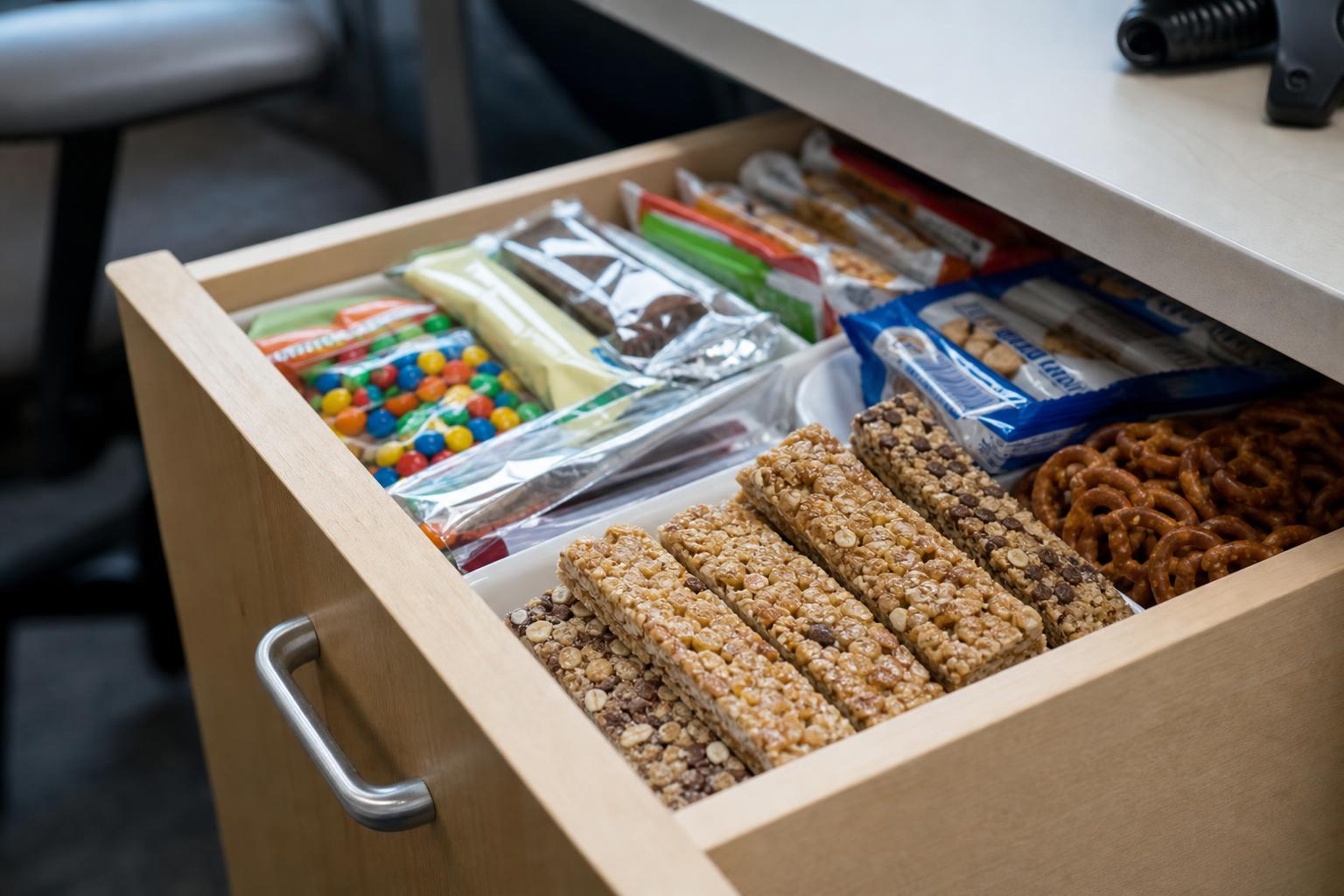
The office snack drawer has a strange advantage over every meal on your calendar. It shows up without asking for attention. Lunch gets planned, even loosely. Dinner usually has a place in your mind. Random desk snacks do not. They slip into the day between messages, calls, and deadlines, which is exactly why they are so easy to underestimate.
That is what makes workday snacking frustrating for people trying to manage weight. You can feel like you ate pretty well overall, then look back and realize the unplanned extras were doing more work than your actual meals. Not because you were reckless, just because the environment made low-effort eating easy all day long.
Why office snacks sneak up on people
The first reason is proximity. If the snack is in your desk, in the shared kitchen, or sitting out in a bowl, it keeps asking for almost nothing. You do not have to cook it, order it, or even stand up for long. That tiny amount of friction matters. A low-effort snack gets eaten more often, especially when the workday is stressful or dull.
The second reason is that office snacking often feels disconnected from hunger. People do not just eat at work because they need fuel. They eat because a meeting ran long. Because somebody brought donuts. Because the afternoon is dragging. Because they want a break that is not obviously a break. Those moments are normal, but they are easy to miss when you think calorie tracking only matters at meal times.
A useful workday question
Before opening the snack, ask whether you are actually hungry, mentally tired, bored, or just reacting to the fact that food is nearby. You do not need to judge the answer. You just want to know which problem you are solving.
What makes the office snack drawer so easy to overeat from
One issue is packaging psychology. Individually wrapped snacks feel controlled, but they can still lead to mindless stacking. One mini candy turns into three because each item feels too small to matter. Crackers, nuts, trail mix, and granola bars can create the same problem. None looks dramatic on its own, but the day is long and the drawer keeps reopening.
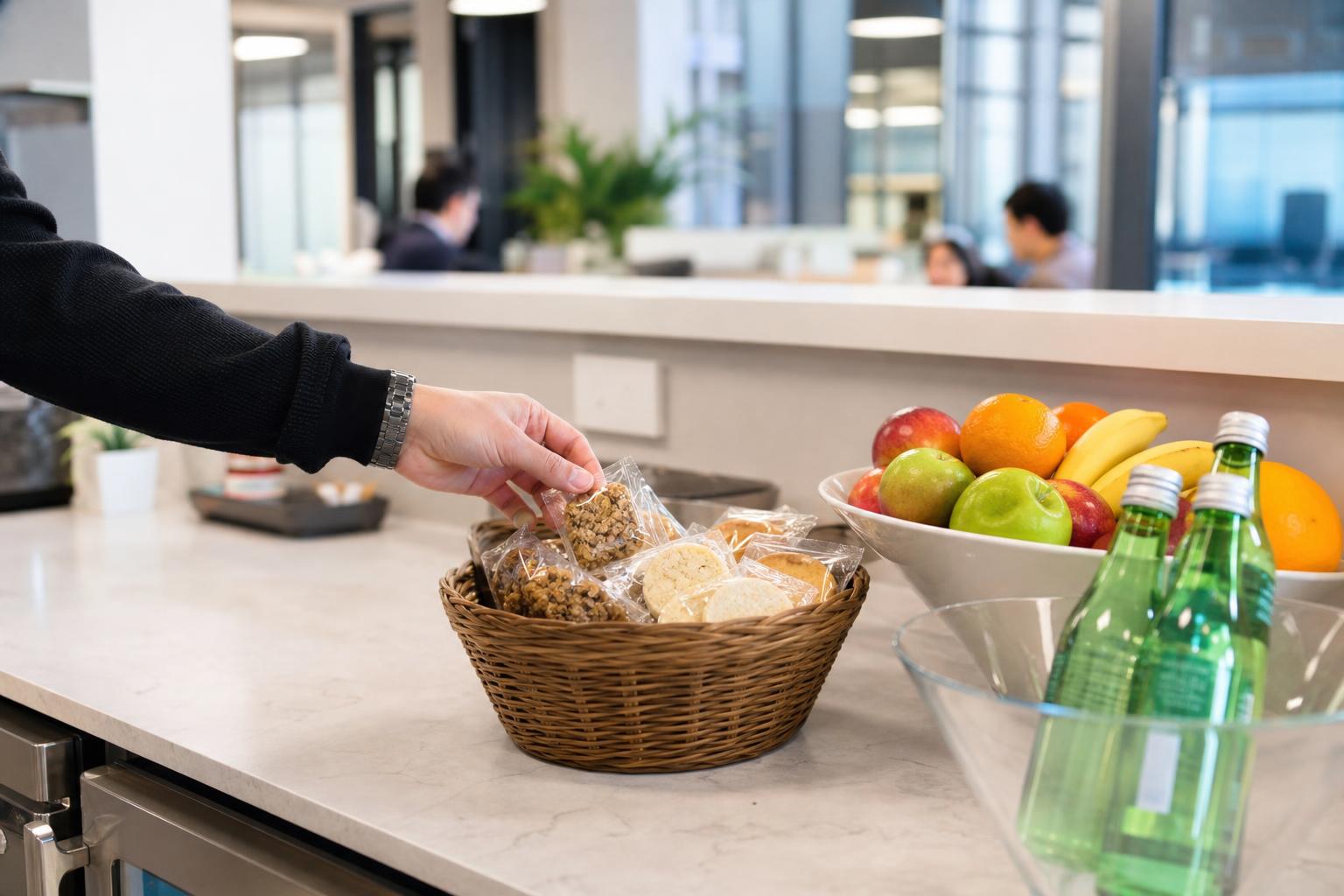
Shared office food can be even trickier. Bowls of candy, leftover pastries, and break room snacks create a constant low-level invitation to grab something without ever making a real decision. It is not just hunger. It is visibility, convenience, and the social feeling that these calories somehow do not count the same way a plated meal would.
There is also a logging delay problem. If you wait until the evening to remember what happened, office snacks are often the first thing that disappears from memory. You might remember lunch and dinner clearly while forgetting the two cookies, the protein bar, the handful of pretzels, and the extra few bites from the candy bowl. That is how honest calorie tracking gets quietly distorted.
How to build work snacks that are easier to manage
The easiest improvement is pre-deciding what a real work snack looks like for you. That might be one bar, one yogurt, one piece of fruit with a measured serving of nuts, or one savory option that actually holds you over. A good work snack should feel intentional enough to register in your day, not like a series of tiny grabs that keep restarting your appetite.
Portioning matters too. If you want pretzels, trail mix, or candy, pull out one portion and close the drawer. Eating from a single portion creates a clear beginning and end. Eating from the source turns snack time into a fuzzy stretch of minutes where it is hard to tell what you actually ate.
Another smart move is making the healthier choice the easiest one. Keep your better go-to snack where it is visible and easy to grab first. Put the more tempting treat farther back, or decide that it is for specific days instead of every afternoon. You do not need a perfect office pantry. You just need enough structure that convenience works for you instead of against you.
Meetings, stress, and boredom eating still count
A lot of office snacking is emotional in a very ordinary way. You may reach for food during a long meeting because it gives your brain something to do. You may eat because a stressful email lands and the snack offers a quick reset. You may snack because your afternoon energy dips and eating feels easier than stepping away for five minutes. None of that is weird. It is just worth noticing.
That is why aggressive restriction usually backfires. If the rule is never touch office snacks, you often end up white-knuckling the day until you finally cave and overdo it. A better strategy is letting snacks exist while making them more visible and more deliberate. You can have the snack, log it, and move on without turning it into an all-or-nothing event.
If the afternoon slump is a repeat issue, it can also be a sign that the earlier part of the day needs work. A skimpy breakfast or a low-protein lunch often shows up later as random drawer grazing. Sometimes fixing the snack problem really means fixing the meal before it.
How Calory helps with office snack habits
Calory is useful here because workday snacks are usually repetitive. The same granola bar. The same pretzels. The same sparkling drink and candy combo from the break room. Once those repeat items are easy to log, you get a much clearer picture of what is actually happening during the day.
That helps because the office snack drawer is not really about one treat. It is about patterns. When you can see those patterns more clearly, you can make smaller adjustments that actually stick. Maybe you keep the afternoon snack but make it more filling. Maybe you stop grazing and choose one portion. Maybe you realize the drawer was not the real problem at all, and the bigger issue was a lunch that never held you through the afternoon.
Any of those wins is useful. The point is not having the cleanest desk food routine on earth. It is keeping workday calories honest enough that your bigger plan still works.
Frequently asked questions
Is it bad to keep snacks at my desk?
Not necessarily. Desk snacks can actually help if they stop you from getting overly hungry. The key is choosing snacks intentionally and not turning the drawer into a constant grazing zone.
What kind of office snack is easiest to fit into a calorie goal?
Usually the easiest options are the ones with a clear portion and decent staying power, such as a measured serving of nuts, a protein bar you know well, yogurt, fruit, or another repeat snack you can log quickly.
Why do tiny snacks feel like they should not matter?
Because each one is small and forgettable. The issue is frequency. Several tiny snacks spread across a workday can add up to a large total without ever feeling like a real eating moment.
Should I log every single office bite?
If you are trying to understand why progress feels stalled, yes, at least for a while. Logging the small extras is often what reveals the pattern that meals alone were hiding.