People often assume calorie tracking gets easier once breakfast is handled, but lunch is where a lot of inconsistency sneaks in. Meetings run late. You forget to prep something. The office kitchen has snacks. A coworker suggests takeout. Suddenly the calm plan you had in the morning gets replaced by whatever feels fastest and most rewarding at noon.
A lunch template helps because it reduces the number of decisions you need to make when your energy and attention are already being used somewhere else. You are not forcing yourself to eat the exact same thing every day. You are building a reliable structure, the same way a simple workout routine works better than a different complicated plan every morning.
Why lunch templates work better than random weekday lunches
The goal of a lunch template is not variety for variety’s sake. It is consistency without boredom. When lunch changes wildly from one day to the next, portion awareness gets weaker. Hunger can become harder to predict. Logging takes longer because every meal is a fresh estimate. That adds friction, and friction is one of the fastest ways to stop tracking consistently.
A template solves that by giving you a familiar shape. Maybe your default lunch is protein, one carb source, one produce source, and one small extra like dressing, cheese, or a snack side. The ingredients can change, but the overall format stays recognizable. That means you usually know what the meal is going to feel like before you eat it, and you usually know how it will fit into your day before you even log it.
What a lunch template really does
It turns lunch from a daily decision problem into a light system. That makes it easier to stay consistent on your busiest days, which is when good habits usually fall apart.
Build a lunch structure before you choose the exact foods
The easiest way to create a template is to start with categories, not recipes. Think in building blocks. A practical workday lunch often needs four things: something filling, something that supports your protein goal, something with volume, and something that keeps the meal satisfying enough that you are not raiding the snack drawer an hour later.
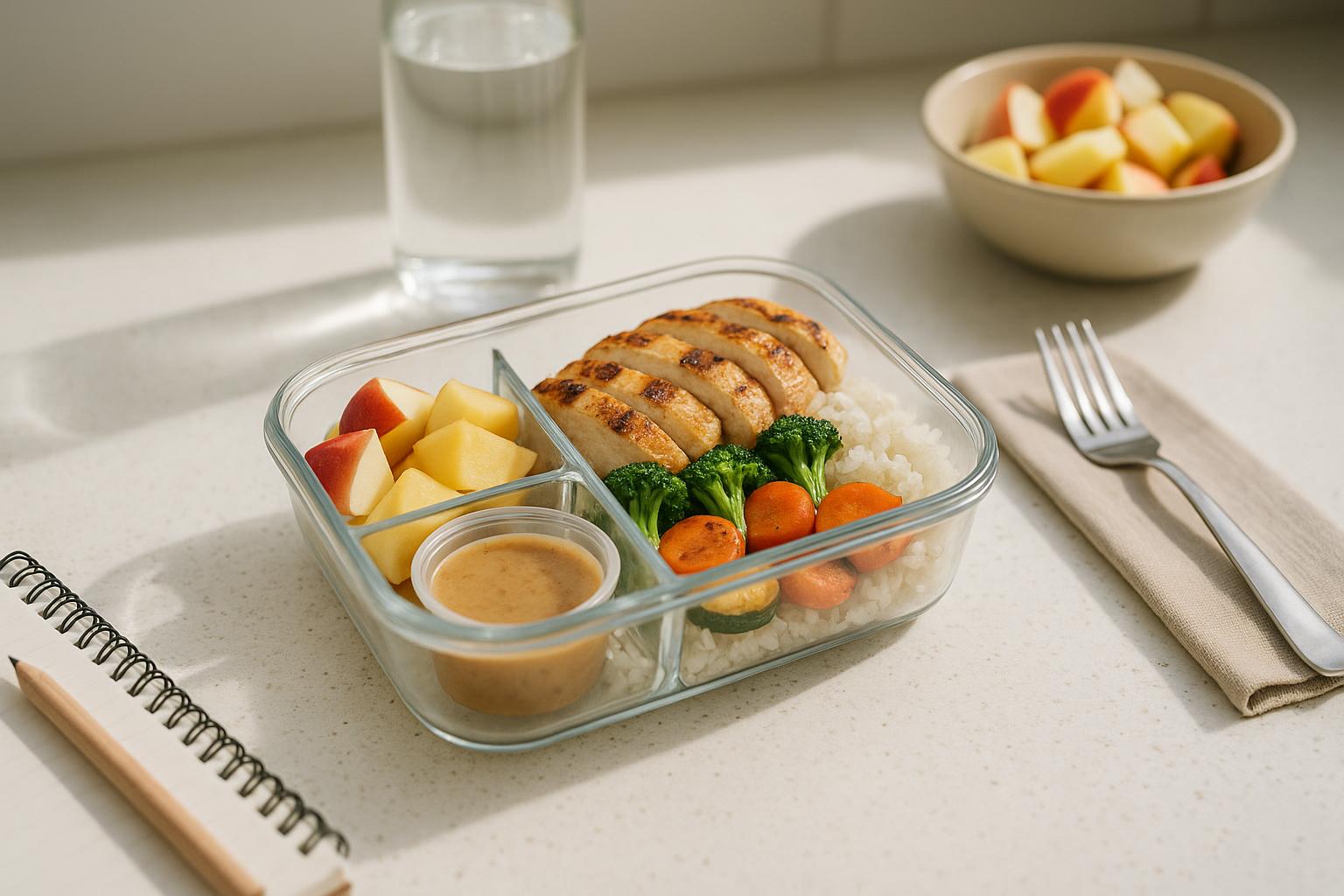
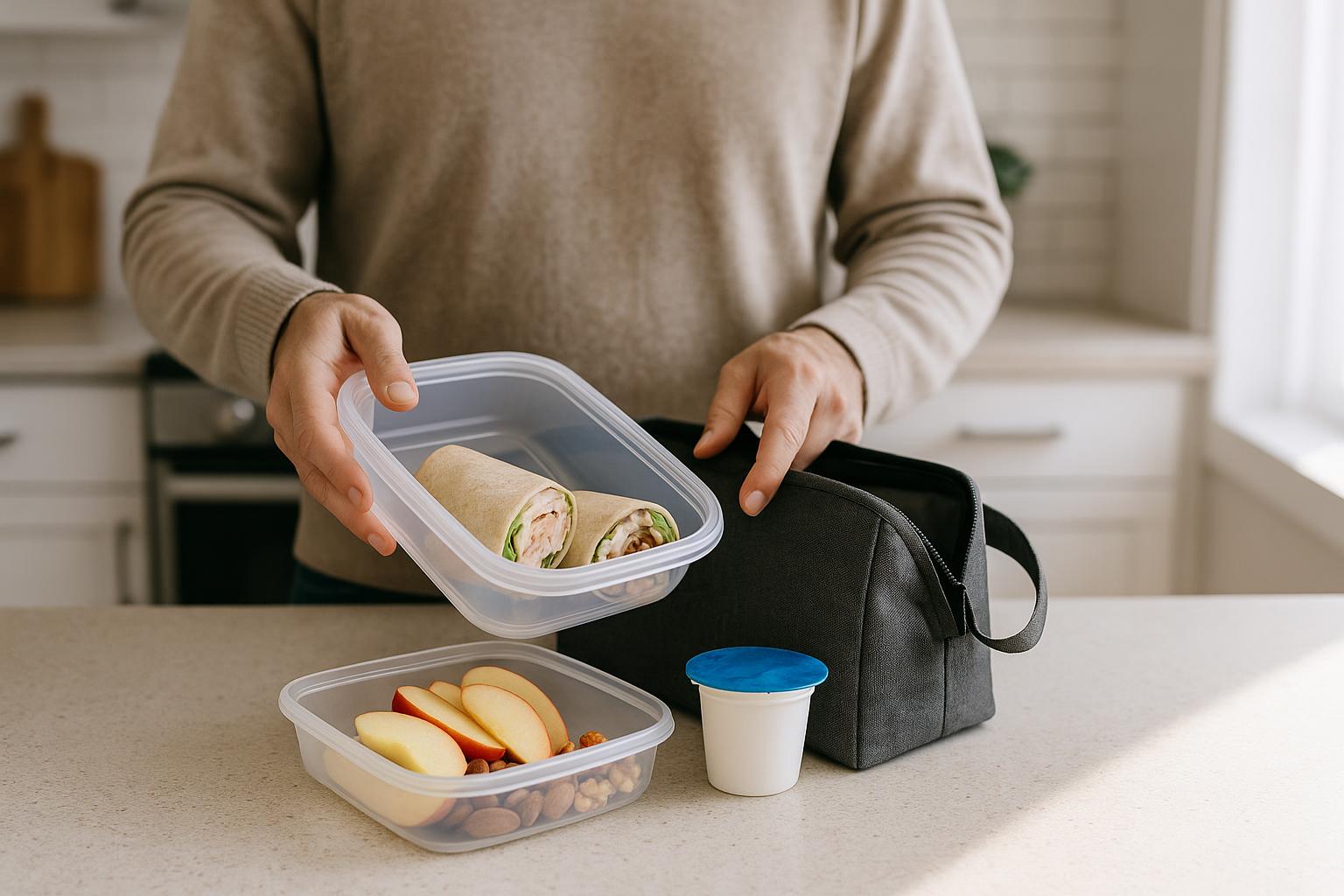
One simple template could look like this: lean protein, moderate carb, produce, and one flavor booster. That might be grilled chicken, rice, roasted vegetables, and a small sauce cup. Another version could be turkey wrap, fruit, yogurt, and a handful of nuts. Another could be a grain bowl with tofu, quinoa, chopped vegetables, and feta. The specific foods can move around, but the job of each part stays similar.
That is what makes the template useful. You are not relying on motivation to plan lunch from scratch. You are choosing from a familiar structure that already works for your schedule and your calorie target.
Choose realistic portions you can repeat
A lunch template only helps if the portions are realistic. If your default lunch is too small, you will end up chasing snacks all afternoon. If it is too big, you may burn half your daily calories before dinner. The sweet spot is a lunch you can repeat often without feeling deprived or overly full.
This is why it helps to test the template a few times and pay attention to your afternoon hunger. If you are starving by 3 PM, the issue may not be discipline. It may just mean the lunch needs a little more protein, more fiber, or a slightly bigger carb serving. If you feel sluggish and overfull, the opposite may be true. Small tweaks usually work better than rebuilding the whole meal.
It also helps to keep the calorie range fairly steady. Not mathematically identical, just close enough that you know what lunch usually costs in your day. That makes the rest of your planning easier, especially if breakfast and dinner also have familiar patterns.
Create a few easy variations so the template does not get stale
A good template should feel flexible, not rigid. One easy trick is to create three variations inside the same structure. For example, if your base template is protein plus carb plus produce plus extra, your three lunch versions might be a chicken rice bowl, a turkey sandwich with fruit and yogurt, and a tuna wrap with veggie sticks and crackers. All three work similarly in your day, but they taste different enough that lunch stays interesting.
You can also swap ingredients seasonally or based on what is easy to buy. Rice can become potatoes or pasta salad. Chicken can become tofu, deli turkey, ground turkey, salmon, or beans. Vegetables can shift between raw, roasted, or mixed into the main dish. The point is not meal perfection. The point is staying close to a familiar shape so the lunch keeps doing the same job.
This matters because weekday eating rarely falls apart from lack of nutrition knowledge. It usually falls apart because life gets busy and the easy option wins. A template lets your easy option also be your useful option.
Keep one or two backup lunches for chaotic days
Most people do not fail their plan because the plan was bad. They fail because the plan assumed every day would go smoothly. A realistic lunch system needs backups. That might mean frozen meals you actually like, a shelf-stable office lunch, a nearby deli order you already know how to log, or ingredients for a five-minute sandwich plus fruit situation.
Your backup lunch should still fit the same basic structure as your normal template. That way the emergency option is not wildly different from the plan. If your usual lunch lands in a manageable calorie range and your backup does too, the day stays on track without requiring perfect prep. This is especially helpful on meeting-heavy days, travel days, or afternoons when the fridge is emptier than expected.
Think of the backup as part of the system, not evidence that the plan failed. The more normal it feels to use a backup lunch when needed, the easier it is to stay consistent across a real workweek.
How Calory helps make a lunch template easier to keep
Calory is especially useful when you already have a lunch structure you like. Repeated meals become faster to log, familiar portions are easier to compare, and small ingredient swaps are easier to see in context. That saves time, but it also lowers the mental effort of staying aware. You do not need to treat every lunch like a full research project.
Over time, a simple lunch template can make the whole day feel more stable. If lunch is predictable, you can handle dinner with more flexibility. If lunch is satisfying, you are less likely to drift into random snacks. If logging lunch is quick, calorie tracking feels more like a helpful check-in and less like busywork. That is the kind of system people actually keep.
Frequently asked questions
What if I work from home and lunch changes every day?
A template still helps. It can be as simple as keeping the same meal structure while changing ingredients based on leftovers and what you have in the kitchen.
Is a lunch template only for weight loss?
No. It is also useful for portion awareness, meal planning, reducing weekday stress, and making food choices feel less random.
Can I use takeout as part of a lunch template?
Yes, if you have a few repeat orders that fit your day reasonably well. The key is choosing them intentionally so they act like part of the system instead of a daily wild card.
How many lunch options should I keep in rotation?
Usually two to four is enough. That gives you variety without bringing back the same decision fatigue that the template is supposed to remove.