Happy hour tends to start with good intentions and end with a vague memory of what was actually eaten. That is not because people are careless. It is because the setting is built to keep attention on the conversation instead of the food. Drinks arrive slowly, snacks are passed around, and nobody is sitting there with a measuring cup.
That is exactly why happy hour calories can sneak up so fast. The servings are often larger than they look, the pace is slow enough that you do not feel full right away, and the food is usually shared. A few rounds of chips, fries, sliders, or wings can look tiny in the moment and still add up to a full meal or more.
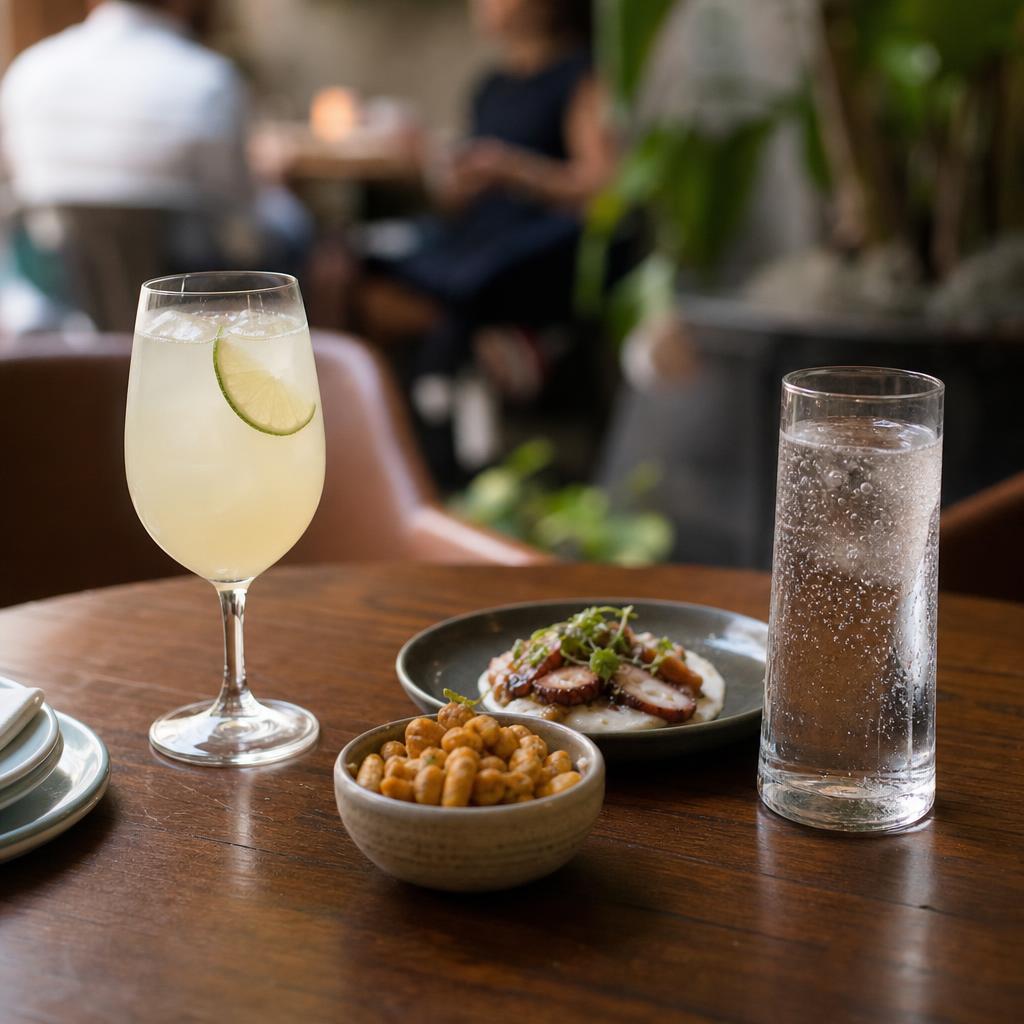
Why happy hour drifts so easily
The biggest reason is that drinks are slow calories. You do not get the same obvious fullness signal you would get from a plated meal, so a second drink can feel more like continuing the vibe than making another choice. Add appetizers to that and the total can outpace what your brain expected by a lot.
There is also a social pressure effect, even when nobody says anything directly. If the table is sharing, it is easy to keep circling back to the fries or chips because that is what everyone is doing. The meal becomes less about hunger and more about the flow of the group. That is normal, but it is exactly why a loose plan helps.
A useful question
Before the first order, ask yourself whether you want a drink, a snack, a full meal, or just the social time. You do not need a perfect answer, just enough clarity to keep the evening from becoming accidental eating.
Choose your default drink before you get there
One of the easiest ways to keep happy hour from spinning is to pick a default drink in advance. That does not have to mean the same thing every time. It just means you are not making the first decision while everyone is already ordering and the menu is in your face.
Maybe your default is a light beer, a glass of wine, a vodka soda, a spritz, or a zero-proof drink with sparkling water. Maybe it is a single cocktail instead of two. The point is to know what category you are in so you are not starting from zero every time. If you already know the rough calorie range, even better, but the bigger win is consistency.
When the drink is predictable, the rest of the evening gets easier to track. You are not trying to remember what the bartender poured from a mystery list of ingredients. You have a known starting point, which makes the whole night less slippery.
Pick one food decision, not five
Happy hour food gets messy when every item is a fresh maybe. Fries? Maybe. Wings? Maybe. Nachos? Maybe. Sliders? Maybe. Suddenly you have ordered three side dishes and told yourself it was just snacks. That is how a social stop turns into a calorie fog.
Instead, choose one food decision ahead of time. That might mean you are having one appetizer and calling it good. It might mean splitting a plate with someone. It might mean deciding that the drinks are the main event and the food is just a small side. One clear choice is much easier to live with than a chain of random yeses.
If you know happy hour tends to run long, a food decision matters even more. A small plate early can keep you from feeling ravenous later, which often leads to a second round of bar food or a late dinner you did not actually want. Planning the first food choice usually protects the rest of the night better than trying to be perfect later.
Watch the shared snacks and mystery plates
Shared snacks are where happy hour calories become slippery. A basket of chips, a bowl of nuts, a tray of fries, or a plate of sliders is easy to dip into without ever making a clear serving decision. The table just keeps coming back around to you, and the next bite feels too small to count.
This is where a plate helps. If the restaurant offers small plates, take one. If not, ask for one. Portioning the food onto your own plate makes the evening feel more like a real meal and less like a background stream of bites. You do not need to weigh it. You just need to stop eating from a communal pile.
It also helps to choose one thing you actually care about and ignore the rest. If the chips are good, eat the chips. If the wings are the thing, eat those. The goal is not to sample everything because everything is there. The goal is to enjoy the thing you wanted without letting the table make the decisions for you.
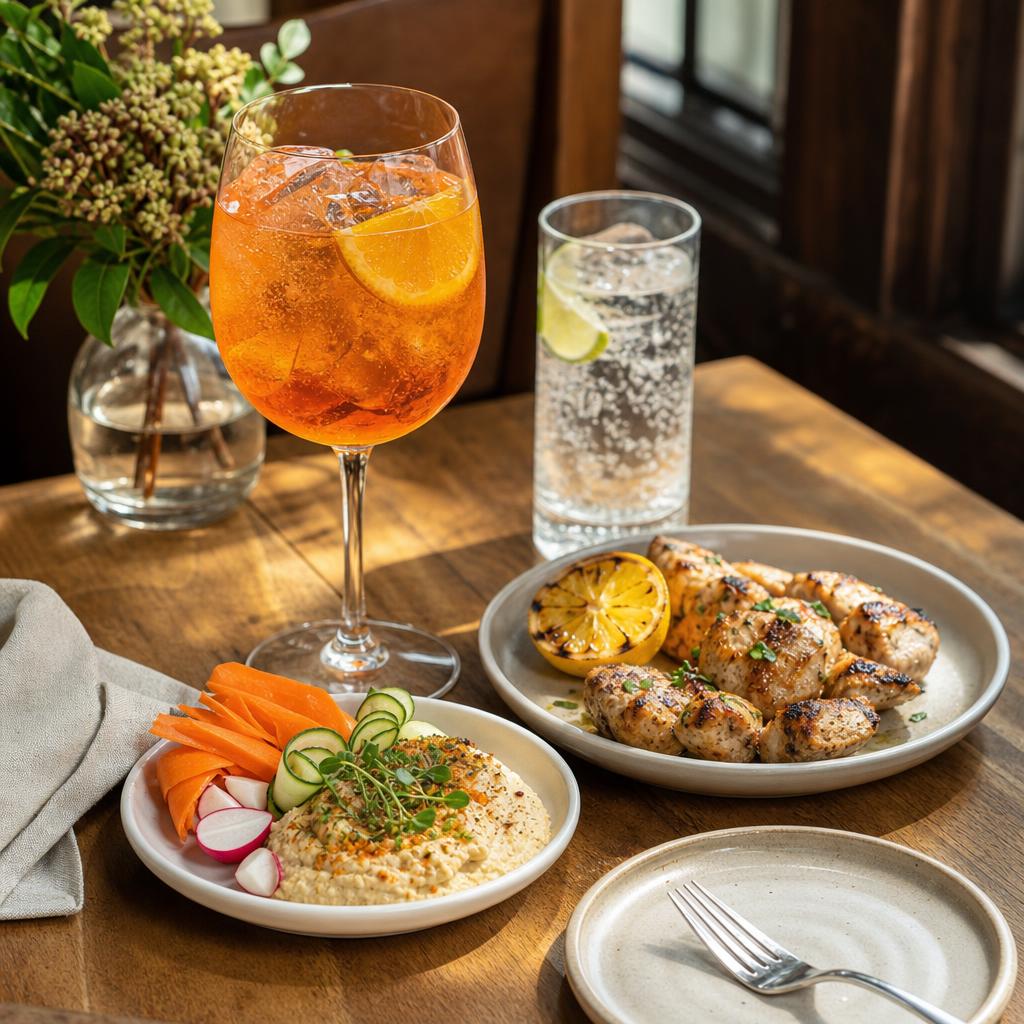
Log it without stress
You do not need perfect numbers for happy hour to be useful in Calory. You just need a good enough estimate that matches reality better than a guess made hours later. If you had one drink and one appetizer, log those. If you split food, estimate your share honestly. If the snack bowl was endless, decide on the amount you actually ate and move on.
This is one of those moments where consistency beats precision. Repeating a rough pattern of orders and logs teaches you more than trying to reconstruct every breadcrumb in the morning. If you keep seeing the same kind of evening, you will quickly learn which drink and snack combos fit your goals best.
It also helps to log sooner rather than later. The closer you are to the actual meal, the easier it is to remember what happened. Waiting until the next day turns a simple social outing into a memory puzzle you probably do not want to solve.
A realistic happy hour example
Here is the kind of plan that works well for a lot of people. You arrive, order one drink you already expected, split one appetizer with the table, and stop there unless you are truly hungry. If the night keeps going, switch to sparkling water or another zero-calorie drink so you can stay in the conversation without stacking more food on top.
Another solid option is to treat happy hour as the meal. In that case, you pick one drink, one small plate, and call it dinner. That works better than half-snacking your way through the bar and then getting home hungry enough to order takeout. A real stopping point saves calories and usually feels better too.
The best version is the one you can repeat. If your normal pattern is a light drink and a shared plate, keep it simple. If you prefer to eat before you go, do that and let happy hour stay social. The point is not optimizing every gram of food. It is keeping the evening predictable enough that it does not quietly wreck the rest of the day.
How Calory helps with happy hour
Calory is useful here because happy hour usually involves repeat patterns, not one-off surprises. Maybe you always order the same drink. Maybe you usually split fries or wings. Maybe you already know the handful of bar items you tend to choose. Once those become familiar, logging gets much faster and the calorie picture gets much clearer.
That clarity is the real win. It makes social eating feel less mysterious and less like something that only counts if it was perfectly measured. You get a cleaner view of the evening, which makes it easier to keep your bigger calorie goal intact without skipping the part of life that you actually enjoy.
Keep it simple
One drink, one food choice, one rough log. That is usually enough to make happy hour feel normal instead of chaotic.
Frequently asked questions
Should I skip happy hour food completely?
Not usually. A small planned food choice is often easier to manage than trying to resist everything and then overeating later.
What is the biggest calorie trap at happy hour?
The combination of drinks, shared appetizers, and slow pacing. Each one feels manageable, but together they can add up fast.
How do I handle a group that orders everything for the table?
Take a smaller portion, choose the item you actually want, and log your share honestly. You do not need to match the whole table just because it was served that way.
What if I do not know the calories in the drink?
Pick the closest reasonable estimate and stay consistent. A rough log that you actually use is more helpful than waiting for a perfect number that never comes.