The easiest lunches to track are usually not the most exciting ones. They are the ones you can build quickly, pack without drama, and eat without needing a complete recalculation every time. That is what makes a low-effort packed lunch useful. It cuts down on the little decisions that wear people out and keeps lunch from becoming the meal that throws off the rest of the day.
This is especially helpful if you work in an office, spend time in the car, or get distracted by whatever is nearby at noon. A packed lunch gives you a known option before hunger starts making the choices for you. Once you stop treating lunch like a daily creative assignment, calorie tracking gets much easier to keep up with.
Why low-effort packed lunches work so well
Lunch usually happens at the worst time for decision making. You are already busy, already hungry, and usually already trying to do something else. That is why lunches get random so fast. You grab what is close, what is fast, or what sounds good in the moment, and then the calories can swing more than you expected.
A low-effort packed lunch fixes that by making the choice earlier. You decide while you still have a little more patience and attention. Then you simply repeat the lunch later. The food itself matters, but the real benefit is the reduced mental load. Fewer choices mean fewer chances to drift into oversized portions or surprise extras.
The useful goal
Build a lunch you can pack on a normal day, log in a minute, and repeat next week without needing a new plan every time.
Pick a simple lunch formula first
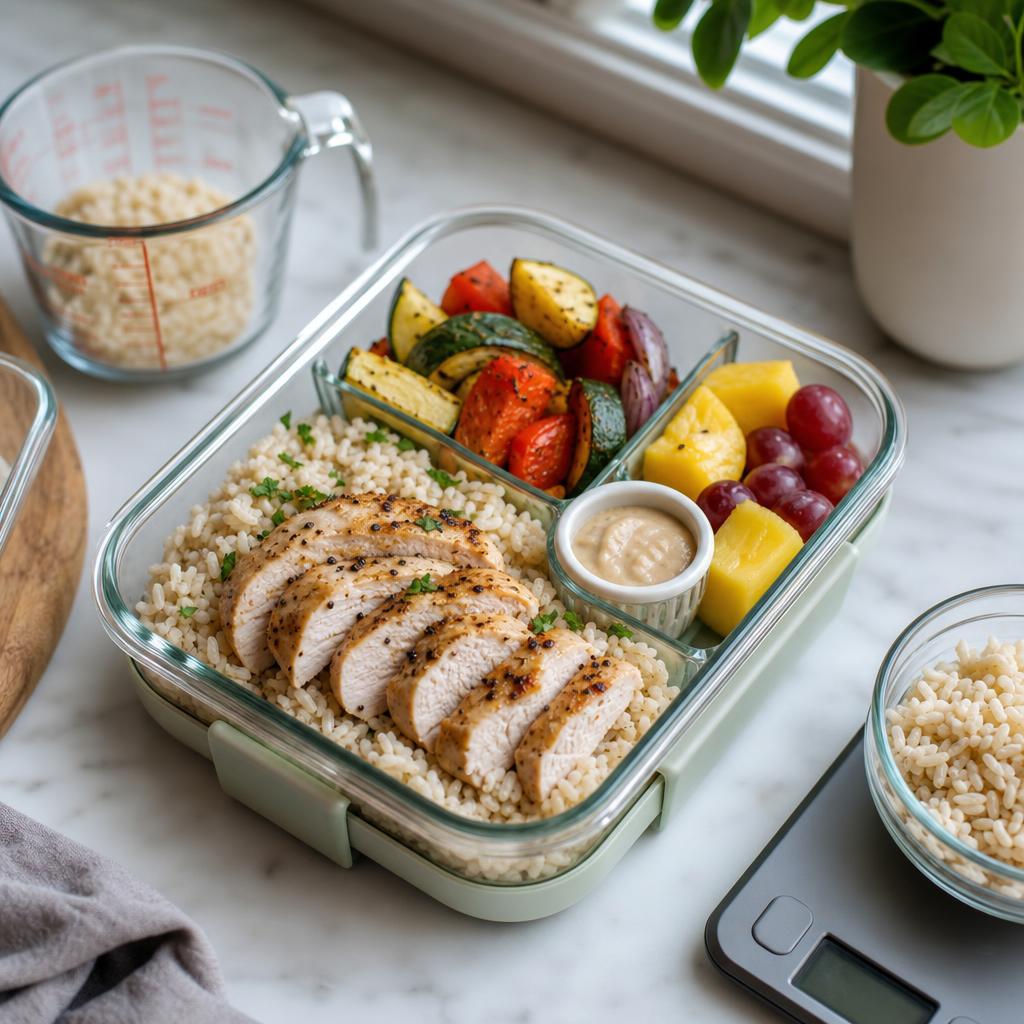
The easiest way to build a packed lunch is to stop thinking in recipes and start thinking in formulas. A practical formula might be protein plus carb plus produce plus one small extra. That could be chicken, rice, broccoli, and a sauce cup. Or turkey wrap, fruit, yogurt, and nuts. Or tofu, quinoa, roasted vegetables, and a little dressing.
That structure helps because you already know what the meal is supposed to do. Protein keeps it filling. Carbs make it sustainable. Produce adds volume. A small extra gives it flavor and makes it feel like real food instead of punishment. Once the formula is clear, the actual ingredients become much easier to swap around.
The formula also keeps you from overbuilding the lunch. A lot of packed lunches get heavier than intended because every compartment gets upgraded. More cheese, more sauce, more nuts, more bread, more bites. The formula keeps the meal recognizable, which makes it easier to estimate later.
Choose foods that travel well and still taste normal later
Not every food is a good packed lunch food. Some things get soggy, separate, or turn sad after a few hours. That does not mean they are bad foods. It just means they are bad lunch candidates. A low-effort system works best when you lean on ingredients that still feel solid after sitting in a container.
Good options are usually simple. Grilled chicken, roasted turkey, tofu, hard-boiled eggs, beans, rice, quinoa, pasta salad, chopped vegetables, fruit, and thicker dressings or sauces in small containers. If you want sandwiches or wraps, use fillings that hold up and avoid stacking too much wet ingredient in the middle unless you pack them carefully.
It can help to test lunches in the real world. If something tastes fine at home but gets weird by noon, it is not a reliable lunch. A reliable packed lunch does not need to be fancy. It just needs to be edible, satisfying, and easy to repeat without regret.
Keep the portions steady without weighing every single thing
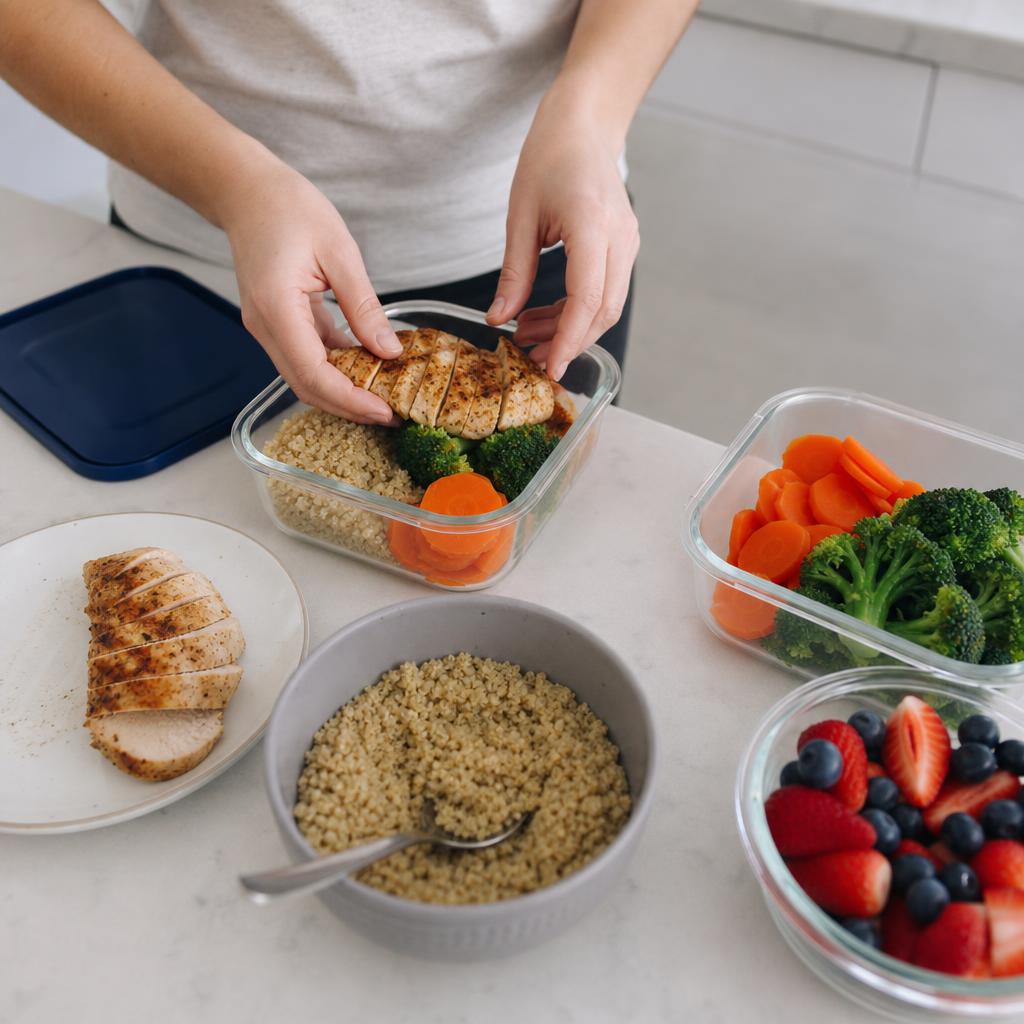
Portion consistency matters more than perfect precision. You do not need to measure every leaf of lettuce. You do need enough consistency that you know what lunch usually looks like. If your chicken serving is roughly the same, your rice portion is familiar, and your sauce stays in a small cup, lunch starts to behave predictably.
That predictability matters because packed lunches are often eaten quickly. If you do not know what the meal usually contains, logging gets sloppy. If you do know the usual portions, you can estimate with much less effort. That is one of the biggest wins of calorie tracking in real life, because the easier the estimate, the more likely you are to keep doing it.
A useful trick is using the same container or lunch box most days. Containers create a visual baseline. When the box looks about the same, the portion usually is too. It is simple, but it works.
Make it satisfying enough to ignore the snack drawer
The best packed lunch is not the one with the fewest calories. It is the one that actually carries you through the afternoon without making you hunt for snacks an hour later. If lunch is too light, you will probably make it up somewhere else. If it is satisfying, the rest of the day gets easier.
Protein helps a lot here, but fiber and volume matter too. Vegetables, fruit, beans, whole grains, and other filling ingredients make the meal feel bigger without requiring a giant calorie bill. A small amount of fat can help the lunch feel complete as well, but it should usually be intentional, not accidental. A spoonful of dressing is helpful. A free-pour situation is where lunch gets weird.
This is where low-effort lunches become a habit instead of a chore. If the lunch is easy, satisfying, and repeatable, you stop looking for excuses to skip it or replace it with a random buy. That is the kind of stability calorie tracking needs.
Keep one backup lunch for mornings that go sideways
Even a good system needs a backup. Some mornings are messy. The fridge is emptier than you expected. You ran out of containers. You forgot to thaw something. A backup lunch prevents the whole day from collapsing just because the main lunch did not happen.
The backup does not need to be perfect. It just needs to be usable. Maybe it is a shelf-stable lunch kit, a frozen meal you trust, a sandwich combo you can assemble in five minutes, or a repeat takeout order that you know how to log. The important thing is that it fits roughly the same calorie range as your normal lunch and does not make the day feel like a loss.
When you treat the backup as part of the plan, the plan becomes more realistic. That is usually the difference between a habit that lasts and a habit that breaks the first time life gets noisy.
How Calory helps with low-effort packed lunches
Calory is a good fit for lunches that repeat with small variations. Once you know your usual lunch formula, logging gets faster because you are not starting from scratch every time. You can compare a chicken bowl against a turkey wrap, see how portion changes affect the total, and keep the whole routine more honest without adding a lot of work.
That matters because most people do not need more food rules. They need less friction. A low-effort packed lunch gives you that. Calory helps you keep it visible, trackable, and easy to repeat. Together, they make lunch feel like a useful part of the day instead of a daily interruption.
Frequently asked questions
What should I pack if I want lunch to be easy every day?
Start with a repeatable formula and pick foods that hold up well in a container. Familiar ingredients and steady portions are more useful than elaborate recipes.
How many packed lunch options should I keep around?
Usually two to four options are enough. That gives you variety without bringing back the same decision fatigue you were trying to remove.
Do I need to prep lunch for the whole week?
No. You can prep just the parts that save the most time, like protein or grains, and still make weekday lunches much easier to manage.
Can packed lunches still fit a weight loss goal?
Yes. In fact, packed lunches often work better for weight management because you control the portions and avoid the surprise extras that show up in random takeout lunches.