Dessert after dinner feels harmless because it is usually not the main event. The meal is over, the conversation is slowing down, and one small sweet thing feels like a reward instead of a decision. That is also why it is easy to misjudge. A few bites can become a full serving. A full serving can quietly become two. Before you know it, dessert has added more calories than the dinner you already tracked carefully.
The fix is not to make dessert boring. The fix is to make dessert visible. Once dessert has a size, a place, and a plan, it becomes much easier to fit into your day. You still get the taste, the ritual, and the satisfaction. You just do not let it sneak up on you.

Why dessert is easy to overdo
Dessert is a problem because it usually arrives after you have already decided the meal was enough. You are not planning a second entree. You are just saying yes to something small. That makes it feel low stakes, but sweets are often dense, fast to eat, and hard to estimate once everyone has gone back to talking.
Restaurant desserts are especially sneaky because the portion can be much larger than a home serving. A slice of cake may look modest on a menu, then arrive as a tower of frosting and crumbs that could easily be two or three servings. Even at home, a pie slice or a bowl of ice cream can get bigger every time you go back for a second scoop.
So the real skill is not restraint. It is awareness. If you know dessert is part of the evening, you can treat it like part of the meal instead of a mystery attachment that does not count.
Pick your dessert rule before the meal ends
The easiest people to track are usually the people who decide in advance. You do not need a complicated framework. You just need a rule you can remember when the dessert menu lands or when the kitchen counter is calling your name.
Four simple rules work well. First, choose a full portion and log it honestly. Second, share dessert and count half. Third, take a smaller portion than usual and stop there. Fourth, save dessert for tomorrow if dinner already pushed your day high enough. All four are valid. The useful part is choosing one before you start guessing.
If you tend to change your mind halfway through eating, the first bite should not happen until you know which rule you are using. That tiny pause keeps dessert from becoming a floating exception.
A simple rule that works
If dessert is planned, plate it. If it is not planned, decide whether it replaces something else or waits until tomorrow.
Make the portion obvious instead of vague
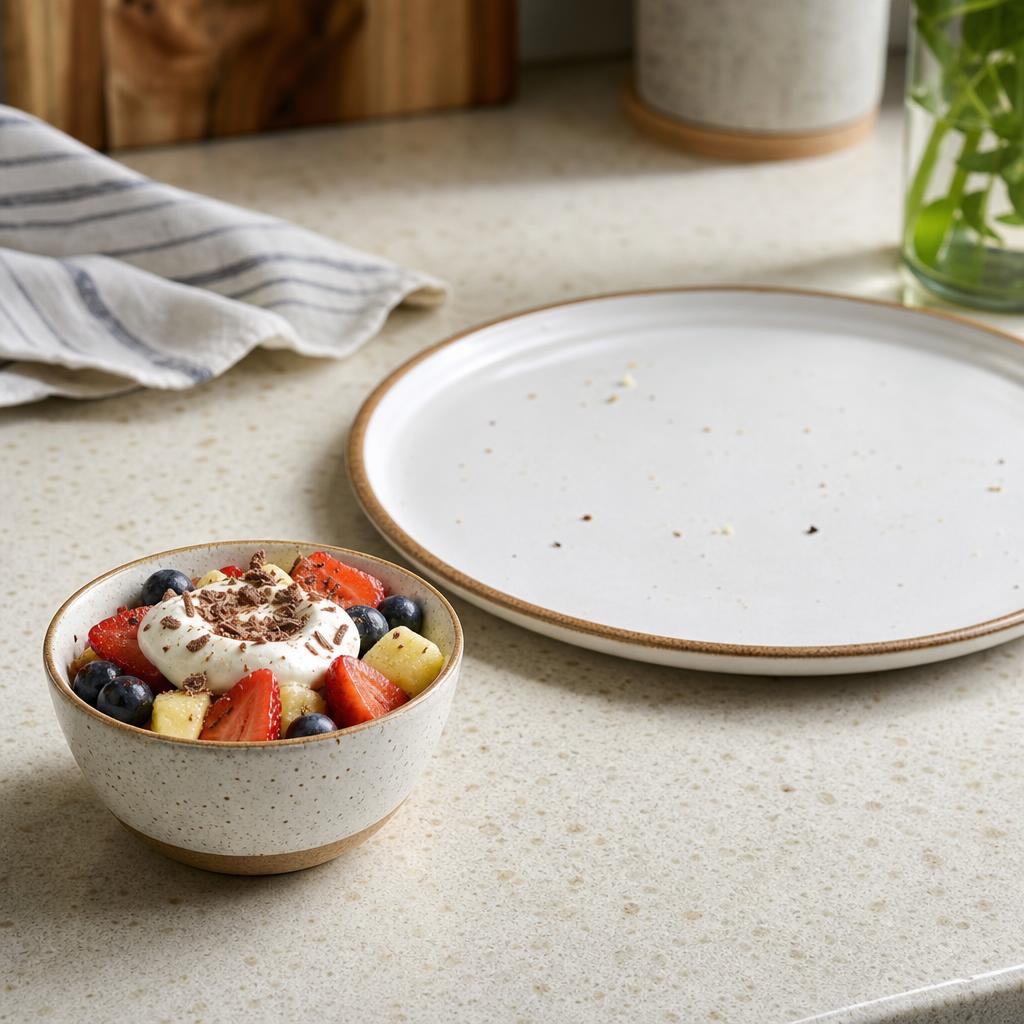
Vague dessert is where calories disappear. Clear dessert is much easier. Put it on a plate. Use a bowl if it is ice cream. Use a small fork or spoon if the serving is rich. If the dessert comes in a container, close the container before you take the first bite so there is a natural stopping point.
That is also why shared desserts work so well. Sharing creates a visible limit. You can say yes to the experience without pretending the whole thing is one portion. If you are at home, pre-portioning into two smaller servings is even better. One serving goes now. One goes later, or tomorrow, which usually feels better than eating until the container is empty.
The same idea works with dessert-style snacks. A few cookies on a plate are trackable. The bag in your hand is not. A dessert that is visible is a dessert you can manage.
Restaurant dessert deserves its own plan
At a restaurant, dessert can feel like part of the social script. Everyone is looking at the menu together, the meal was good, and saying no can feel oddly abrupt. You do not need to make it dramatic. You just need a default response.
Sharing is the cleanest move. If nobody wants to split, choose the dessert that is easiest to portion visually, like a slice, a scoop, or a smaller item rather than the biggest layered option on the menu. If the portions are huge, ask for a to-go box early and move half out of reach before the forks start moving fast.
It also helps to remember that dessert is optional even when it is tempting. If you know you already had a richer dinner, you can still enjoy coffee, tea, or just the conversation. That is not a failure. That is part of a calorie goal working in the real world instead of in a perfect spreadsheet.
Build a default dessert habit instead of a random one
People usually get into trouble when dessert is either forbidden or random. A better middle ground is a default pattern. Maybe dessert is for weekends only. Maybe it is a few nights a week. Maybe it is fruit and yogurt most days, with a richer sweet on nights out. The exact rule does not matter as much as the fact that the rule exists.
A default pattern helps because it removes surprise. If dessert is something you already expect sometimes, you can budget for it. That makes it easier to enjoy the moment without mentally turning every sweet bite into a moral debate. You are just following a pattern you chose.
There is also a softer benefit. When dessert becomes intentional, it feels more satisfying. You stop chasing random bites all night and start treating the sweet part of dinner as a real finish. That usually makes less food feel like enough.
How Calory helps with dessert tracking
Calory helps most when dessert is something you want to repeat, compare, or keep honest over time. You can save your common dessert picks, log them quickly, and see what actually fits your day instead of guessing every time a sweet option shows up.
That matters because dessert usually loses control through friction, not rebellion. If logging takes too long, you stop doing it. If portions are fuzzy, you undercount them. Calory makes it easier to keep dessert visible, which is the whole trick. Once the dessert is in the log, it stops being a surprise at the end of the day.
Frequently asked questions
Can I eat dessert every night and still lose weight?
Sometimes, yes, if the portion is small and the rest of the day fits your calorie target. The important part is the total, not whether dessert happens at all.
What if I always want seconds?
Pre-portion dessert into one serving and put the rest away before you start. If you still want more later, you can decide again, instead of eating on autopilot.
Is it better to skip dessert if I already ate out?
If the meal was already rich, skipping dessert can be the easiest choice. But if dessert matters to you, sharing or choosing a smaller portion is usually the better long-term move.
How do I stop dessert from turning into a binge?
Use a plate, use a portion, and use a decision before the first bite. The more visible the dessert is, the easier it is to stop when you meant to stop.