Potlucks can be genuinely nice, because there is usually more variety than a normal dinner and a little more freedom to build a plate you actually want. The problem is that the food is homemade, the serving spoons are different sizes, and no one is handing you a nutrition label. That makes it easy to undercount without meaning to.
The answer is not to act like the potluck is impossible. It is to stop treating every dish like a mystery. You do not need exact numbers for every casserole and salad. You need a practical estimate that is honest enough to keep your day on track.
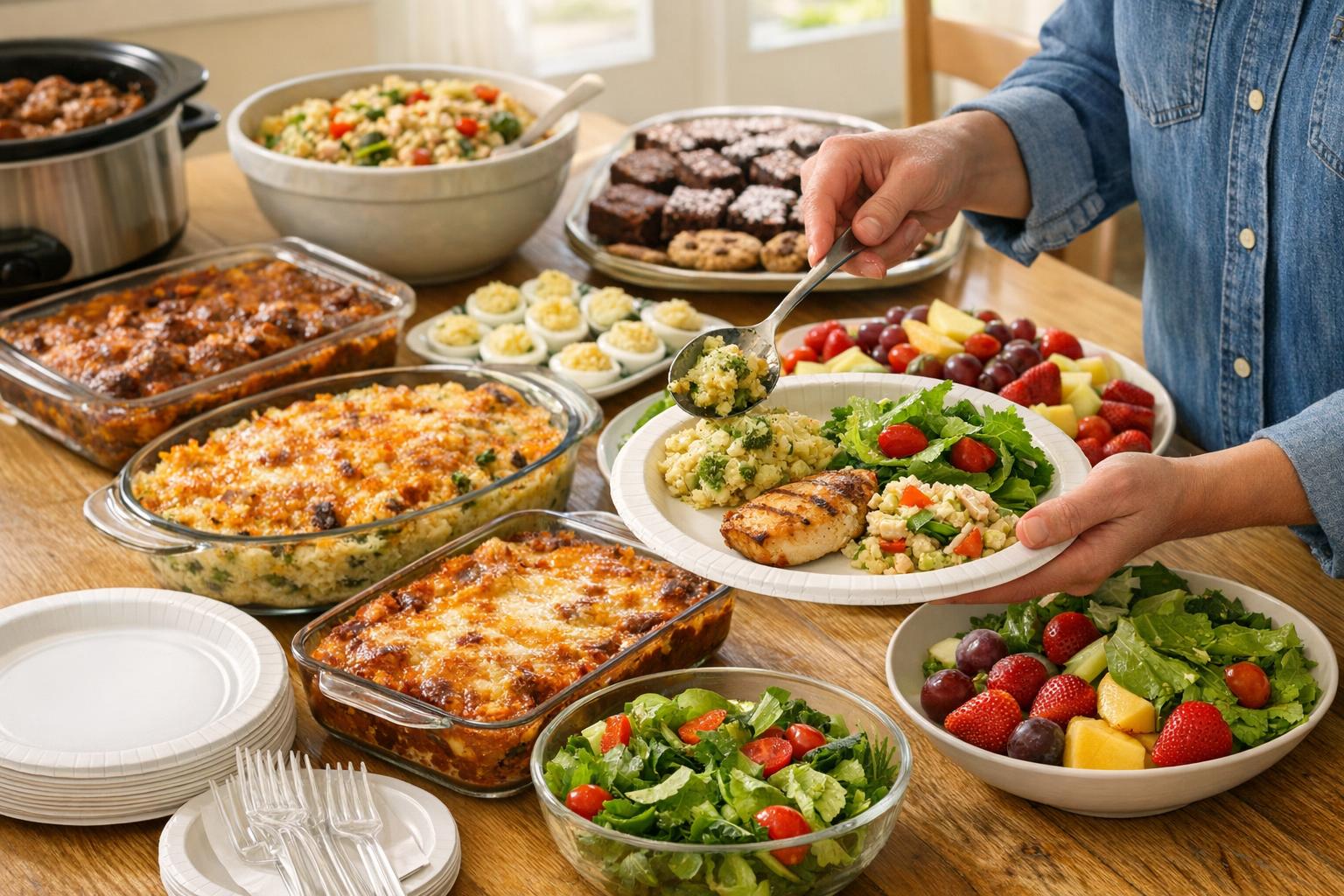
Start with one plate before you start socializing
The easiest way to stay in control at a potluck is to make the first plate on purpose. If you wander around talking first, it becomes much harder to notice how much you are eating. If you build the plate first, then sit down, you already have a stopping point.
A good plate usually has one protein, one vegetable or fruit, and one carb or richer side. That could look like chicken, salad, and a scoop of pasta salad. It could also be chili, cornbread, and fruit. The exact mix matters less than the idea that the plate has structure instead of becoming a random stack of samples.
If the table is packed with comfort food, do not try to win by being the person who eats the least. Just make the first plate a real plate, then decide if you still actually want more after you finish it. That is a much calmer way to eat than grazing while standing up.
Pick the big calorie drivers first
Not every dish at a potluck matters equally. A green salad with light dressing is not the same as creamy potato salad. A fruit tray is not the same as a frosted dessert bar. A simple grilled item is not the same as a casserole loaded with cheese and breadcrumbs.
When you estimate, start with the foods that are most likely to carry calories. Casseroles, mayo-based salads, bread, chips, dips, desserts, and drinks are usually the pieces that move the number the most. The vegetables and garnish matter, but they rarely change the total as much as the rich stuff does.
That is why vague but thoughtful tracking works better than pretending the meal is too messy to log. A plate with a generous spoon of pasta salad, a slice of lasagna, and a brownie is not a mystery. It is just a reasonably dense meal that deserves a reasonable estimate.
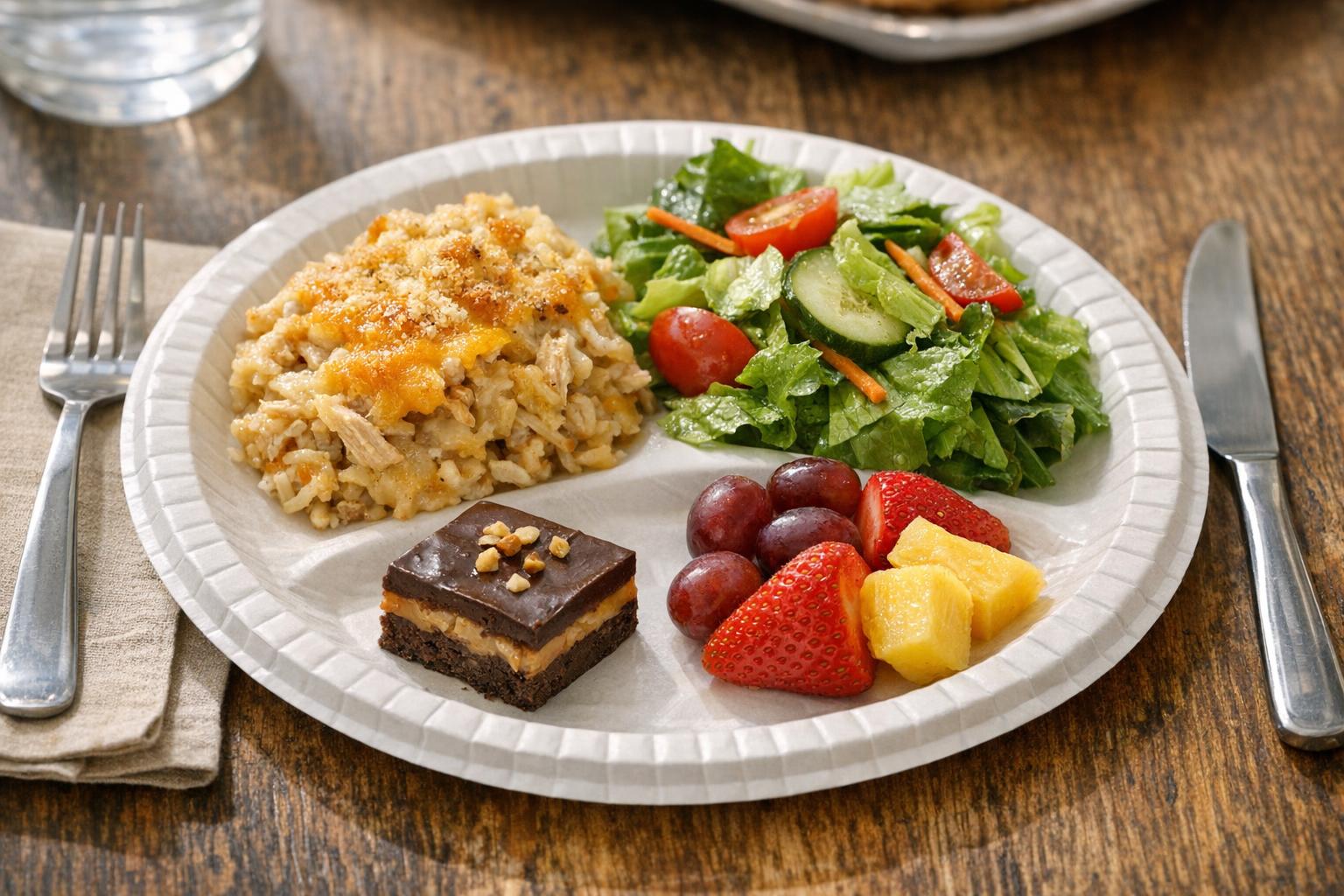
Estimate by category, not by ingredient list
One of the biggest mistakes people make with homemade food is trying to reverse engineer every ingredient. That sounds precise, but it usually turns into guesswork that is so annoying you do not finish the log at all.
Instead, estimate by category. A scoop of macaroni salad is a scoop of macaroni salad. A slice of lasagna is a slice of lasagna. A spoonful of creamy casserole is a spoonful of creamy casserole. You can keep the estimate rough and still be much closer to reality than if you count nothing.
If you want a simple rule, think in ranges. Light items can stay lower, richer items should move higher, and desserts should usually be logged honestly instead of wishfully. If you are unsure, do not try to talk yourself down. Use the estimate that best matches what is actually on the plate.
Handle dessert and drinks on purpose
Potlucks often go off the rails because dessert and drinks get treated like background noise. They are not background noise. Soda, sweet tea, punch, beer, wine, cake, cookies, and bars can add up fast, especially when the main plate already had plenty of calories.
A cleaner approach is to choose one fun thing. Maybe you want the dessert. Maybe you want a drink. Maybe you want both, but then keep the main plate a little simpler. The point is not to ban the good stuff. The point is to keep the meal from becoming a pile of unrelated extras.
That tradeoff matters because potlucks often have a “just one more thing” rhythm. One more roll, one more slice, one more sample spoon. Once you notice that pattern, it gets much easier to stop before the meal becomes three meals.
What to log in Calory when the recipe is homemade
When the recipe is homemade, you do not need to be perfect. You need to be consistent. If a dish looks like a creamy pasta casserole, log it like a creamy pasta casserole. If it looks like a lighter pasta salad, log it like that instead. The goal is to match the food in front of you, not to impress anyone with a spreadsheet.
If the same family or office potluck happens again, save the meal in Calory. Repeat events are where the app really saves time. Once you have a rough entry for the chicken casserole plate, the fruit, and the brownie, you can reuse it next time and make a small adjustment only if the portion changed.
That is where the habit becomes useful. You stop starting from scratch every time and start building a small library of real-world meals that already reflect your actual life.
How Calory helps at potlucks
Calory is useful here because potluck meals are repetitive in a sneaky way. The setting changes, but the patterns do not. There is usually one rich side, one salad, one main dish, one dessert, and maybe a drink. Saving those combinations makes the next event faster and less stressful.
Instead of debating the whole plate in your head later, you can log a reasonable estimate right away and move on. That keeps the day from turning into a guessing game, which is really the whole point.