Brunch buffets look easy at first glance. There is a little of everything, the serving trays are tidy, and the atmosphere makes the whole thing feel more relaxed than a normal restaurant meal. That relaxed feeling is exactly why brunch can get out of hand so fast. You can have eggs, potatoes, fruit, pancakes, bacon, toast, pastries, coffee, and a drink without ever feeling like you had a huge meal. Then the calorie total tells a different story.
The goal is not to skip brunch. The goal is to eat it on purpose. When you decide what your plate is supposed to be before you start scooping, brunch becomes much easier to track and a lot less sneaky.
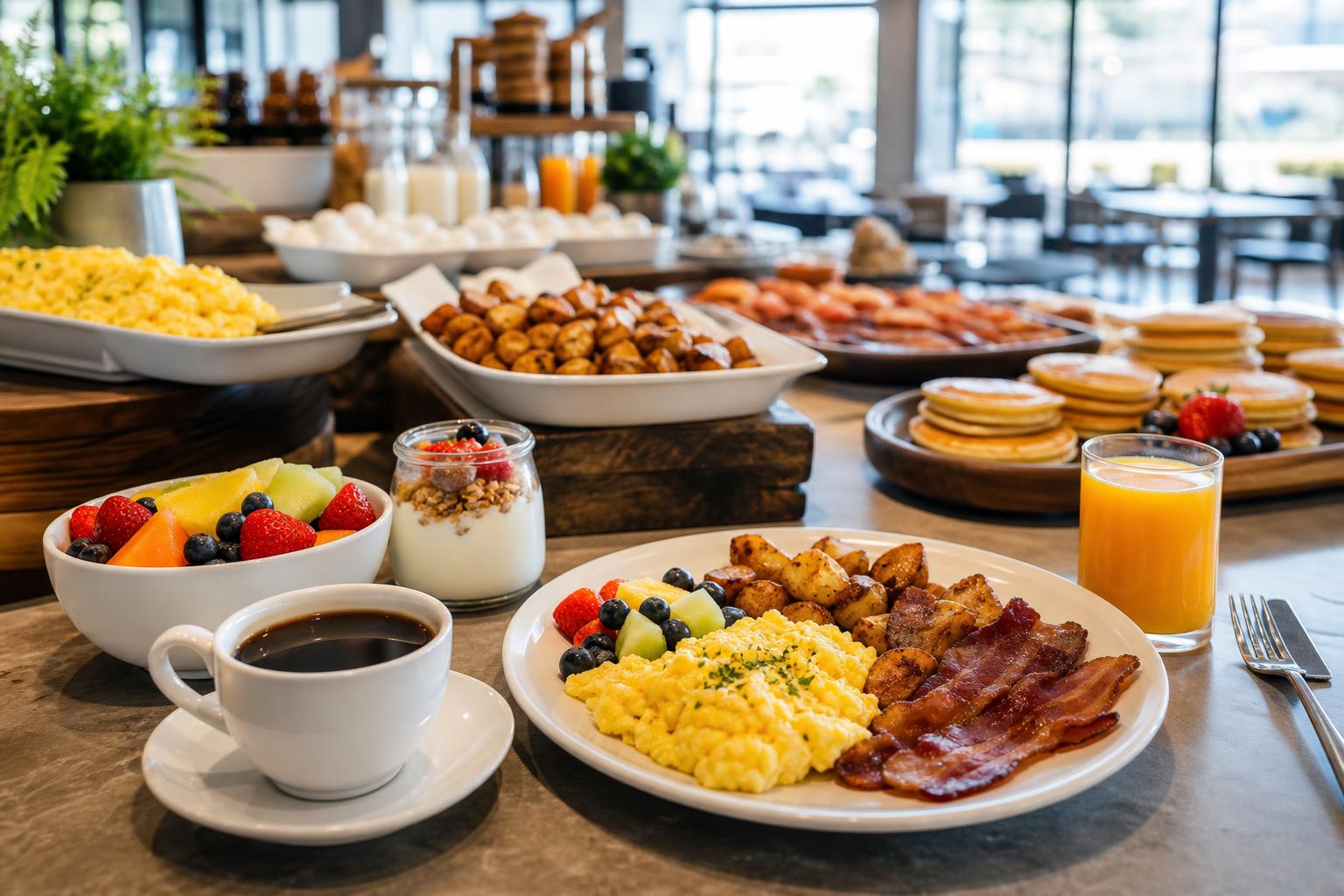
Make one real plate first
The simplest brunch rule is also the most effective. Build one real plate and sit down with it before you go back for anything else. That stops the buffet from turning into a moving target where every little bite feels harmless.
Before you fill the plate, decide whether you want a breakfast-style plate or a lunch-style plate. A breakfast plate might be eggs, potatoes, fruit, and toast. A lunch-style plate might be eggs, salad, smoked salmon, roasted vegetables, and one pastry. Either choice works. The problem is mixing three different versions of brunch and calling it one meal.
Once the first plate is done, ask yourself whether you still want more food or whether you only want the mood of more food. That question saves a lot of calories.
Build around protein, then add the extras you actually want
Eggs, Greek yogurt, cottage cheese, smoked salmon, turkey sausage, ham, and other proteins usually make brunch feel more balanced. Start there. Protein gives the plate structure and keeps the estimate more honest because it is easier to see what the meal actually contains.
After protein, add one carb item and one produce item if you want them. That might be potatoes and fruit. Or toast and berries. Or pancakes and eggs if you really want the sweeter route. The point is to choose a lane instead of grabbing every carb on the table.
If you are still hungry after the plate, add more protein first. That is usually a better second step than reaching for another pastry or another pile of potatoes.
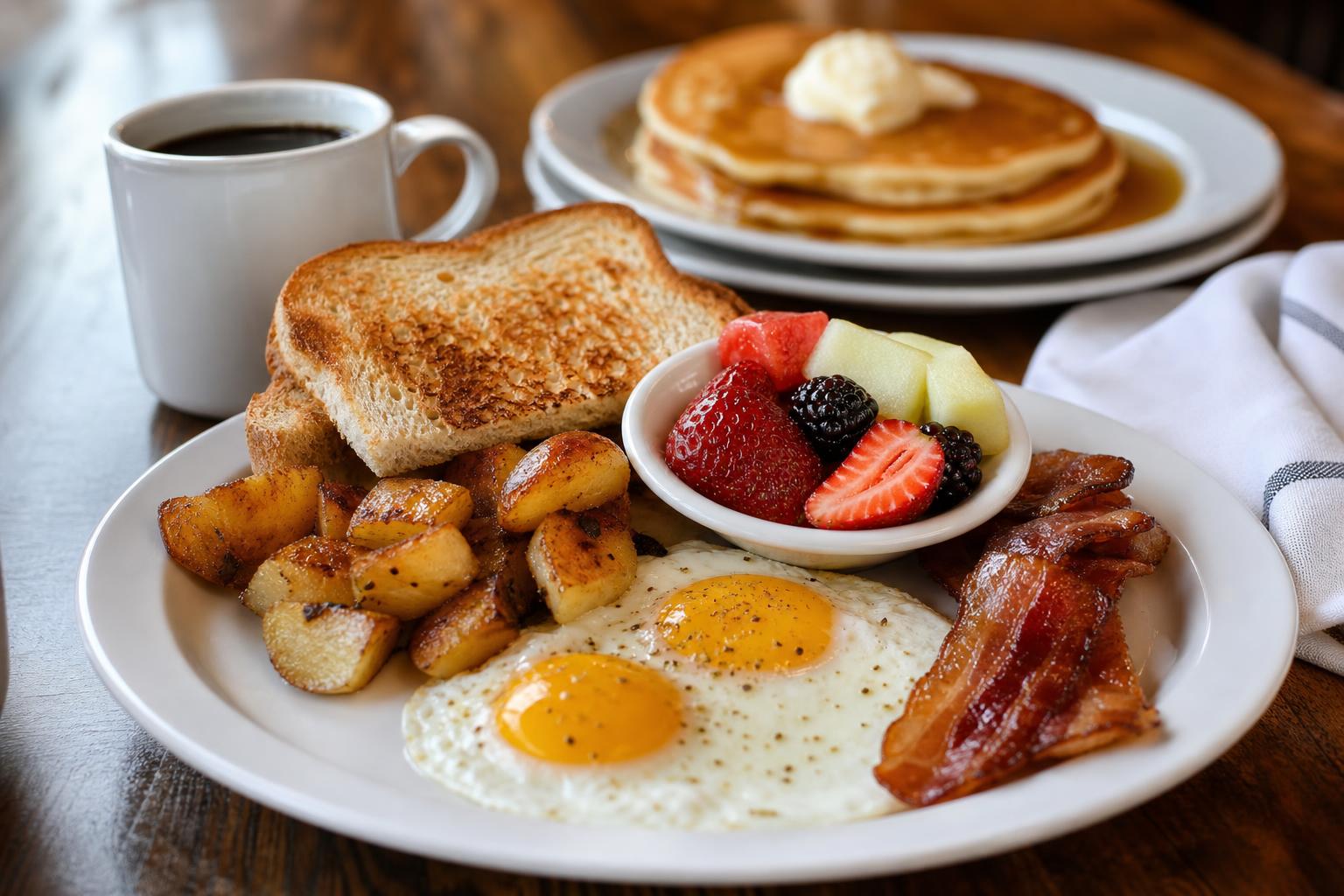
Handle pancakes, waffles, and pastries on purpose
Pancakes, waffles, muffins, croissants, cinnamon rolls, and Danish pastries are the easiest brunch foods to underestimate because they feel like weekend comfort food rather than a calorie decision. But they are dense, and the portions are usually larger than people think. A single pancake stack with syrup can easily become the biggest item on the plate.
The cleanest approach is to treat sweet items as a real choice, not a side quest. If you want pancakes, take pancakes and enjoy them. If you do not, skip them and put the space toward eggs, fruit, or another protein. That keeps the meal both more satisfying and easier to log.
If you want both sweet and savory, keep the portions small on both sides. One pancake instead of three. One small pastry instead of a pastry plus toast plus potatoes. That balance usually feels better than trying to taste everything.
Deal with coffee drinks, juice, and mimosas honestly
Drinks are the sneaky part of brunch because they do not look like a meal. But the drink station can add a lot of calories quickly. A latte, sweetened iced coffee, juice, and a mimosa are not the same thing as water or black coffee.
If you want a lighter brunch, start with water and black coffee. If you want a richer brunch, count the drink like part of the meal. The same logic applies to cream, sugar, flavored syrups, and extra pours. None of those are bad. They just need to be logged like the calories they are.
When the drink is the splurge, keep the food simpler. When the food is the splurge, keep the drink simpler. That tradeoff is usually enough to stop brunch from becoming an all-day calorie surprise.
Make one default brunch combo you can reuse
If you go to brunch often, save a default brunch combo in Calory. Maybe your usual is two eggs, potatoes, fruit, coffee, and one pancake. Maybe it is eggs, smoked salmon, toast, and a latte. Maybe it is yogurt, berries, a muffin, and water. Having a default takes the guesswork out of the next brunch before you even sit down.
This is especially helpful at hotel breakfasts, family brunches, and neighborhood spots where the buffet or menu is basically the same every time. Reusing the same estimate beats rethinking the same meal from scratch every weekend.
When the buffet is vague, estimate from the ingredients
Sometimes brunch dishes are labeled with cute names that do not say much. House potatoes. Weekend scramble. Garden tray. Bakery basket. That is not a calorie estimate. That is a vibe.
When the labels are vague, look at the ingredients and the cooking method. Creamy, cheesy, buttery, fried, or oil-heavy foods should be estimated higher. Fresh fruit, plain yogurt, eggs, and lean proteins are easier to keep moderate. Bread-heavy dishes usually sit somewhere in the middle unless they are drenched in butter or sauce.
If the meal looked richer than the label sounded, trust the food more than the menu wording. That one habit prevents a lot of accidental undercounting.
How Calory helps
Calory makes brunch easier to repeat. Save the brunch plate you actually eat, then pull it up the next time you face the same buffet or a similar menu. That keeps the estimate fast and realistic.
Brunch is supposed to feel easy. Logging it should feel easy too.