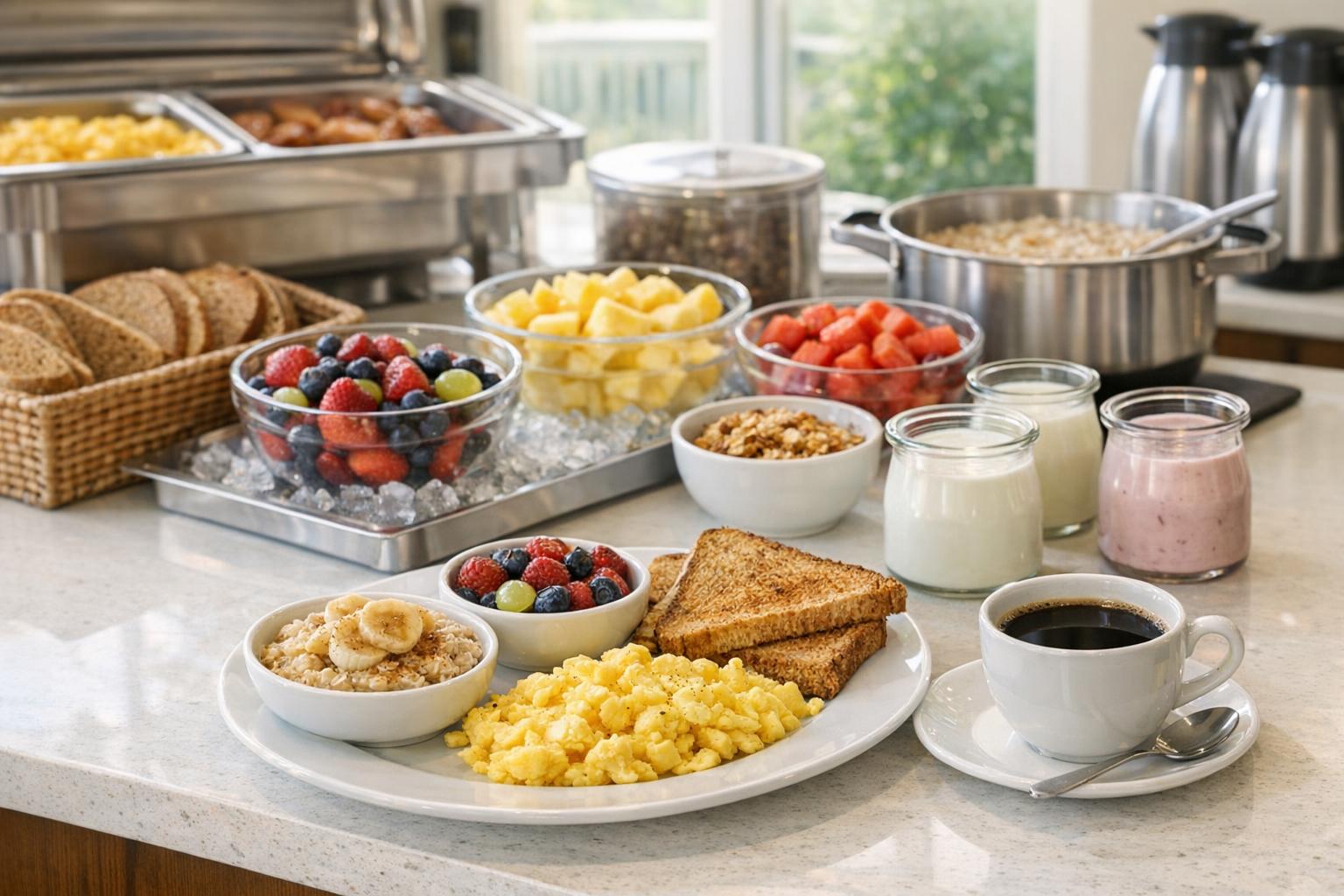
Hotel breakfast feels harmless because it is built into the trip. You walk downstairs half awake, see eggs, fruit, pastries, coffee, and maybe a waffle station, and it looks like a free meal. The problem is that “free” usually means “easy to overdo.” A few small choices can stack up fast before you even reach lunch.
The fix is not to avoid breakfast altogether. The fix is to give the buffet a simple job. Pick one real plate, keep the calories you actually care about in view, and stop the meal from becoming a random sampler of everything on the counter.
Why hotel breakfasts get expensive so fast
Hotel breakfasts are tricky because they are designed to feel abundant. The buffet is wide, the portions are not obvious, and everything is ready to eat. That combination makes it very easy to grab one pastry, then a second thing because you are still hungry, then juice or a flavored coffee because it feels like part of the experience.
Another issue is that the meal happens early, when people are least likely to be paying close attention. You may not be fully awake yet, and the food is right there. That means the breakfast decision is often made with almost no planning, which is exactly when calories start slipping by without notice.
If you want the day to stay on track, the answer is not a tiny sad plate. The answer is a plate with a few intentional choices that actually hold you through the morning.
Build the plate around protein first
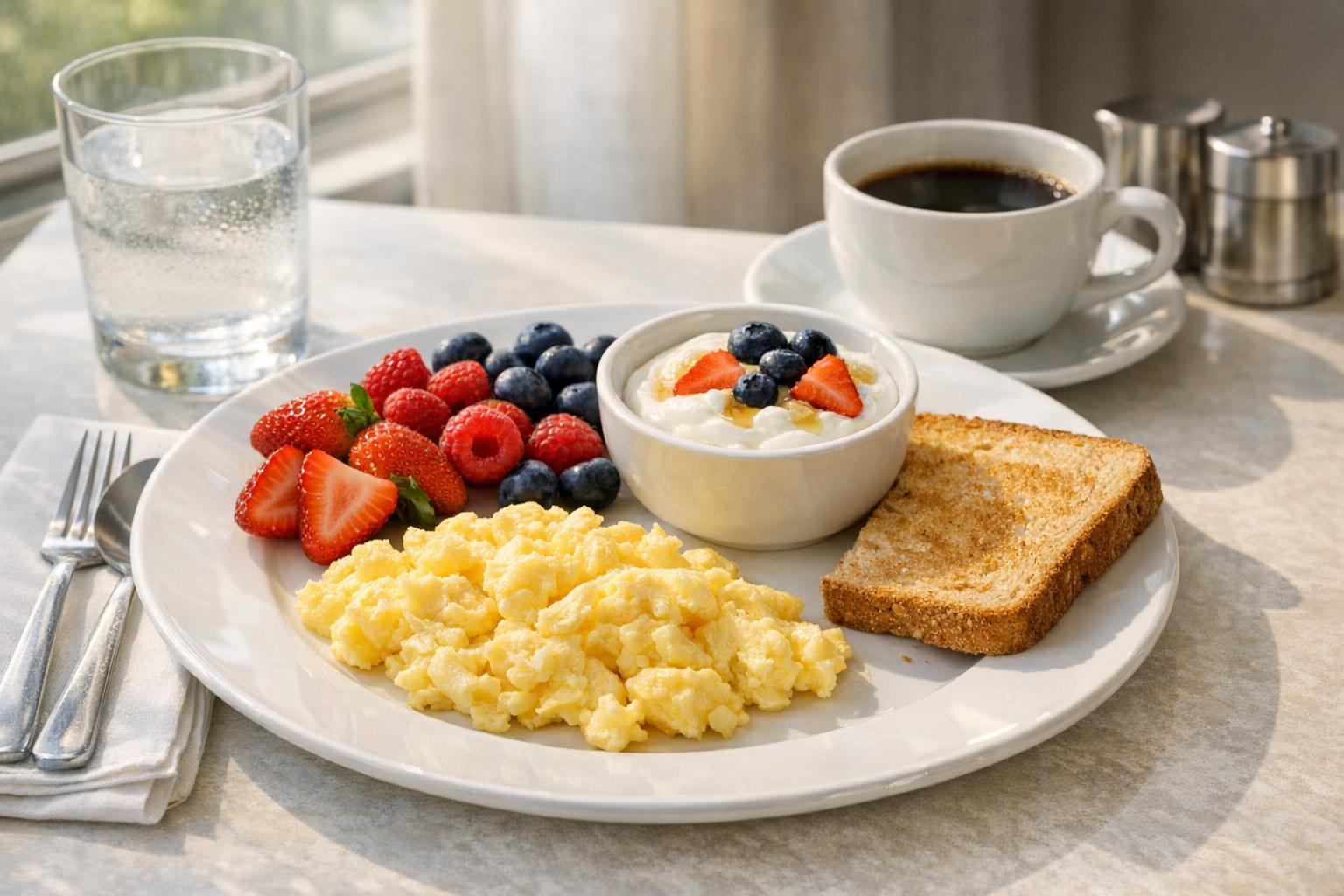
Protein is the easiest anchor because it helps the meal feel like breakfast instead of dessert. Eggs, Greek yogurt, cottage cheese, turkey sausage, smoked salmon, or a simple breakfast sandwich can give the meal structure. Once that is on the plate, it gets easier to decide what else deserves space.
After protein, add something with volume. Fruit, oatmeal, or a little toast can make the meal feel complete without turning it into a sugar-heavy tray. That combo usually beats a plate of pastries because it keeps you satisfied longer and makes the calorie estimate more predictable.
If the buffet has a waffle station, that does not mean waffles are forbidden. It just means they should be a choice, not a reflex. If waffles are the fun item, keep the rest of the plate simpler. A hotel breakfast gets easier when the treat is obvious instead of hidden inside five separate extras.
Choose one extra, not three little ones
The fastest way to blow a hotel breakfast is to think in small items instead of meals. A muffin sounds harmless. So does juice. So does a handful of potatoes. So does a second cup of coffee with cream. None of those choices feels like a lot until they are all on the same receipt.
One good rule helps: pick one extra that makes breakfast feel worth it, then keep the rest basic. Maybe the extra is a pastry. Maybe it is syrup on the waffle. Maybe it is a latte. But if you already took the pastry, make the drink simpler. If the drink is the fun part, keep the food more grounded. That tradeoff keeps the day from turning into a blur of bonus calories.
This also makes the meal more satisfying. People usually enjoy one deliberate treat more than three half-choice add-ons they barely notice. There is a lot less regret when the splurge is visible.
Log it honestly even if the buffet is fuzzy
Hotel breakfast calories are often hard to estimate exactly, and that is okay. You do not need perfect numbers to stay on track. You just need a number that reflects what was actually on the plate.
Start with the biggest drivers. Eggs, toast, pastries, waffles, syrup, juice, cheese, butter, and spreads matter more than a perfect ingredient list. If the plate was modest, keep the estimate modest. If the plate was generous or had a lot of extras, move the number up. The goal is to avoid undercounting just because the food came from a buffet.
If the same hotel breakfast happens more than once on a trip, save it in Calory. Repeat estimates are where a good app really helps. Instead of rebuilding the meal every morning, you can reuse the same entry and make a small adjustment if the plate changed.
Do not overcorrect later in the day
A common mistake is treating a bigger breakfast like a reason to skip lunch and then getting overly hungry at dinner. That usually backfires. You start trying to “make up for it,” and by evening you are tired, hungry, and much more likely to choose whatever is easiest.
A better move is to keep the rest of the day normal. If breakfast was bigger than planned, make lunch simple instead of tiny. A lighter sandwich, salad, or protein-forward snack is usually enough. That keeps the whole day stable without turning it into a punishment cycle.
Consistency beats drama here. A slightly bigger breakfast is not a failure. It is just one meal. The rest of the day still matters.
How Calory helps on hotel trips
Calory is most useful when you already know the pattern. If you keep ordering a hotel plate with eggs, yogurt, toast, and coffee, save that combo once and reuse it. If you always add a pastry on conference mornings, save that version too. Then the breakfast is faster to log and easier to compare across trips.
That matters because hotel routines are often repetitive. Same breakfast room. Same coffee. Same grab-and-go choices. Once those meals are stored, your decisions get easier and more realistic. You are no longer guessing from scratch every morning, which is where a lot of sloppy tracking starts.
FAQ
What is the easiest way to handle hotel breakfast calories?
Start with protein first, add fruit or another high-volume food, and choose only one extra treat so the meal stays satisfying without getting sloppy.
Should I skip breakfast if the hotel buffet looks huge?
Usually no. A planned breakfast is easier to control than getting overly hungry and reacting later with random snacks or a giant lunch.
How do I log a hotel breakfast when the calories are fuzzy?
Estimate by the biggest calorie drivers first. Eggs, pastries, toast, juice, syrup, cheese, and spreads matter more than a perfect ingredient list.
How can Calory help on hotel trips?
Calory lets you save repeat breakfast combinations and reuse rough estimates, which makes the day faster to log and easier to keep honest.