Travel days are tricky because your routine gets stripped down to the parts that are easiest to overdo. You are tired, hungry, rushed, and surrounded by food that was built for convenience, not fullness. Airports, gas stations, hotel breakfasts, and roadside stops all make it easy to eat more calories than you meant to eat.
The fix is not to white-knuckle the whole trip. The fix is to give travel days a simple food plan before you leave. Once you know what your anchor meal is, what your backup snack is, and where the calories usually hide, you can stay close to your goal without making the trip feel miserable.
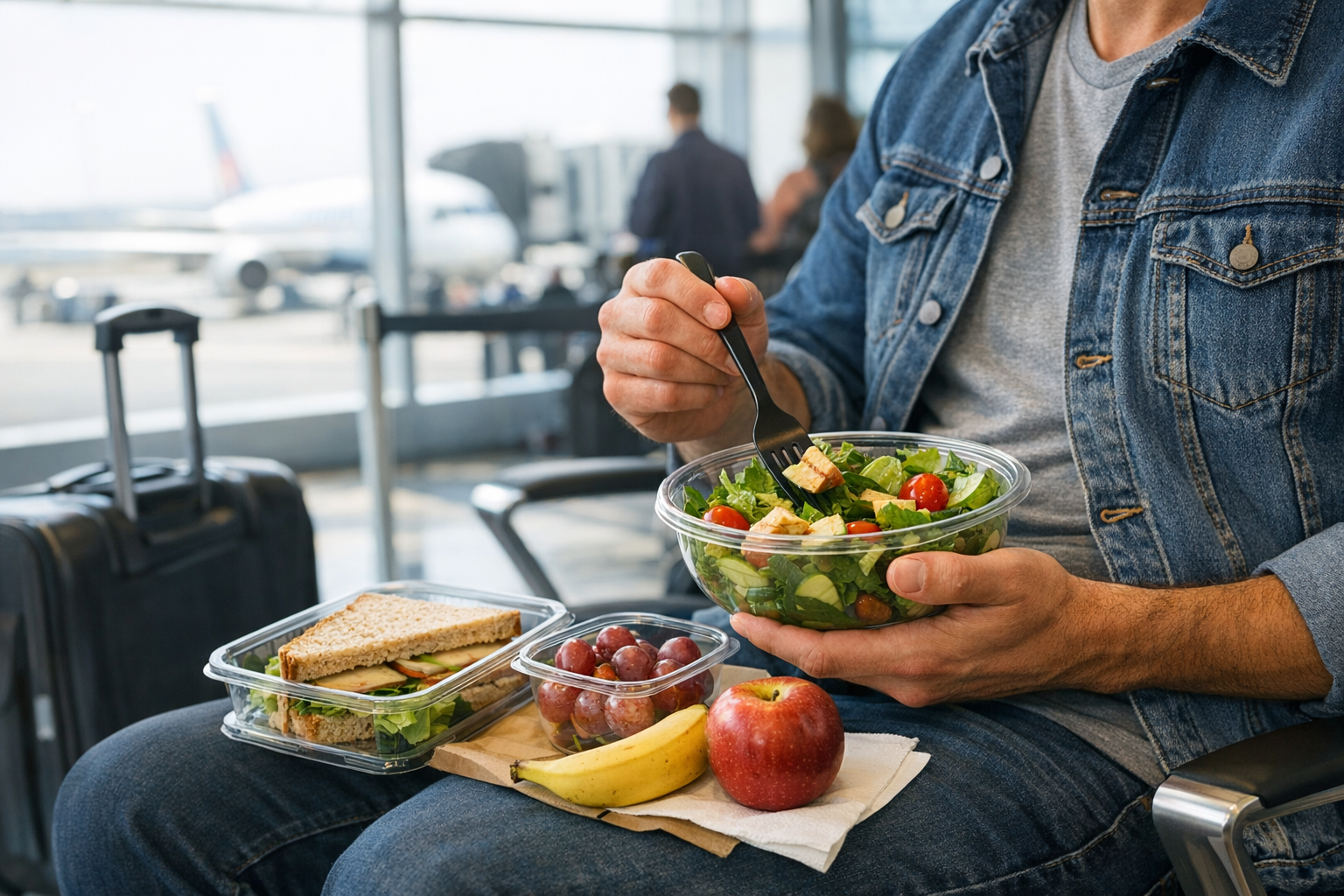
Why travel days are easy to underestimate
Travel food usually looks harmless because it arrives in small packages or in a hurry. A muffin on the way out the door, a coffee drink at the terminal, a bag of chips at the gas station, a sandwich before boarding, then one more snack because the delay was longer than expected. None of those choices feels huge on its own. Together, they can quietly turn a normal day into a much higher calorie day.
The other problem is decision fatigue. When you are traveling, every choice costs more energy. If you do not already know what you are going to eat, you will probably choose whatever is fastest, most visible, or most comforting. That is exactly how calorie tracking gets fuzzy.
So the goal is not perfect control. The goal is a few repeatable rules that make the day predictable enough to manage.
Build a travel-day default before you leave
Most people try to solve travel eating once they are already hungry. That is too late. It works better to decide in advance what the day looks like. A simple travel-day default usually has three parts: one anchor meal, one backup snack, and one drink plan.
- Anchor meal: a real meal with protein, some fiber, and enough volume to keep you full.
- Backup snack: something portioned that prevents a panic purchase later.
- Drink plan: water or zero calorie drinks first, then calories only when you actually want them.
If you know the trip will be long, start with the meal that matters most. For example, if you are facing an early airport departure, make breakfast or lunch the one meal you plan on purpose. That one decision can save you from five smaller impulse choices later.
Airport food: pick one real meal, not five snacks
Airports are built for grazing. The problem is that snacks are rarely satisfying enough to carry you through a delay. A protein bar, a pastry, and a latte may sound reasonable until you realize you are still hungry and already halfway to lunch calories.
When you can, choose one real meal at the airport. A sandwich with protein, a salad with chicken, a burrito bowl, sushi, or even a breakfast sandwich plus fruit is usually easier to track than a trail of tiny purchases. A real meal gives you a better calorie anchor and makes the rest of the day more predictable.
If you must snack, try to make the snack intentional. Pick one item that has some protein or fiber, not just a bag of chips plus a sweet drink. The combo matters more than the label on the package.
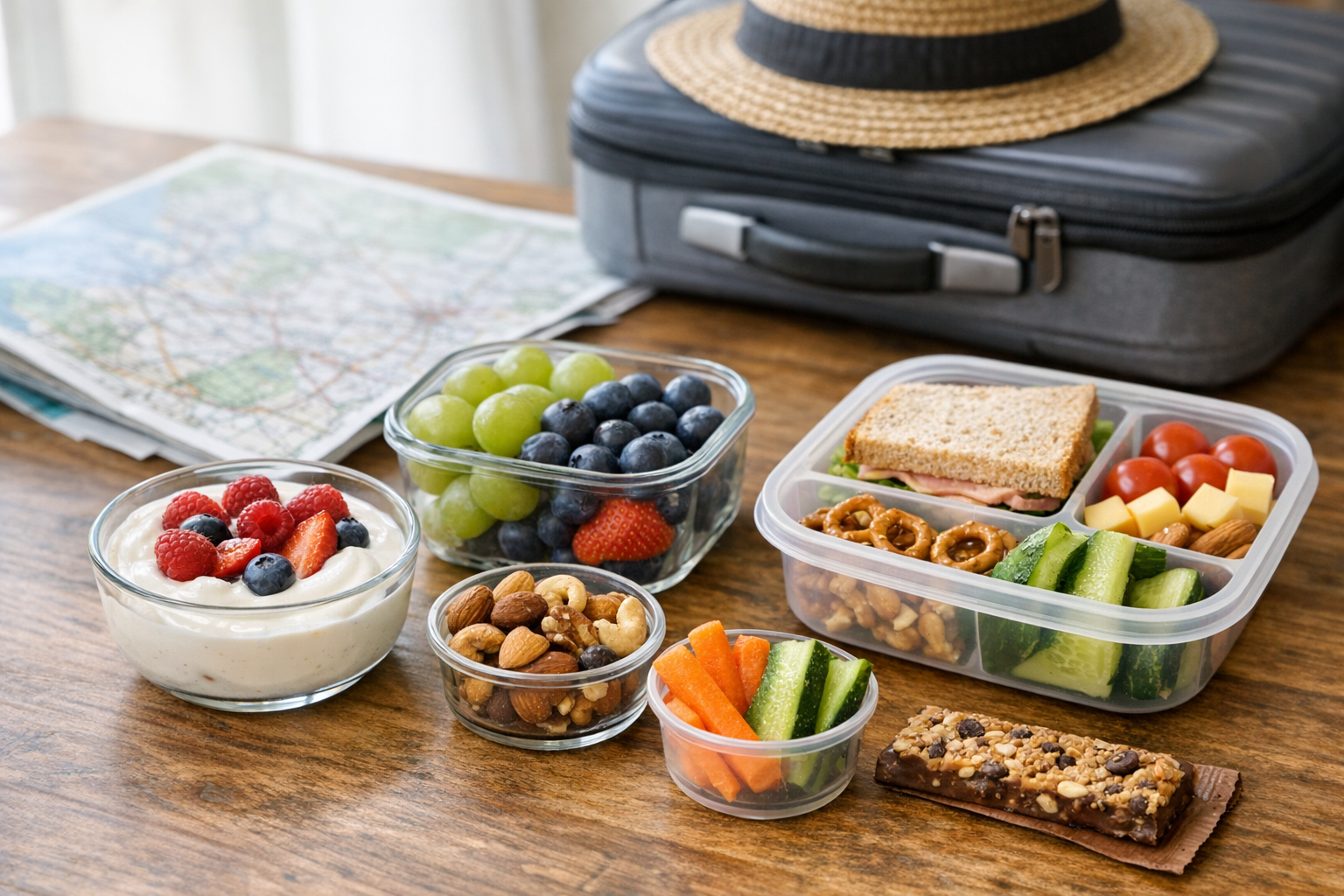
Road trips and gas stations need a different rule
Road trip food is dangerous for a different reason. It is easy to keep eating because the drive is long and the stops are repetitive. A gas station snack can feel tiny in the moment, but it is often calorie dense and not very filling. That means you can keep stacking purchases without ever feeling fully satisfied.
The smarter move is to choose one of two patterns. Either pack a real meal and a couple of planned snacks, or decide in advance that the gas station stop is only for one item. If you already know you are getting a sandwich, skip the cookies. If you already know you are getting a protein snack and fruit, skip the chips and candy case.
Packable foods usually win here: jerky, fruit, yogurt, nuts in a measured portion, hard boiled eggs, protein shakes, cheese sticks, or a simple wrap. The point is to stop treating every stop as a fresh food emergency.
Hotel breakfast is a buffet in disguise
Hotel breakfasts feel free because they are included, but they can quietly turn into a lot of calories. The pastries are easy to reach, the juice goes down fast, and the waffle machine makes it simple to build a breakfast that is mostly starch and sugar. That is a rough combination if you want steady energy and a reasonable calorie count.
A better hotel breakfast usually starts with protein first. Eggs, yogurt, cottage cheese, turkey sausage, or a breakfast sandwich can keep the meal grounded. Then add fruit or another higher volume food so you do not leave still hungry. If you want a pastry, make it the side dish, not the foundation of the meal.
One practical rule helps a lot: pick one sweet item or one liquid calorie, not both. So if you are having juice or a sweet coffee drink, skip the pastry. If you want the pastry, make the drink zero calorie. That alone can save a surprising amount of space in the day.
Use a range when the calorie count is fuzzy
Travel food is often impossible to log with precision, and that is fine. You do not need the exact calories of a terminal sandwich to make a good decision. You just need a range that is honest enough to keep you on track.
If a travel meal could reasonably be 450 or 700 calories, log the number that better matches the portion and the extras. Was there sauce, cheese, or a big drink? That pushes the estimate up. Was it a plain sandwich, fruit, and water? That keeps it lower. The point is to use the clues in front of you instead of the number you wish was true.
That kind of estimating is not lazy. It is realistic. The best calorie tracking system is the one you can actually repeat when you are tired and out of routine.
Make Calory work for travel days
Calory helps most when you already know your common travel patterns. If you always grab the same airport breakfast sandwich, the same gas station snack box, or the same hotel breakfast combo, save those meals so you can reuse them later. That turns a stressful day into a familiar one.
It also helps to save a few fallback meals that are easy to log. A protein-forward snack, a simple deli sandwich, a wrap with fruit, or a salad with chicken can all become practical defaults. Once those entries exist, you do not have to rebuild the whole day from scratch every time you leave town.
That is the real win. Travel will always be a little messy. Calory just keeps the mess from turning into a calorie free-for-all.
FAQ
What is the easiest way to handle calories on a travel day?
Pick one anchor meal before you leave, keep one backup snack, and avoid turning every stop into a separate food decision. That makes the day much easier to track.
Should I skip meals to save calories while traveling?
Usually no. Skipping meals often leads to overeating later, especially when you are tired and surrounded by convenience food. A planned meal is usually better than a desperate one.
How do I log airport or hotel breakfast when I do not know the exact calories?
Estimate the meal by the biggest drivers first. Protein, starch, sauces, pastries, drinks, and extras matter more than a perfect ingredient list. Use the higher end if the portion was generous.
How can Calory help on trips?
Calory lets you save repeat travel meals and reuse rough estimates, so you are not rebuilding every log from zero every time you leave town.