Catered office lunch is one of those meals that looks easy until you are standing in front of a long tray line with a plate in your hand. The food is familiar, the portions are uncertain, and the pressure is low enough that it is easy to scoop a little extra of everything. By the time you sit down, the meal may look normal, but the calorie total can be a lot higher than it first seemed.
The trick is to treat office lunch like a meal with separate parts, not one vague event. Count the protein, the starch, the sauces, the drinks, and the dessert separately. Once you do that, catered lunch becomes much easier to track without making the workday feel like a food audit.

Start with the plate, not the tray
The tray line can be misleading because it makes every option look small and harmless. A spoonful of rice does not look like much. A scoop of chicken does not look like much. A ladle of sauce does not look like much. On the plate, though, all of those choices add up fast. The first move is to focus on what actually went onto your plate, not what was available in the room.
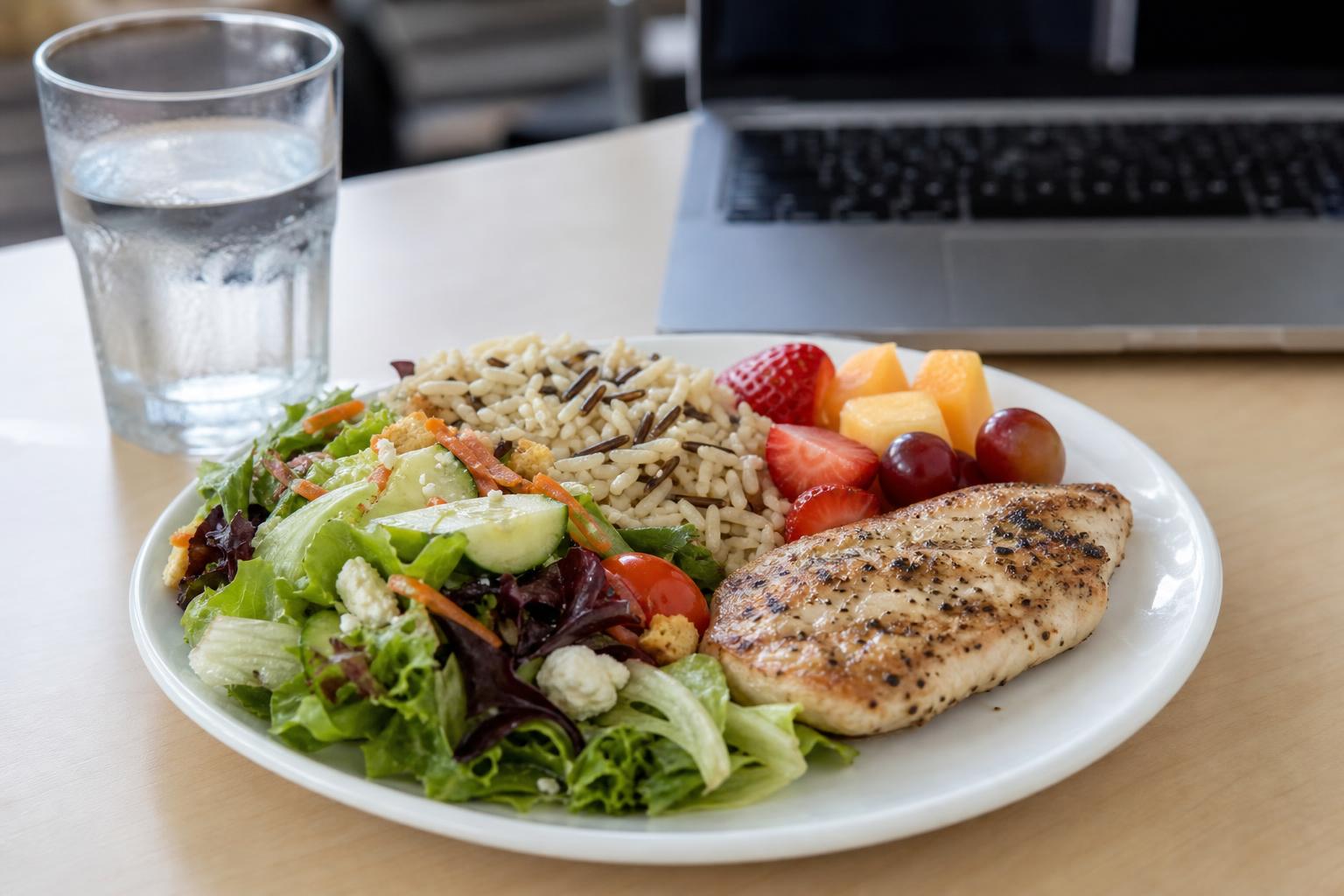
If the lunch had a clear protein, a starch, a vegetable, and a sauce, that is already enough detail for a solid estimate. The exact chef recipe is less important than the shape of the meal. A grilled protein with salad and fruit is a very different guess from a creamy pasta tray with garlic bread and dessert bars.
When you are in doubt, use the plate as your anchor and move through the meal one piece at a time.
Watch for portion creep at the buffet line
Office catering quietly encourages portion creep because there is usually no reason to stop at the first scoop. The line is right there, the food is free, and the servings are usually generous enough that a second spoonful feels harmless. That is how a sensible lunch becomes a bigger lunch without anyone really deciding to make it bigger.
One useful habit is to build the plate once, then step away. If you want a second item, ask whether it is actually worth the extra calories or whether it is just there because it is easy to reach. That pause matters. It does not have to be dramatic. It just gives you a chance to notice whether the extra bread, extra rice, or extra cookie is solving a hunger problem or just a habit problem.
Smaller plates also help. Not because they are magical, but because they keep the meal from spreading out until it looks lighter than it really is.
Build a default office lunch estimate
If your workplace does catered lunch often, the easiest solution is to build a default estimate you can reuse. You do not need a perfect company-wide number. You just need a practical baseline for the kind of plate you usually take. One default for grilled protein and salad. One for sandwich trays. One for pasta or rice bowls. One for dessert-heavy days.
That saves a lot of mental energy. Instead of solving the same lunch from scratch every week, you just start with your usual estimate and tweak it for what changed. More sauce than usual. Bigger portion than usual. No dessert this time. That kind of reuse is exactly what makes Calory useful in real life.
Once the default exists, logging office lunch takes seconds instead of fifteen minutes of guesswork.
Make office lunch repeatable
The best office lunch plan is the one you can repeat on a tired Tuesday. Maybe that means choosing mostly protein and vegetables. Maybe it means taking one starch and skipping dessert. Maybe it means saving a few favorite catered meal estimates in Calory so you can tap the same lunch again next time.
Repeatability matters because work lunches are rarely about one perfect day. They are about many normal days. If you can keep office lunch roughly predictable, the rest of the week gets easier. You do not need to eat like a robot. You just need enough structure that catered lunch does not quietly erase the progress you made earlier in the day.
That is the whole point. Office catering can still be enjoyable, but it should not be mysterious.
FAQ
What is the easiest way to estimate a catered office lunch?
Start with the main plate, then add the hidden extras separately. Protein, starch, dressing, bread, dessert, and drinks usually explain most of the calories.
Should I treat buffet-style office lunch like a restaurant meal?
Usually yes, or at least close to it. If the portions were generous or the meal was rich, do not log it like a tiny home lunch.
How do I avoid undercounting when the menu is vague?
Use the look of the food, not the marketing name. Creamy, cheesy, fried, oily, and bread-heavy meals deserve higher estimates than simple grilled plates.
How can Calory help with office catering?
Calory lets you save a default estimate for the kinds of lunch plates you see most often, so you can log catered meals quickly and move on with your day.