Pizza night with friends is easy to love because nobody needs a menu debate or a complicated plan. Someone orders a few pies, a couple of drinks land on the table, and everybody relaxes. That relaxed setup is also why pizza night can become a calorie trap. The food comes in slices, which makes it feel manageable, but the calorie total can climb quickly once you add crust, cheese, drinks, dipping sauce, wings, and whatever else showed up with the order.
The goal is not to make pizza night smaller or less fun. It is to make it predictable enough that you can enjoy it and still know what you ate.
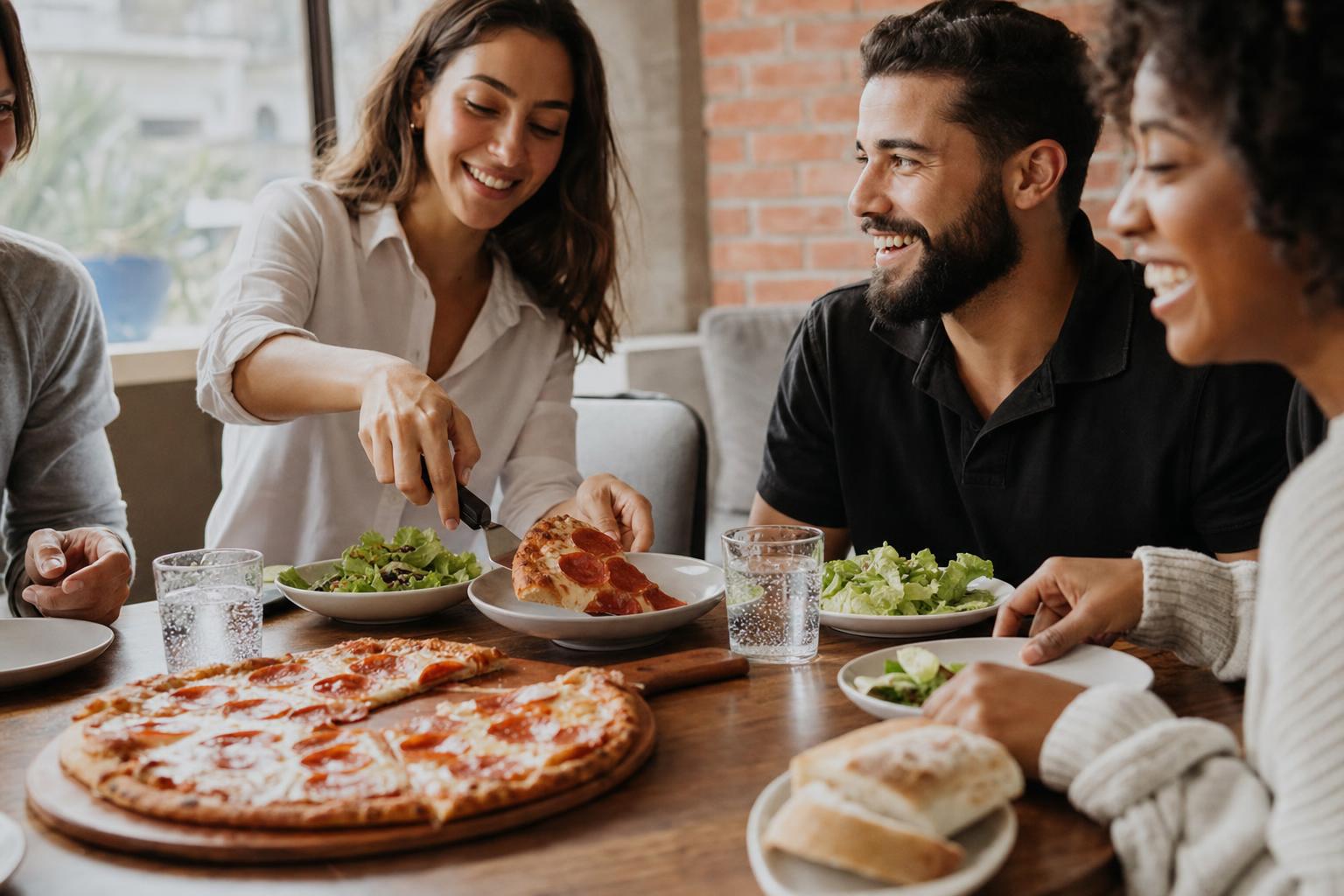
Pick your slice plan before the box opens
The easiest mistake is waiting until the box is open and everyone is already reaching in. That is when the food starts feeling free. A better move is to decide ahead of time how many slices you actually want. Two slices. One slice plus salad. Three slices if it is a long hangout and you are okay with that. Any of those is fine as long as it is real.
Once you have a slice plan, the rest gets simpler. If your plan is two slices, you do not need to keep renegotiating after the second one. If your plan is one slice and a side salad, do that on purpose. The more specific the plan, the less likely you are to keep grazing just because more pizza is sitting there.
This is especially helpful when the group orders multiple styles. A plain cheese slice and a loaded meat slice are not the same meal. A thin crust slice and a thick, extra-cheese slice are not the same meal either. Naming your plan ahead of time keeps the estimate honest.
Log the crust and size, because slice shape changes the math
Pizza looks simple, but slice size matters a lot. A narrow thin-crust slice is not the same as a big restaurant slice that folds in half. Stuffed crust, pan crust, and thick crust all push the calories up as well. If the pizza is from a casual restaurant, the slices are often much bigger than the little picture in your head.
It helps to think about pizza in categories instead of pretending every slice is identical. Thin and lighter. Normal crust. Thick or stuffed crust. That is enough detail to make a reasonable estimate without getting lost in the weeds. If you usually leave the end crust behind, fine, but log that pattern consistently instead of guessing differently every time.
The same idea applies to the portion count. One oversized slice can easily function like two small slices. If you know the slice is huge, just log it as a big slice. That is better than pretending it was tiny because it came on a paper plate.
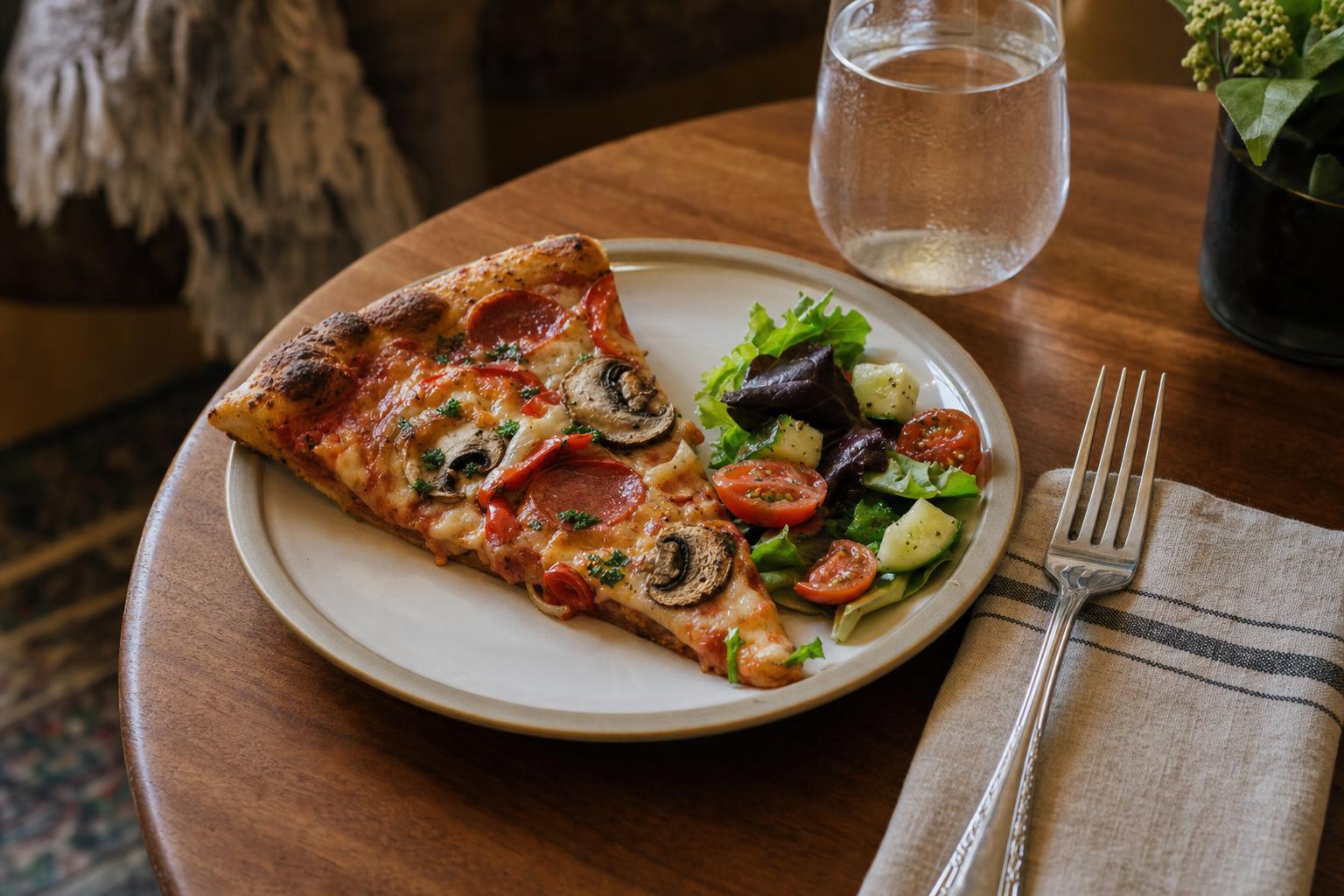
Toppings and cheese matter more than people want them to
Pizza is never just dough and sauce. Extra cheese, sausage, pepperoni, bacon, creamy sauces, and stuffed crust all move the number upward. Even if a slice looks reasonable, the toppings may make it much richer than you expected. That does not mean you should avoid your favorite slice. It just means you should call it what it is.
If you are choosing between slices, the lighter option can make the rest of the night easier. A veggie slice or a plain cheese slice often leaves more room for salad, a drink, or another small side. If the topping-heavy slice is the one you really want, take it and log it properly. A good estimate is more useful than a fake low one.
Dipping sauces belong in the count too. Garlic butter, ranch, marinara, and creamy dips seem small, but they can quietly turn one slice into a much more calorie-dense meal. If you dip every crust, log the dip. If you barely use it, just estimate the amount you actually used and move on.
Do not forget drinks and sides
The drink is the part people forget most often. A big soda, a beer, sweet tea, or a fancy bottled drink can add a lot more than you think, especially when pizza night already feels like a treat. Water is the easiest default if you want the night to stay lighter. If you want the beer or soda, that is fine. Just count it like it belongs there, because it does.
Sides are the other sneaky part. Garlic knots, breadsticks, wings, fries, and even a shared salad can change the total fast depending on the dressing or sauce. The order may look casual, but by the end it can behave like a full dinner plus a snack.
If you are eating with friends, the cleanest approach is to choose one main thing and one small support item. For example, pizza plus salad. Pizza plus one drink. Pizza plus wings, but fewer slices. That keeps the meal fun without letting the extras stack into a surprise second meal.
Use leftovers on purpose
Leftovers are actually useful for calorie tracking if you plan them instead of treating them like a random bonus. If you know you are bringing home two slices, that becomes tomorrow's lunch and not an accidental extra meal. Save them in a container, log them once, and move on.
This also helps you avoid the classic pizza-night overbuying problem. People order like they are feeding a crowd when they are really feeding a few hungry friends. A couple of extra slices in the box is better than running out. It also means you can stop eating when you are satisfied instead of finishing the last slice because it is there.
That is the easiest long-term pattern. Enjoy the pizza now. Plan the leftovers later. The whole thing feels much calmer when the leftovers already have a job.
How Calory helps
Pizza night gets easier when you save a repeat estimate in Calory. If your usual order is two thin crust slices and water, keep that as a recurring combo. If your friends always order a large cheese pizza and a pepperoni pie, save the version you usually eat. The next time pizza night comes around, you can log it in seconds instead of rebuilding the guess from scratch.
The goal is not perfection. It is making the same kind of night easy to track every time.