Sushi is one of the easiest meals to underestimate because it feels so compact. The rolls are small. The fish looks clean. The soy sauce comes in a tiny dish. Even the presentation makes the meal feel lighter than a burger or pasta night. But that clean look can hide a lot of calorie creep once you add rice, tempura, creamy sauces, extra rolls, appetizers, and a drink or two.
If you want sushi night to stay easy to track, the trick is not to panic about every piece. It is to decide what kind of meal it is, then count the parts that actually move the number.
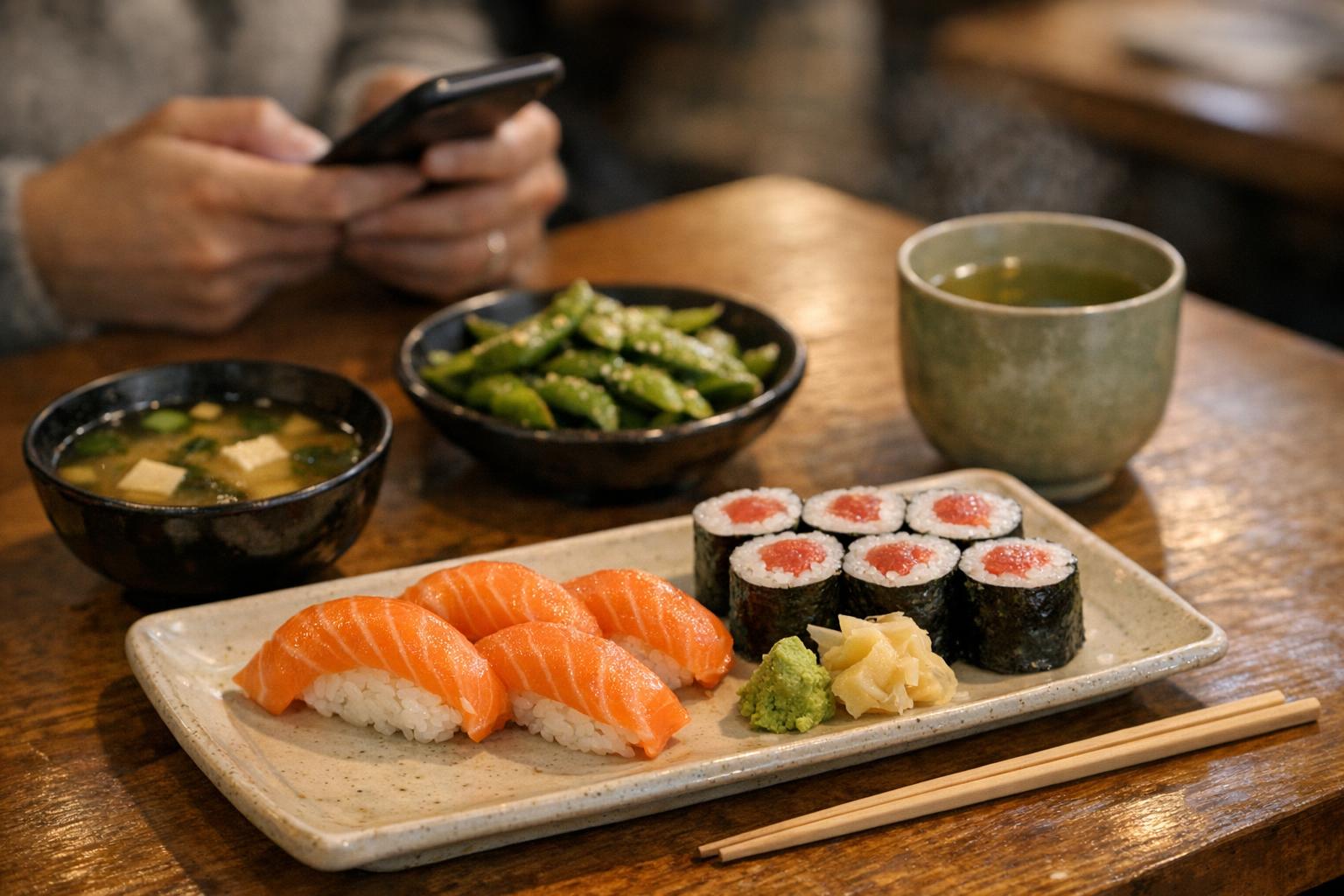
Choose your sushi plan before the plates start coming out
The cleanest way to handle sushi night is to decide your plan early. Maybe you want a lighter dinner with sashimi, miso soup, and edamame. Maybe you want two rolls and tea. Maybe you want a bigger night with appetizers and a drink. All of those can work if you choose them intentionally.
What gets people in trouble is the steady drift from one small choice to another. First it is a roll. Then another roll because everyone else ordered one. Then a crunchy appetizer. Then dessert or a cocktail. None of those feels dramatic in the moment, but together they can double the meal.
If you know you are hungry, it is better to make the meal honest from the start. A real dinner is easier to log than a half snack, half dinner mystery plate with a bunch of leftovers you were never planning to eat.
Rice and roll size matter more than people expect
The biggest hidden variable in sushi is usually the rice. A roll can look neat and small, but rice is the part that quietly changes the total fast. Thick rolls, big restaurant rolls, and specialty rolls with extra fillings all push the number up. If the roll is large enough that it takes two bites instead of one, it probably deserves a bigger estimate too.
That is why sushi is easier to log when you think in categories instead of pretending every piece is equal. Light roll. Standard roll. Large specialty roll. Fried roll. That is enough detail to keep your estimate practical without turning dinner into a math exam.
If the restaurant serves rolls that are heavy on rice, you do not need to overthink the exact amount. Just recognize that rice is the base of the meal and it is not free. If the roll also has tempura crumbs, creamy sauce, or extra avocado, the total should be higher than a plain roll with fish and cucumber.
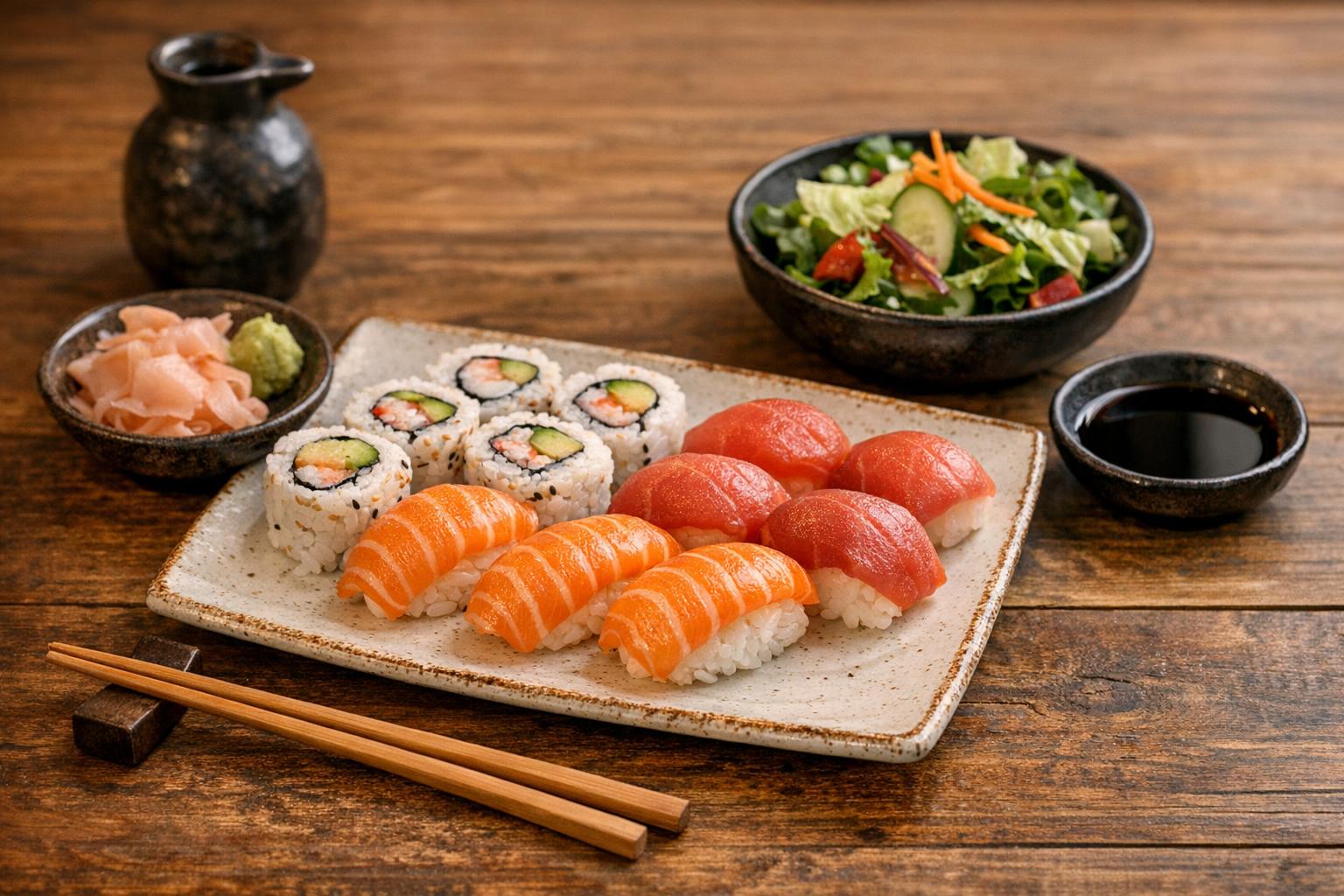
Sashimi, nigiri, and rolls are not the same meal
Sashimi is usually the simplest option because it skips most of the rice. Nigiri adds rice and is still fairly straightforward. Rolls can go anywhere from light to very rich depending on the filling, toppings, and sauce. That is why sushi menus often look harmless until you notice the special rolls sitting at the bottom of the page.
If you want the easiest estimate, start with the plainest thing you actually want. Salmon sashimi, tuna nigiri, cucumber roll, or a simple hand roll are much easier to track than a specialty roll covered in sauce and crunchy toppings. That does not mean you have to order the plain thing every time. It just means the plain thing gives you a cleaner baseline.
If you love specialty rolls, log them as specialty rolls. Do not pretend spicy mayo, cream cheese, eel sauce, and tempura crumbs are just decoration. Those ingredients are the whole reason the roll tastes richer in the first place.
Watch sauces, tempura, and appetizer creep
Sushi dinner rarely stays just sushi. There is often miso soup, salad, gyoza, fried calamari, tempura shrimp, crab rangoons, or a crispy appetizer that everyone wants to share. Those extras are where the meal can quietly jump from moderate to heavy. A few crunchy bites may not look like much, but fried starters and creamy sauces can move the total a lot faster than the fish itself.
Sauces are the same problem in smaller packaging. Spicy mayo, eel sauce, ponzu, and dipping sauces seem like details, but they can turn a tidy plate into a much richer one. If the roll comes covered in sauce, count it. If you dip every bite, count the dip. If you barely touch the sauce, then estimate a smaller amount and move on.
The simplest rule is to ask whether the extra item changed the meal or just sat near it. If it changed the meal, it belongs in the log.
Do not forget drinks and side dishes
Sushi often gets paired with drinks that do not feel like much at the table. Green tea is easy. Water is easy. Sake, beer, cocktails, and sweet iced drinks are not. If you choose a richer drink, just treat it like part of dinner instead of a tiny add-on.
Side dishes can matter too. Edamame is usually a pretty simple add-on. Seaweed salad, miso soup, and plain cucumber salad are also straightforward. But once the sides become fried appetizers, creamy salads, or sugary drinks, the meal starts behaving more like a full restaurant spread than a light bite.
If you are sharing, decide who is actually eating what. Shared appetizers are where people often underlog because nobody feels like the whole plate was theirs. That works fine for a casual dinner, but it is not a great way to keep your calorie estimate honest.
Make one default sushi order you can reuse
If sushi night happens often, make a default order in Calory. Maybe it is sashimi, one simple roll, miso soup, and tea. Maybe it is two nigiri, one spicy roll, and edamame. Maybe it is a dinner box from your favorite place. Having one saved pattern makes logging much faster the next time you end up at the same restaurant.
That matters because sushi restaurants often repeat the same menu patterns. The same roll names. The same sauces. The same side dishes. Once you have one trusted estimate, you do not need to rebuild the whole meal every time somebody says they are in the mood for sushi.
The goal is not to perfectly measure every grain of rice. It is to have one realistic version of sushi night that you can repeat without stress.
How Calory helps
Calory makes sushi night easier to repeat. Save your usual rolls, sides, and drinks, then tap the same combo next time you go out. That turns a fuzzy restaurant guess into a fast, realistic log.
Good tracking should feel like a quick habit, not a debate with the menu.
FAQ
What is the easiest way to estimate sushi calories?
Pick the exact plate you actually ate, then count rice, sauces, and drinks honestly instead of treating each small item like it does not matter.
Is sashimi always the lowest calorie option?
Usually it is lighter than rolls because it skips most of the rice, but sauce, side dishes, and appetizers still matter if you add them.
What makes sushi dinner harder to log?
Tempura, spicy mayo, cream cheese, large rolls, extra rice, second rounds, and sweet drinks are the most common ways the total climbs.
How can Calory help with sushi night?
Calory makes it easy to save your usual sushi order, then reuse the same estimate next time instead of rebuilding the guess from scratch.