A restaurant burger and fries meal is not hard to track because it is complicated. It is hard because it feels familiar. The plate shows up, it looks like one ordinary dinner, and the mind wants to treat the whole thing as a rough guess. That is where the calories get slippery. A burger can seem moderate until the cheese, sauce, bun, fries, and drink all land in the same meal.
The better move is to slow the estimate down just enough to make the meal visible. You do not need exact lab numbers. You just need a clear enough picture that the meal does not vanish into “I had a burger.”
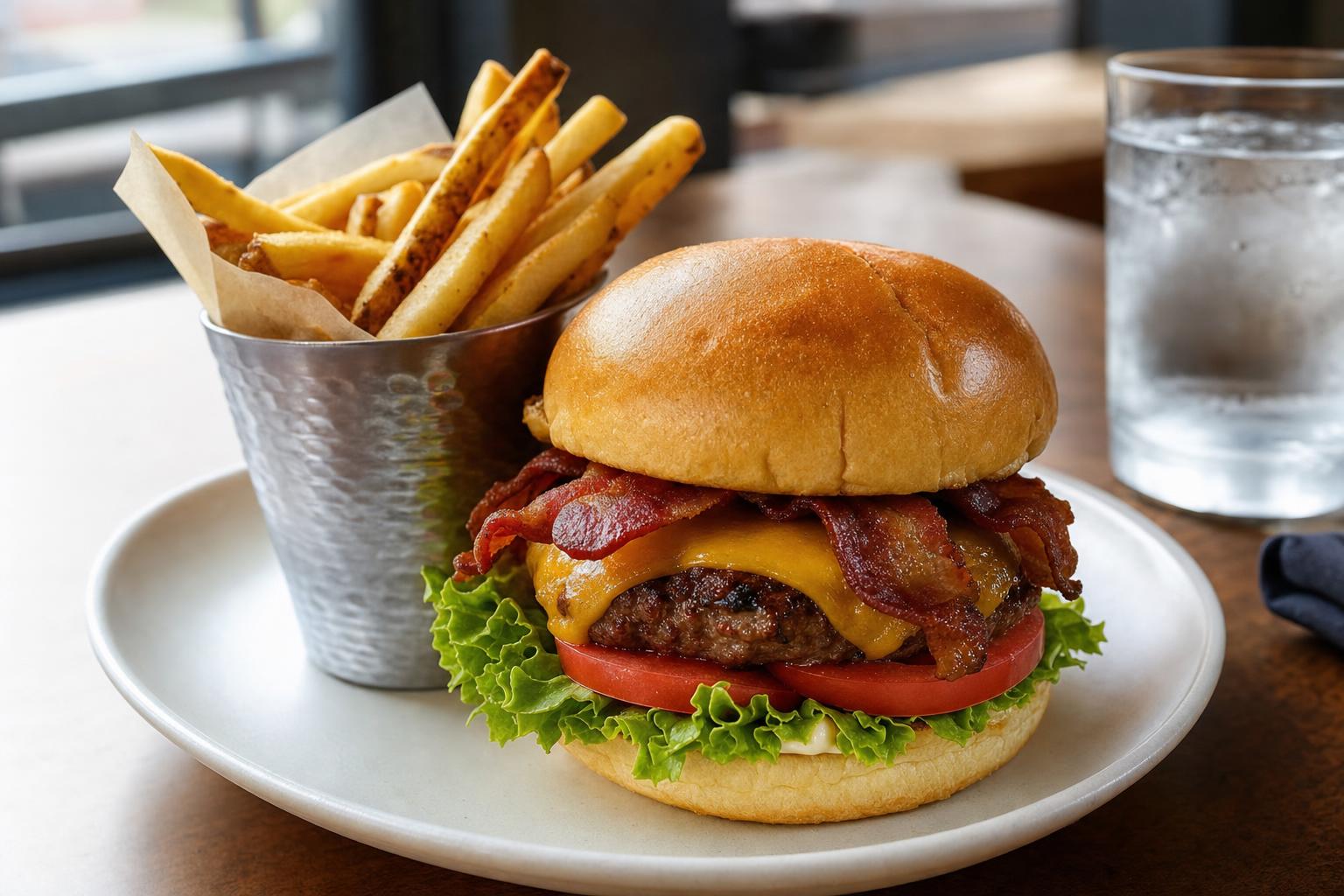
Start with the burger, not the sides
Begin with the burger itself. The patty, bun, cheese, and sauce usually matter more than the lettuce and tomato. If it is a double burger, a smash burger with extra sauce, or a burger with bacon, the estimate moves up quickly. If it is a simple single patty with mustard and pickles, the meal stays more manageable.
That does not mean you need to obsess over every ingredient. It means you should identify the structure of the burger before you get distracted by the fries. Once you know whether the sandwich is a single or double, plain or loaded, grilled or fried, the rest of the estimate gets much easier.
One helpful habit is to ask yourself one question: if the fries disappeared, what would the burger be? That answer usually tells you the real shape of the meal.
Do not hand-wave the fries
Fries are the easiest part of the meal to undercount because they feel like a side, not the star. But a side is still food, and the portion can be much larger than it looks. A handful of fries is not the same thing as a paper boat, and a paper boat is not the same thing as a full basket.
It helps to decide what fries mean before you start eating. Are they a real part of the meal, or just a few bites? If you know you want the fries, log them as fries. If you only want a few, own that smaller portion instead of pretending the basket somehow stayed invisible.
Restaurant fries also come with curveballs. Sometimes they are thinner and lighter. Sometimes they are thick-cut, crinkle-cut, seasoned, or double-fried. Those differences matter, but not as much as the portion itself. A small serving is one thing. A basket you keep reaching into is another.
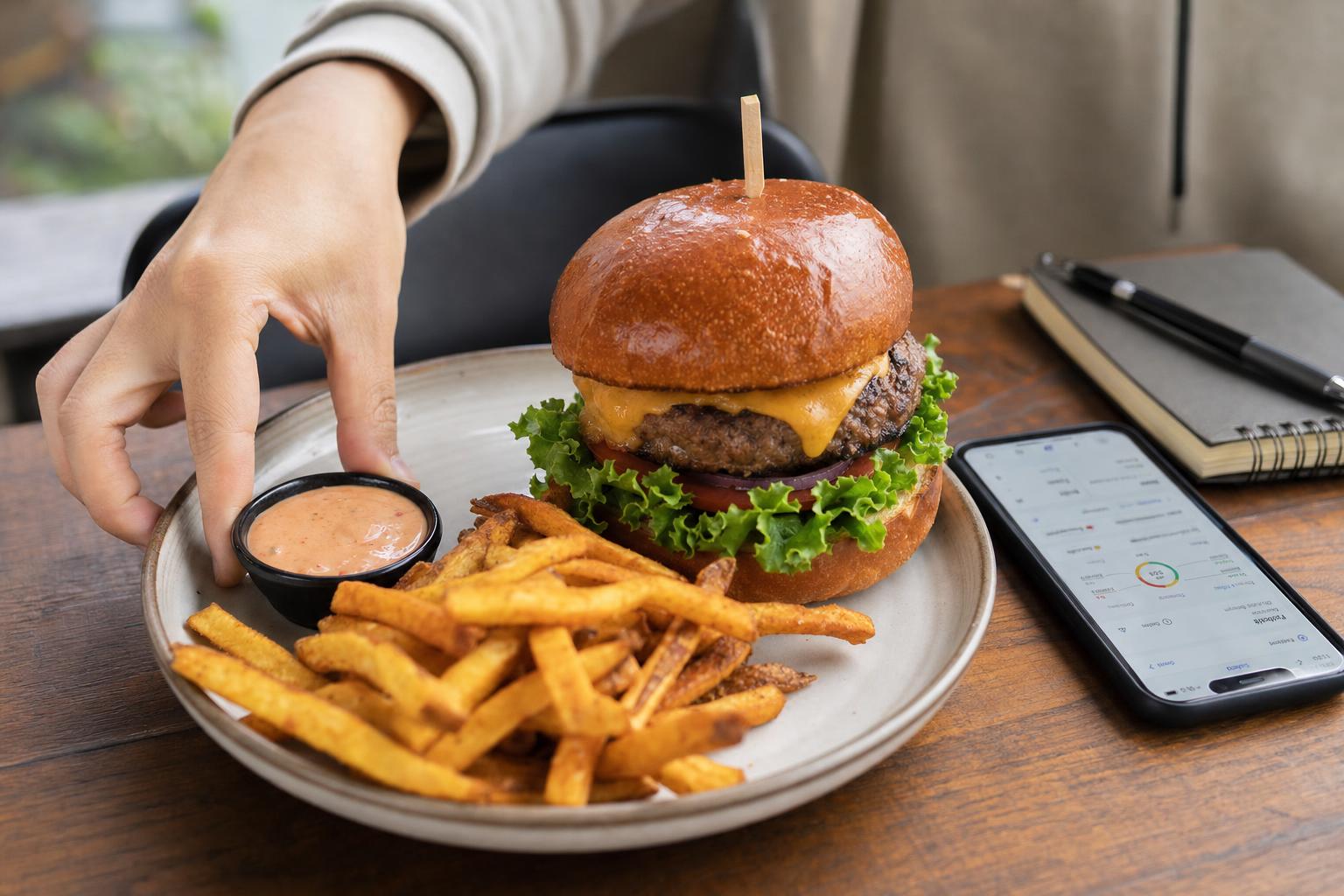
Count the toppings that actually move the number
Cheese, bacon, mayo, aioli, special sauce, fried onions, and extra buttered buns all add up faster than people expect. Those are the pieces that quietly turn a basic burger into a much heavier meal. Meanwhile, lettuce, tomato, onion, and pickles usually matter less unless the burger is very small to begin with.
The easiest rule is simple. If a topping makes the burger richer, creamier, or more indulgent, treat it as a real calorie driver. If it is mostly there for crunch or freshness, it usually matters less. That keeps the estimate focused on the pieces that change the meal most.
If the burger comes with a sauce on the side, do not assume it is free just because it is in a little cup. Dipping a burger or fries in sauce can turn a small add-on into a meaningful extra. Count what you used, not what you wish you had not used.
Treat the drink as part of the meal
A burger meal often gets underestimated because the drink gets mentally separated from the plate. A soda, milkshake, sweet tea, beer, or fancy restaurant soda can change the meal more than a side garnish ever will. Even a coffee drink after dinner can push the total higher if it is loaded with cream or sugar.
If you want the meal to stay predictable, decide on the drink before you order. Water keeps the estimate clean. A regular soda or beer adds a clearer amount than a blended drink with hidden extras. The point is not to ban drinks. It is to stop them from drifting into the meal without being counted.
This is where people often fool themselves. They focus on the burger and forget the liquid calories because the cup is just sitting there. But the drink is not a background detail. It is part of the order.
Build a repeatable order if you go often
If burger night is a regular thing, build a default order. Maybe it is a single burger, small fries, and water. Maybe it is a double burger with no mayo and a shared fries basket. Maybe it is a burger with a salad instead of fries. The exact combination matters less than the fact that it stays mostly the same.
Repeatable orders are powerful because they take the emotion out of the estimate. Instead of asking, “What did I have this time?” you already know the pattern. That makes logging faster and keeps the meal closer to reality.
You can also use repetition to learn your own habits. If the burger always feels satisfying with a smaller fry portion, you do not need to keep buying the larger one. If a double burger keeps you full longer, that might be worth the calories. Tracking is not just about restriction. It is about learning what actually works.
How Calory helps
Calory makes burger night easier to repeat. Save your usual burger and fries combo once, then reuse it the next time the same meal shows up. If you usually get extra cheese or swap in a different side, save that version too.
That way you are not starting from zero every time a burger craving wins. You have a real estimate ready, which makes the log faster and the day more honest.
Frequently asked questions
Is a burger and fries always a high calorie meal?
Not always, but it is usually bigger than it looks. The burger build, fry size, sauces, and drink decide the real number faster than the name of the restaurant.
What part gets underestimated most often?
Usually the fries or the sauce. People notice the burger patty, then forget that the side and the creamy extras can move the total a lot.
Can I still order fries and stay on track?
Yes. Pick a portion on purpose and log it honestly. A smaller fries order is much easier to fit than pretending a basket was only a few bites.
What is the simplest Calory habit for this meal?
Save your standard burger order, including fries and drink if they usually come together. That makes the next visit much faster to log.