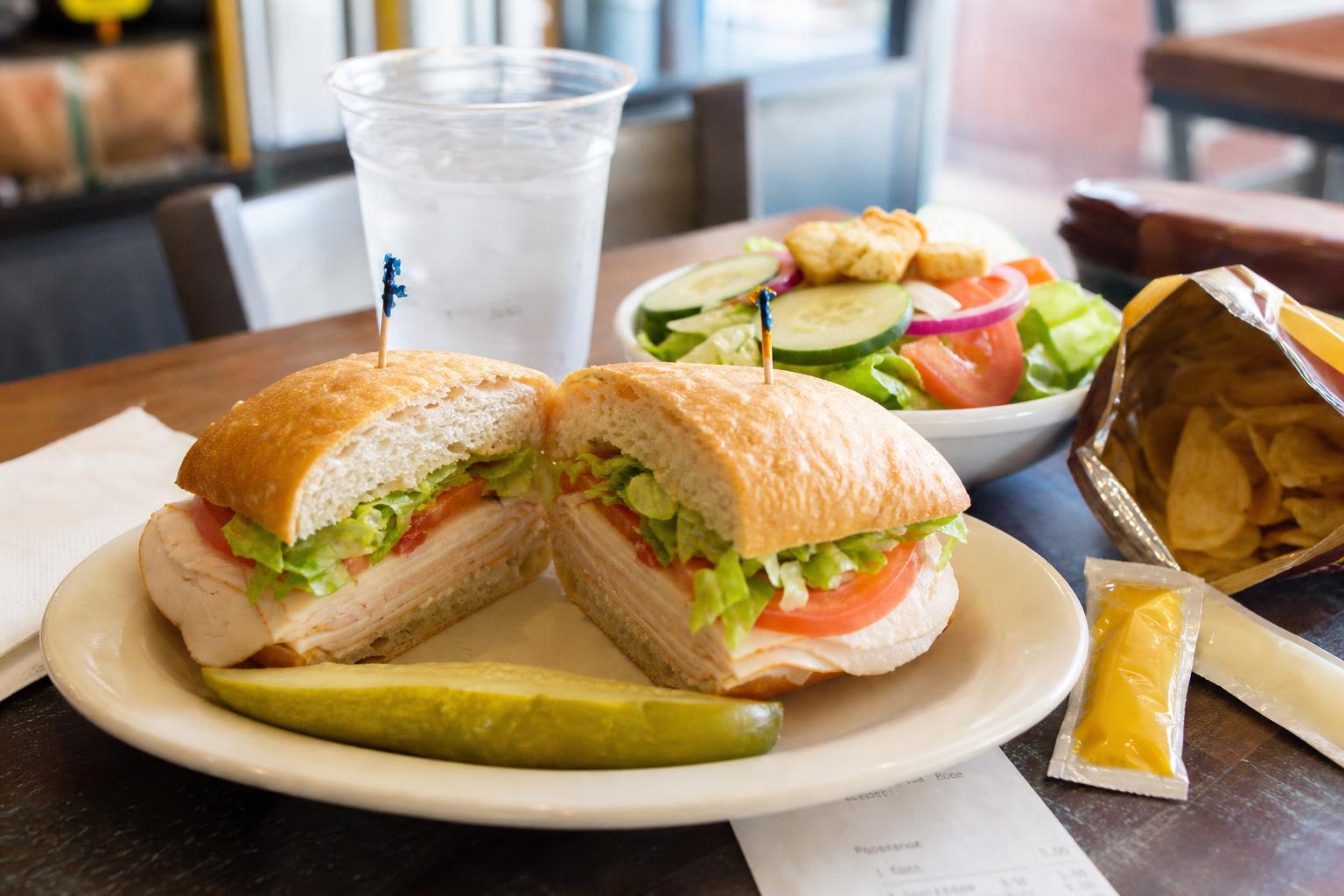
A sandwich shop lunch feels simple because the food is familiar. You can see the bread, the meat, the cheese, and maybe a side of chips. That familiarity is exactly why the calories can slip past you. The meal does not look like a big decision, so it is easy to treat it like one. But deli sandwiches are often built from several calorie-dense pieces that add up fast when they are stacked together.
The easiest way to stay honest is to stop thinking of the order as one item. A sandwich shop lunch is usually a bundle of parts, bread, filling, sauce, cheese, sides, and drinks. Once you estimate each piece separately, the total gets much easier to understand and a lot less mysterious.
Start with the sandwich, not the shop name
The shop name does not tell you enough. A turkey sandwich, a pastrami sub, a grilled chicken sandwich, and an Italian combo can all live in the same menu, but they are not even close to the same calorie story. The better move is to start with the actual sandwich build. What bread did you choose? Was it a footlong or a six-inch? Was there mayo, oil, pesto, or a creamy spread? Did it have double cheese or just one slice?
Those details matter more than the marketing description. A sandwich that sounds healthy can still be a calorie-heavy lunch if it comes on thick bread with a big spread and a side of chips. On the other hand, a simple sandwich on lighter bread with mustard and lean protein can be much easier to fit into a plan.
If you make the same order often, build a default estimate for it once and reuse that number. That saves time and keeps the log much more consistent.
Watch the bread and spread first
In a lot of sandwich orders, bread and spread are where the calories quietly live. Thick artisan rolls, hoagie bread, ciabatta, focaccia, and oversized sourdough slices can all add more than people expect. The bread is not just a container. It is part of the meal.
The same goes for spreads. Mayo, aioli, ranch-style sauces, pesto, cream cheese, and oil-packed dressings can change the total quickly. Even when the sandwich looks balanced, a heavy spread can make it much richer than the ingredients alone suggest. If the sandwich was dripping, glossy, or heavily dressed, that is a signal to estimate higher.
A useful shortcut is this, plain bread and mustard often stay manageable. Thick bread plus creamy spread usually does not.
Count the sides and drinks separately
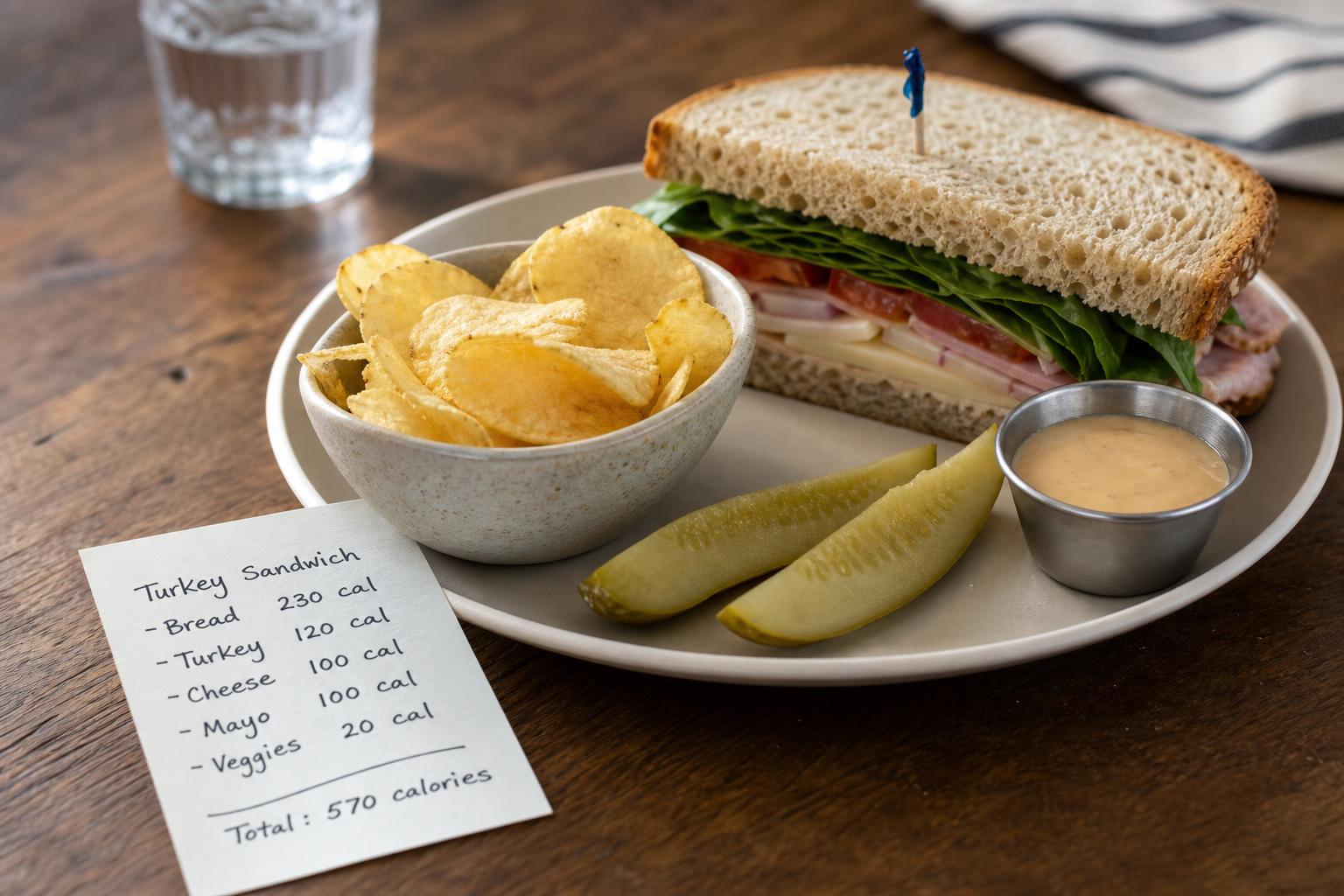
The sandwich is usually only half the story. Chips, a cookie, a brownie, a pickle spear, a side salad with dressing, a bottled drink, or a fancy iced tea can move the total a lot more than the sandwich itself. That is why sandwich shop lunches often surprise people. The meal feels small enough, but the extras keep stacking.
One of the easiest habits is to separate the base order from the add-ons before you log anything. If you got chips, log chips. If you got a cookie, log the cookie. If you got a sugary drink, treat it like its own decision. That makes the lunch easier to see clearly instead of hiding everything inside one vague estimate.
It also helps to ask one blunt question before you order, do I want a sandwich plus a side, or do I want to save room for the drink or dessert? That one choice can prevent a lot of extra calories from feeling automatic.
Build a default order you can reuse
If you visit the same sandwich shop regularly, do yourself a favor and create a default lunch. Maybe it is a turkey sandwich on wheat with mustard and a small bag of chips. Maybe it is a chicken sandwich with no mayo and a diet soda. Maybe it is half a sub and a side salad. The exact pattern does not matter as much as the fact that it is repeatable.
Repeatable lunches are easier to log because they stop being a new puzzle every time. Once you know the rough range for your usual order, you can make tiny corrections instead of rebuilding the meal from scratch. That makes calorie tracking feel much lighter, especially on busy workdays when you want lunch to stay simple.
Calory is useful here because the same lunch order shows up over and over. Once you save the estimate, you are not guessing again next week.
What to do when the sandwich is loaded
Sometimes the order is not a clean turkey sandwich at all. It is stacked with bacon, cheese, mayo, avocado, extra sauce, and a huge portion of fries on the side. That kind of lunch is not a problem, it just needs a more realistic estimate. The mistake people make is logging it like a light lunch because it is still called a sandwich.
When a sandwich is loaded, use the ingredients as the clue. Bacon and cheese are not free. Avocado and oil-based spreads are not free. Large portions of fries are definitely not free. If the lunch looked rich, estimate it like a rich meal. That is how the log stays useful instead of becoming a wish list.
The goal is not to punish yourself for ordering a bigger lunch. The goal is to record the meal in a way that matches reality so the rest of the day still makes sense.
Make sandwich shop lunch easier next time
The real win is not one perfect log. It is making the next lunch easier than the last one. If you know your favorite shop order, save it. If you know which sides are worth it and which ones are not, use that information. If you notice that a certain bread or spread always pushes you over your comfort range, switch it up next time.
That is what good calorie tracking looks like in real life. It is not rigid. It is responsive. You learn which parts of the meal matter most, then you adjust the parts that actually move the total.
Once that happens, a sandwich shop lunch stops feeling like a guessing game and starts feeling like a normal part of the week.
Frequently asked questions
Should I count a sandwich shop lunch as one item?
No. It is usually more accurate to count the sandwich, the sides, the drink, and any dessert separately.
What is the biggest calorie mistake with sandwich orders?
Usually it is undercounting the bread, spread, and side items. Those are the parts that quietly raise the total the most.
Is a sandwich shop lunch always high calorie?
Not always. A simpler sandwich with lean protein, lighter bread, and a small side can fit fine. The problem is usually the extras.
What is the easiest way to log the same order again?
Save a default estimate in Calory and reuse it the next time you order the same sandwich. That keeps logging fast and consistent.