Drive-thru breakfast is popular because it is fast, warm, and predictable enough to feel easy. That convenience is exactly why it can quietly push calories up. You are not sitting down, thinking through each part of the meal. You are ordering on autopilot, eating on the move, and trying to get the day started. That makes it easy to underestimate what the sandwich, side, and drink really add up to.
The answer is not to treat breakfast like a math exam. It is to build a routine that removes guesswork before the order happens. Once you know your usual base order, you can keep the morning moving without pretending every combo is light just because it came from a drive-thru window.
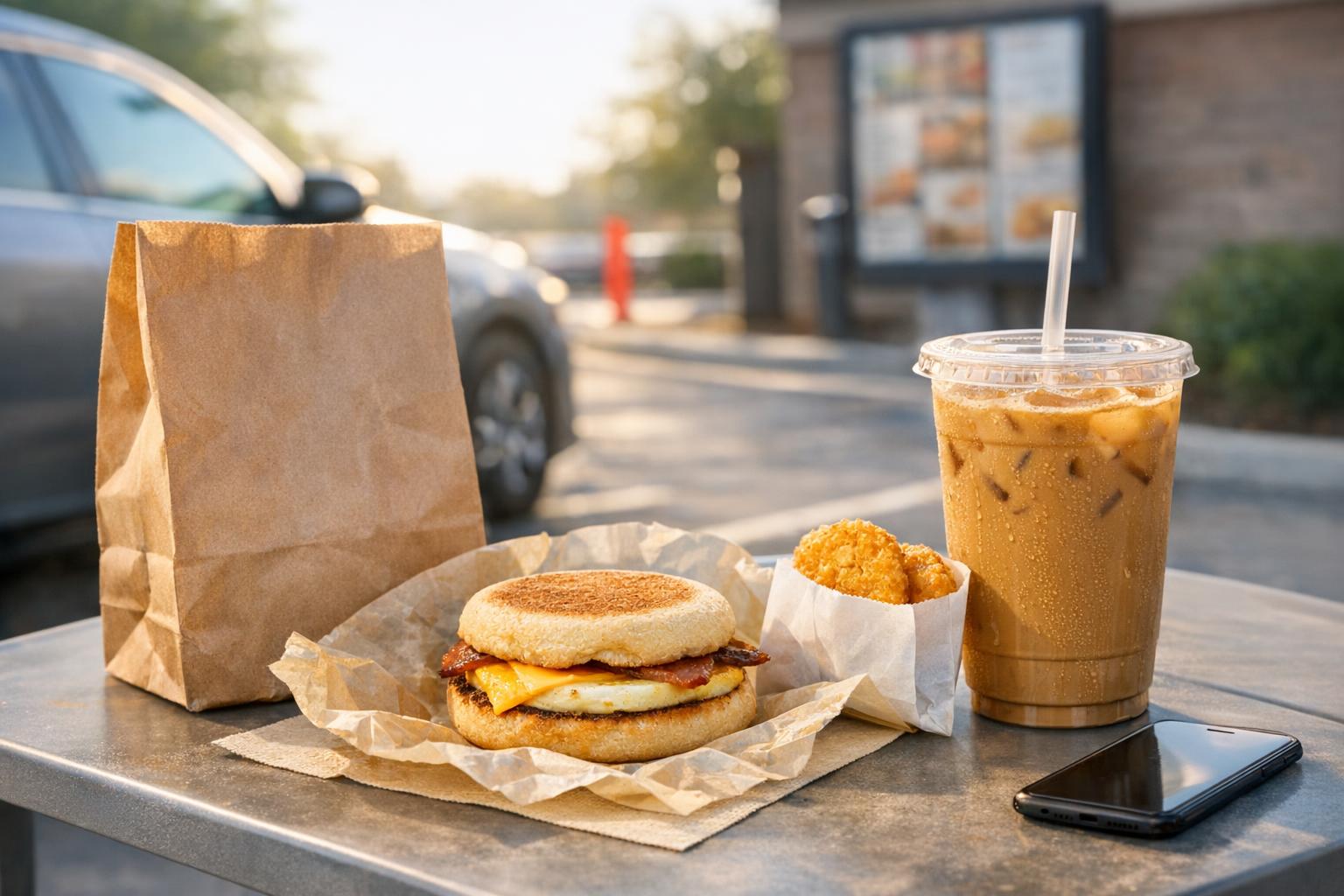
Why drive-thru breakfast adds up so fast
The first problem is bundling. Drive-thru menus love to package the whole meal together, sandwich, side, and drink, which makes the order feel smaller than it is. A breakfast sandwich on its own might be reasonable. Add hash browns and a sweet coffee drink, and the total can climb much faster than your brain expected while you were waiting in line.
The second problem is speed. Fast food breakfast is designed for convenience, so people rarely sit there and compare options for ten minutes. You pick something that sounds safe, maybe add the side you usually get, and move on. That is normal, but it is also where calorie tracking gets blurry. The meal was decided too quickly for the numbers to feel real.
A better question
Before you order, ask which part of the breakfast you actually care about most, the sandwich, the coffee, or the side. Let that answer drive the rest of the order.
Choose the base order first
The easiest way to make drive-thru breakfast manageable is to start with the smallest version of the meal that still feels satisfying. For some people that means one sandwich and black coffee. For others it means a sandwich plus a plain latte. The important part is that the base order is clear before any extras enter the picture.
That base order becomes your anchor. Once you know it, everything else is an add-on that you can judge more honestly. If you add a side, you know it is a side. If you upgrade the drink, you know exactly what changed. That sounds small, but it is the difference between a breakfast you can estimate and a breakfast that turns into a vague total you reconstruct later from memory.
If you are trying to stay in a calorie range, the sandwich-only version is often the simplest starting point. It gives you the most breakfast for the least complexity. You can still add what matters to you, but the meal starts from something stable instead of a combo that grows by default.
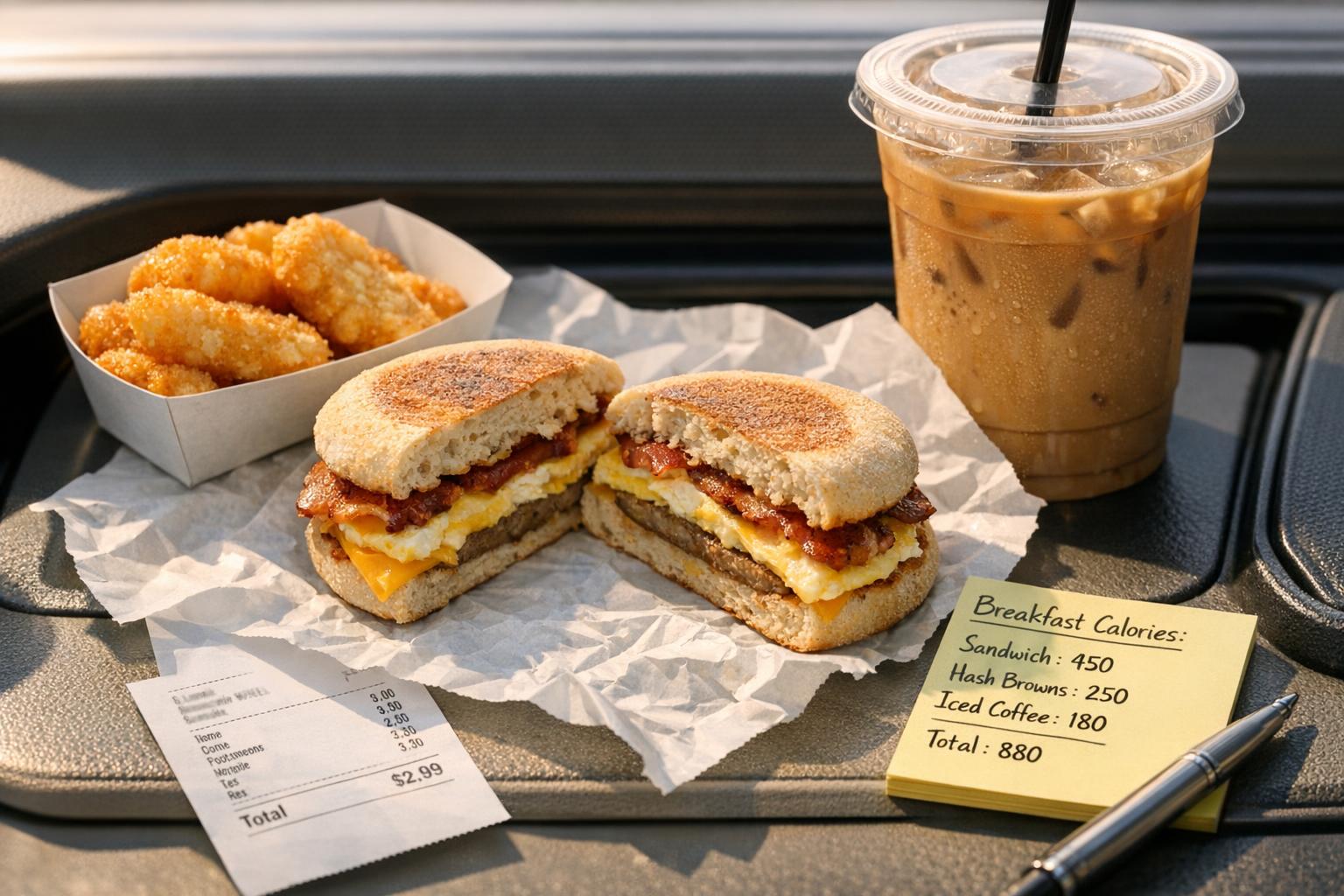
Watch the troublemakers, not just the sandwich
The sandwich usually gets all the attention, but the side and drink are where a lot of the surprise lives. Hash browns are easy to treat like a harmless bonus, yet they can add a meaningful amount of calories without making the meal feel any more filling. If you really want them, great, just count them as part of the meal instead of as an invisible extra.
Coffee drinks deserve the same respect. A black coffee or unsweetened iced coffee is very different from a sweet latte, flavored cold drink, or breakfast shake. The liquid calories can quietly do more damage than people expect because they disappear so fast. If the drink is the part you care about, then keep it. If it is just automatic, consider simplifying it.
Breakfast sandwiches also vary more than people think. Biscuit, croissant, English muffin, bagel, cheese, egg, bacon, sausage, and extra sauce can all change the total. None of those ingredients is automatically bad. The useful move is noticing which version you actually ordered instead of assuming all breakfast sandwiches are in the same lane.
Make it repeatable enough to stop guessing
Repeatability is the real win. If your breakfast is different every day, you have to estimate from scratch every day. If you keep seeing the same order, you can build a default and reuse it. That is much easier to live with, especially when the mornings are already rushed.
One practical way to do that is to keep three versions in mind. A light version, a normal version, and a bigger version. Maybe the light one is just the sandwich and coffee. The normal one adds hash browns. The bigger one includes a sweeter drink. That gives you a structure for the mornings when you need a little more food without pretending every version is the same.
Another useful trick is to decide ahead of time what counts as a treat and what counts as routine. If you love the sweet drink, make that the deliberate treat and keep the rest simpler. If hash browns are the treat, skip the sugary coffee. Breakfast gets easier when not every item is fighting for the spotlight.
How Calory helps with drive-thru breakfasts
Calory is handy here because drive-thru breakfasts often repeat. Once you have a sandwich you like, a drink you keep ordering, and a side you sometimes add, you can save that pattern instead of re-typing it every morning. That makes the habit faster to log and much easier to keep honest.
It also helps you see the difference between versions. If your breakfast goes from sandwich only to sandwich plus hash browns plus sweet coffee, the change becomes visible instead of fuzzy. That matters because small upgrades are often what quietly push a routine over the line. Calory turns those upgrades into a clearer choice.
The goal is not perfection. It is knowing what the drive-thru breakfast really looks like so you can keep it in range, repeat it when it works, and move on with your day.
Frequently asked questions
Is drive-thru breakfast always too much for weight management?
No. It depends on the order. A simpler sandwich and plain drink can fit fine, especially if you are not adding multiple extras on top.
What should I cut first if breakfast keeps creeping up?
Usually the drink or the side. Those are the easiest parts of the meal to forget about, and they often move the total the most.
Should I log the whole combo or split it up?
Log it in the way you actually eat it. If you skip the side some days, do not count it. If you always get the drink, make it part of the default.
How can I make my morning order easier to track?
Keep the order consistent, choose a clear base meal, and save it in Calory so you are not rebuilding the same breakfast from scratch every day.