A default grocery list sounds boring on purpose, and that is exactly why it works. It takes the random part out of shopping. Instead of starting from zero every week, you keep a repeatable list of foods that already fit your normal meals, your normal snacks, and your normal calorie target.
That matters because grocery shopping is where a lot of calorie tracking gets easier or harder before the week even starts. If your cart is full of ingredients you know how to use, your meals become more predictable. If you buy whatever looks good in the moment, the week becomes a series of little surprises.
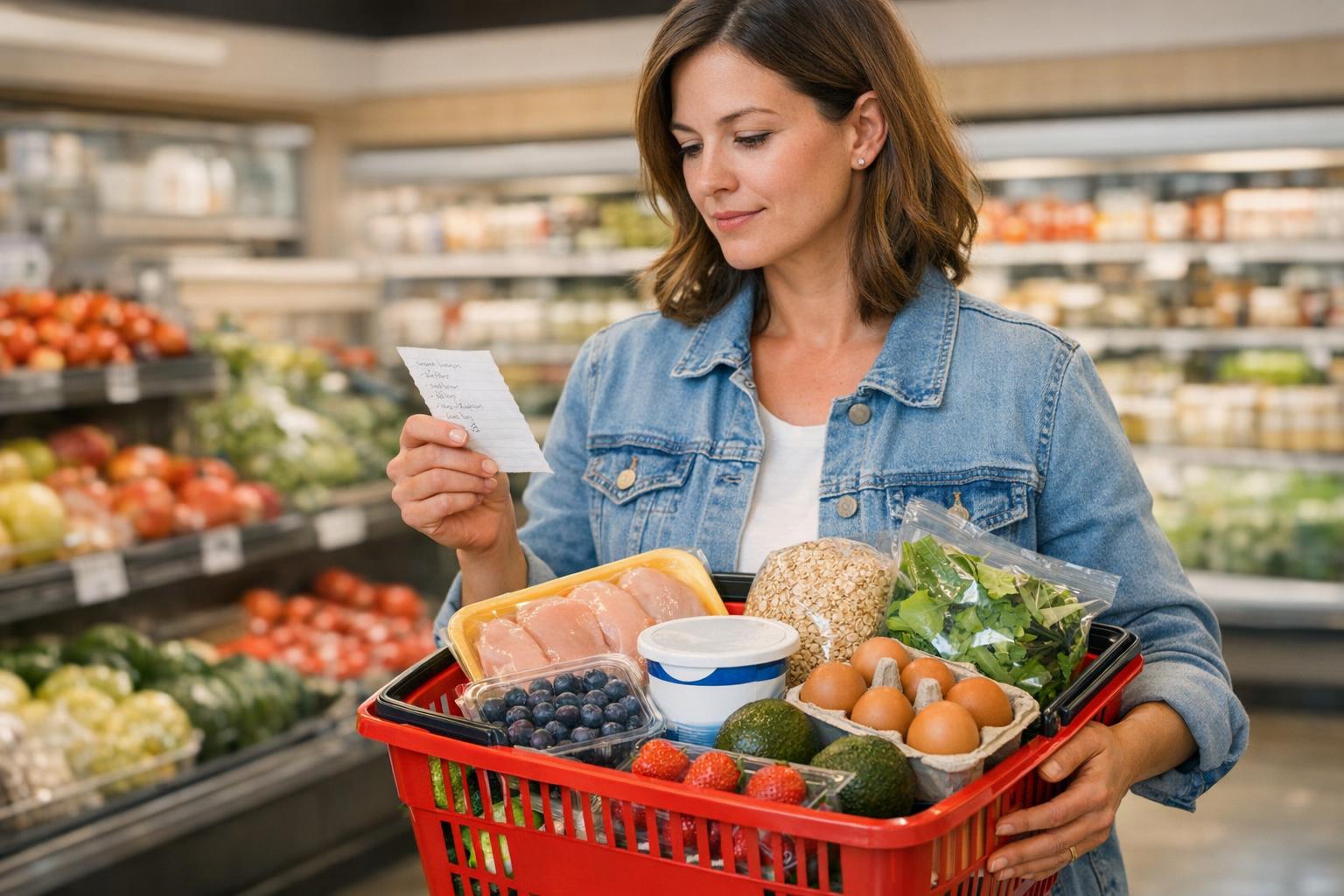
Why a default grocery list helps calorie tracking
The simplest grocery list is usually the one you can use again next week. You are not trying to build a perfect list. You are trying to build a list that removes decisions. When the same breakfast foods, lunch foods, dinner foods, and snack foods show up again and again, it gets much easier to estimate portions and log them honestly.
That repetition does a lot of quiet work. It helps you notice your usual serving sizes. It keeps the calorie range of your meals from bouncing around as much. It also makes the week feel less like a diet and more like a routine. People often think calorie tracking fails because they need more discipline, when the real problem is that their food choices keep changing too much.
A default list solves that by giving you a short menu of safe options. Safe does not mean dull. It means familiar enough that you can shop, cook, and log without having to reinvent the wheel every time you open the fridge.
Start from the meals you actually eat
Do not build the list from a fantasy version of your life. Build it from the meals you actually eat on a normal weekday. If you usually eat yogurt and fruit for breakfast, a packed lunch, a simple dinner, and one snack, your list should reflect that. Grocery lists get more useful when they mirror reality instead of aspiration.
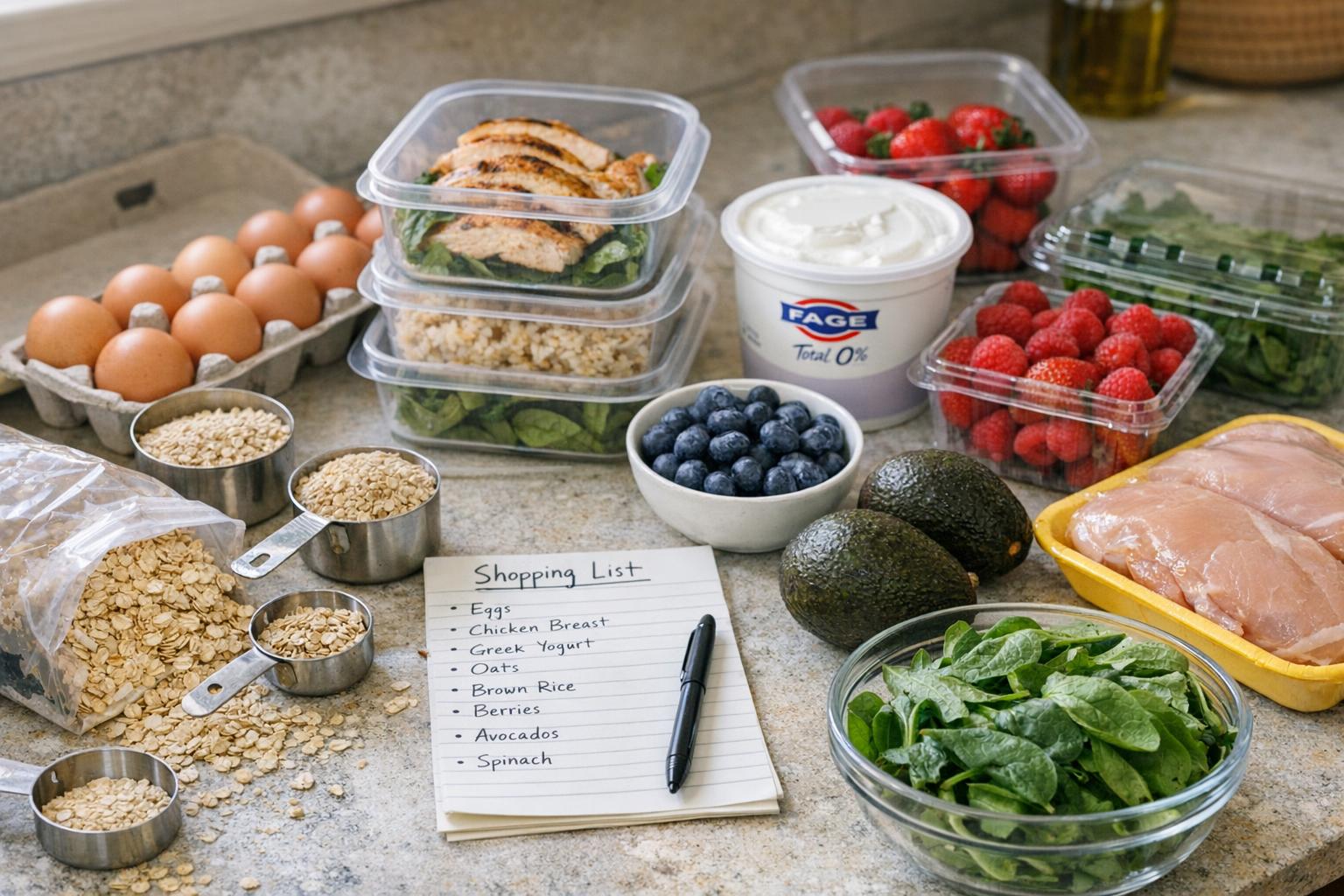
One easy way to do this is to write down the three or four meals and snacks you repeat most often. Then list the ingredients that show up in those meals. You will probably see the same foods over and over again. Eggs. Greek yogurt. Chicken. Rice. Oats. Salad greens. Berries. Potatoes. Whole-grain wraps. Those recurring items are the backbone of a default list.
The real goal
Buy the same useful groceries often enough that your meals stop feeling like fresh math every day.
Keep a few anchor items on every list
A strong default list usually has anchors. These are the foods you almost always want in the house because they make meal building easier. They also make logging easier because the portions are familiar. If you always buy the same anchor items, you can build breakfast, lunch, dinner, and snack combinations without a lot of guesswork.
| Anchor item | Why it helps | Tracking benefit |
|---|---|---|
| Protein basics | Chicken, eggs, Greek yogurt, tuna, tofu, cottage cheese | Easy to portion and reuse across meals |
| Starchy staples | Rice, oats, potatoes, wraps, bread, pasta | Gives each meal a familiar calorie base |
| Produce defaults | Berries, bananas, greens, broccoli, carrots, apples | Adds volume without changing the meal too much |
| Flavor helpers | Salsa, mustard, light dressing, hot sauce, low-cal sauces | Improves taste without a lot of hidden calories |
| Snack backups | String cheese, fruit, popcorn, yogurt, nuts in small portions | Prevents random grazing from taking over |
The point is not to buy everything healthy. The point is to buy a set of foods that you can mix and match without accidentally turning every meal into a different calorie puzzle.
Shop the same way each week
Default grocery lists work best when the shopping pattern is also repeatable. If you shop the same aisles in roughly the same order, you will spend less time impulse buying and more time filling the cart with food that actually fits your plan. That means fewer random items, fewer surprise snacks, and fewer moments where you have to guess how the week will go.
A practical order looks like this: produce first, then protein, then dairy, then pantry staples, then one or two flexible extras. That order helps because you get the most important foods in the cart before you start getting tired or distracted. If you always leave with the same base ingredients, your meals become much easier to predict.
It also helps to give yourself a cap for the fun stuff. Maybe it is one treat item, one convenience item, or one backup meal. That keeps the grocery list useful without making it rigid. You are not trying to be perfect. You are trying to be consistent enough that the rest of the week stays easy to log.
Keep portions steady so the calories stay predictable
The grocery list is only half the system. The other half is buying portions that make sense for the way you eat. If you know you always eat two eggs, buy eggs in a size that supports that habit. If lunch is usually a wrap, buy enough wraps that you can repeat the same meal instead of improvising. If your snacks disappear because the packages are huge, buy smaller packages or portion them out once at home.
This is where a default list quietly improves calorie tracking. The more your groceries match your normal portions, the less mental math you need later. A family-size bag of chips might seem economical, but if it leads to loose snacking all week, it is not really helping your goal. A smaller package or pre-portioned snack can be the better choice, even if it looks less impressive on the shelf.
Buy repeatable breakfast items
Pick two or three breakfasts you can actually repeat. Then keep the ingredients for those breakfasts on the list every week.
Protect lunch from chaos
Keep one lunch formula in rotation so weekdays do not turn into random takeout or a mystery snack combination.
Make snacks deliberate
List the snack on purpose instead of hoping you will “just eat less” when hunger shows up.
Keep dinner simple
Repeat a few dinner formats so the calories are easier to estimate before you even start cooking.
Have one backup list for busy weeks
Even a good default list can fall apart when the week gets busy. That is why it helps to have a backup list with your easiest foods. These are the items you can use when you are tired, rushed, or not in the mood to think. The backup list should be short, practical, and forgiving.
A good backup list might include eggs, yogurt, fruit, rotisserie chicken, microwave rice, salad kits, tortillas, frozen vegetables, and one simple snack. That is enough to get through a chaotic week without making the grocery cart a complete free-for-all. It also keeps calorie tracking honest because you are still using foods you know how to estimate.
Think of the backup list as a safety net, not a compromise. It protects the rest of your routine. If your normal plan is already built on simple repeatable foods, the backup list just keeps you from drifting too far when life gets messy.
How Calory helps with a default grocery list
Calory makes this whole idea more useful because you can reuse the foods and meals that show up every week. Once a default grocery list becomes a default meal pattern, you can log those meals faster and with less second-guessing. That is where the real time savings show up.
Instead of recalculating every breakfast, lunch, and snack from scratch, you can lean on familiar entries and keep moving. That makes it easier to stay consistent when your schedule is busy, your energy is low, or you just want to get through the day without thinking about food all the time.
If your goal is to track calories without turning every grocery trip into a project, a default list is one of the simplest tools you can build. It is ordinary on purpose. Ordinary is what makes it work.
FAQ
What should be on a default grocery list?
The best default list includes the foods you repeat most often, especially easy proteins, starches, produce, simple snacks, and a few flavor helpers.
How does a default grocery list help calorie tracking?
It makes your meals more predictable, which makes portions easier to estimate and log. Less variety usually means less guessing.
Should I keep one list for the whole family?
You can, but it works best if the shared list still includes a few items that support your own routine. Shared shopping is fine as long as your repeat foods stay on it.
How can Calory help once I have a default list?
Calory makes it easier to reuse familiar meals, save time on logging, and stay consistent without rebuilding every estimate from scratch.