Pasta looks simple, which is exactly why it gets underestimated. A bowl of noodles seems harmless until the sauce is richer than expected, the cheese is heavier than expected, and the oil or butter quietly adds a big calorie bump. That is how a normal pasta dinner turns into something you did not really log correctly.
The easiest fix is to stop trying to guess the entire plate as one blob. Break the meal into the parts that matter. If you know the pasta amount, the sauce style, the cheese, and the protein, you can make a solid estimate without weighing every forkful.
Start with the pasta base first
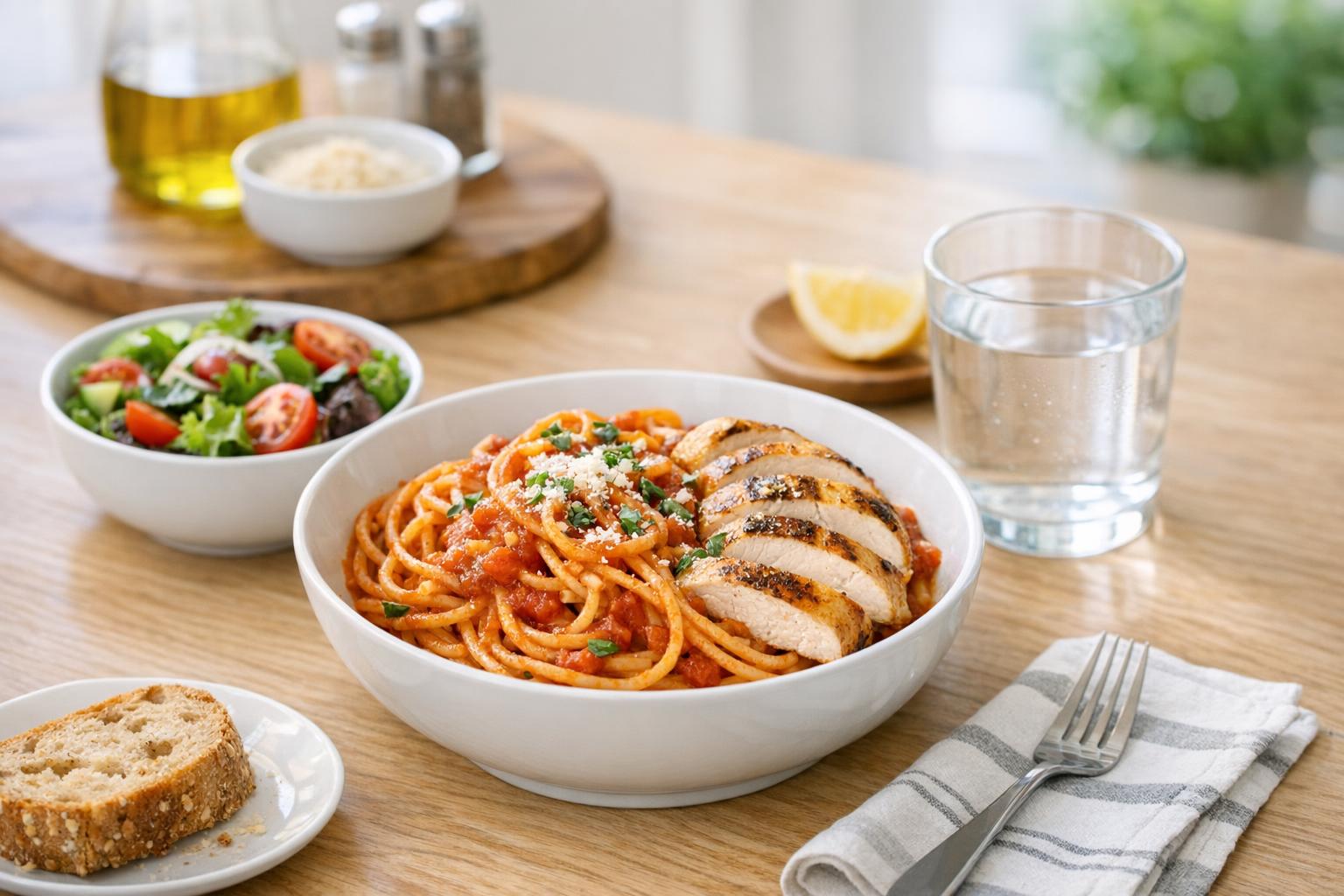
Begin with the noodles before you think about anything else. Cooked pasta is the foundation of the meal, and it gives you a useful anchor for the rest of the estimate. A modest serving of cooked pasta is very different from a heaping bowl, so portion size matters more than almost anything else on the plate.
If you use dry pasta at home, it is even easier. Measure the amount before cooking and log that amount consistently. If you only have the cooked plate in front of you, use the visual cue that feels closest to your portion. A smaller dinner plate with a normal serving is a very different calorie story from a large bowl that got filled twice.
The goal is not a perfect math exercise. The goal is to be honest about whether you ate a normal serving or a generous one.
Sauce does more calorie damage than most people expect
Tomato sauce, creamy alfredo, pesto, vodka sauce, and meat sauce all sit in different calorie ranges. Even when the noodle amount stays the same, the sauce can completely change the total. A light tomato sauce with vegetables is one kind of meal. A creamy sauce with butter, cheese, and sausage is a very different one.
That is why you should think about sauce as its own line item. Ask what was actually in it. Was it mostly tomato and herbs, or was it thick, oily, and creamy? Was the pan finished with extra cheese or butter? Those details matter more than people think.
If you are unsure, do not pretend it was the light version. The better estimate is usually the one that matches how rich the meal looked and tasted.
Watch the add-ons that make pasta climb fast
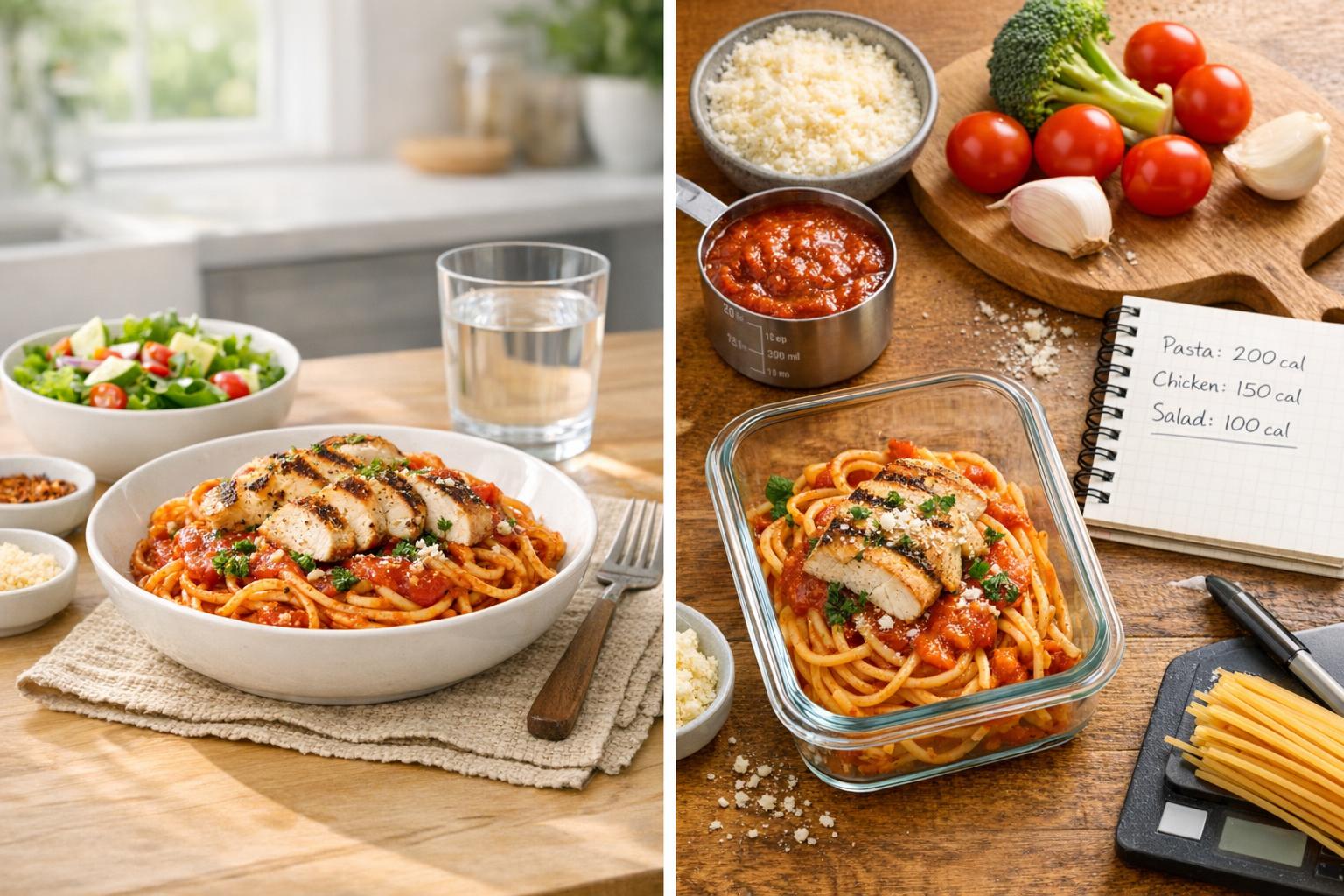
Cheese, oil, butter, sausage, meatballs, cream, garlic bread, and restaurant-style toppings are the hidden reason pasta calories rise so fast. None of them seem dramatic on their own. Together, they can double the calorie total before you notice.
That does not mean you need a sad bowl of plain noodles. It means you should count the extras honestly. A little parmesan is one thing. A heavy handful plus extra oil is another. A few grilled chicken slices are not the same as a full portion of creamy sausage pasta.
When you track the add-ons separately, you get a much more honest picture of the meal. That makes it easier to decide what actually fits your day.
Family-style pasta needs a plate-first estimate
When pasta is served from a big pan, the whole dish can look deceptively normal. The pan may seem modest, but the rich ingredients are often spread across a lot of food. If you try to estimate the entire pan, you will usually undercount. If you estimate your plate, you get closer to reality.
Look at your own portion and ask a simple question: did I take a normal serving, or did I build a second round on the first plate? That answer tells you more than trying to reverse-engineer the whole casserole dish. If there was bread on the side or extra cheese on top, include that too.
Family meals are not a test. They are just easier to log when you stop pretending the serving size was smaller than it really was.
Restaurant pasta should usually be logged on the richer side
Restaurant pasta is often more calorie-dense than home pasta because of the oil, butter, cream, and larger serving sizes. Even a dish that sounds simple can carry a lot of hidden richness once it is plated with sauce, cheese, and a big portion of noodles.
If you eat pasta out, assume the higher end unless you clearly know it was a light preparation. A tomato-based dish may still be reasonable. A creamy or cheesy dish should be treated with more caution. Bread service, salad dressing, and drinks can also turn a pasta dinner into a much bigger calorie event than you planned.
The useful habit is not perfect accuracy. It is avoiding the common mistake of logging restaurant pasta like it was a home-cooked plain noodle bowl.
Make your best pasta estimate repeatable
The most useful calorie estimates are the ones you can reuse. If you often make the same pasta dinner, save that version once in Calory and use it again. A repeatable meal saves time and gives you a more realistic baseline than rebuilding the estimate every time from memory.
You can also make pasta night easier by standardizing a few things. Use one common serving bowl. Keep one default sauce. Pick a usual protein. Once those pieces stay consistent, your calorie estimate gets much cleaner.
That is the real advantage. Pasta does not need to be precise to be trackable. It just needs to be predictable enough that you can log it honestly and move on.
FAQ
What matters most when estimating calories in pasta?
The biggest calorie drivers are the pasta amount, the sauce, the oil or butter, and any cheese or meat on top. The noodles matter, but the extras usually decide whether the meal stays reasonable or quietly jumps higher.
Should I worry more about dry pasta or cooked pasta?
Use the form that matches what you can actually measure. Dry pasta is easier to log before cooking. Cooked pasta is easier to eyeball once it is on the plate. Either works if you stay consistent.
How do I estimate a family-style pasta dinner?
Start with your plate, not the whole pan. Estimate the pasta base first, then add a realistic amount for sauce, oil, cheese, and protein. If the pan looked rich or creamy, log the higher end.
How can Calory help with pasta meals?
Calory makes it easy to save repeat pasta meals, reuse common portions, and stop rebuilding the same estimate every time pasta night comes around.