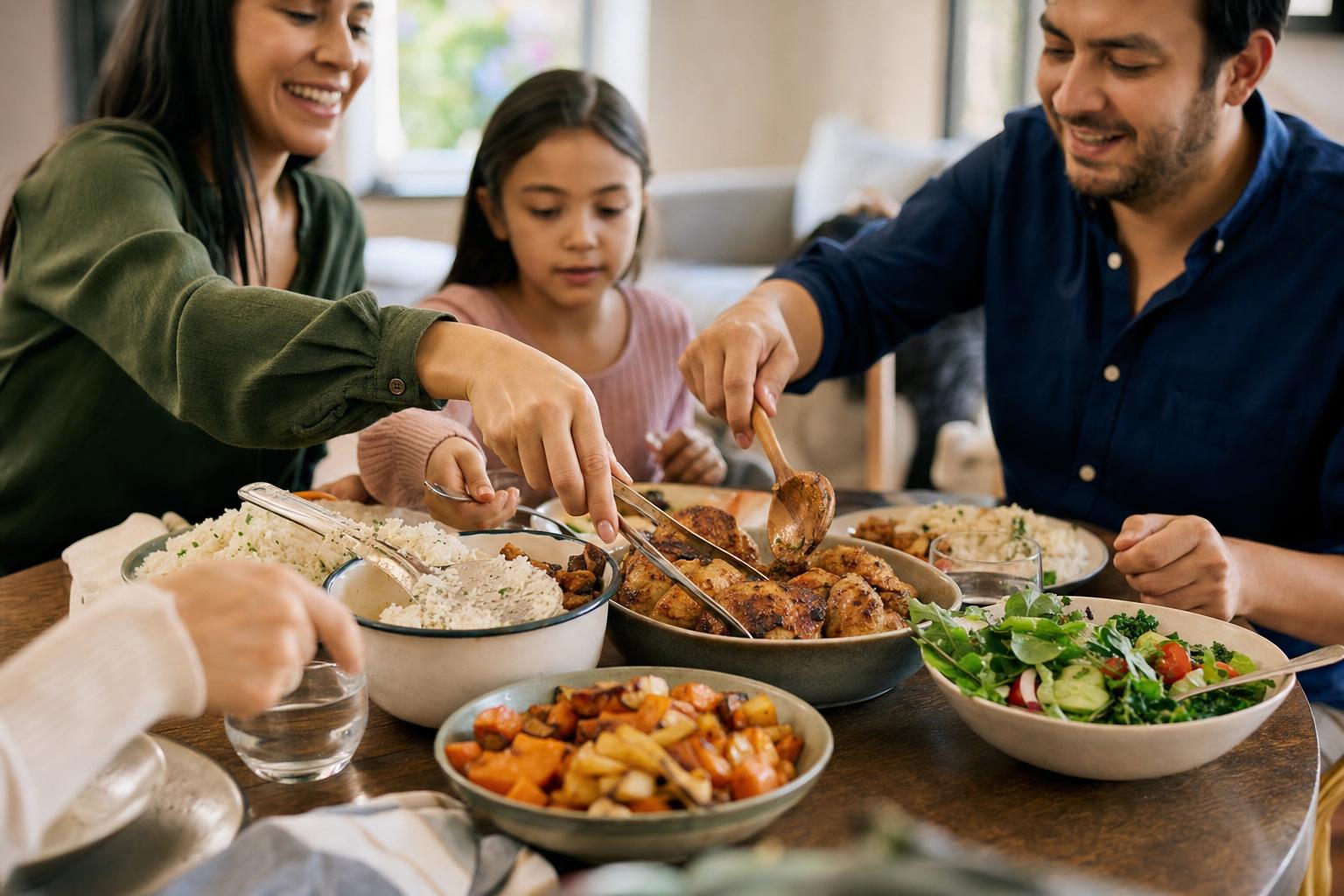
Family-style dinners can look harmless because they feel warm and normal. That is exactly why they can be tricky for calorie tracking. The food is placed in the center of the table, everybody serves themselves, and the pace stays social. No one is standing in line, no one is staring at a portion label, and the whole meal feels casual enough that small extras do not register the way they should.
The goal is not to avoid the meal. It is to make the meal visible enough to log honestly.
Start with one real plate
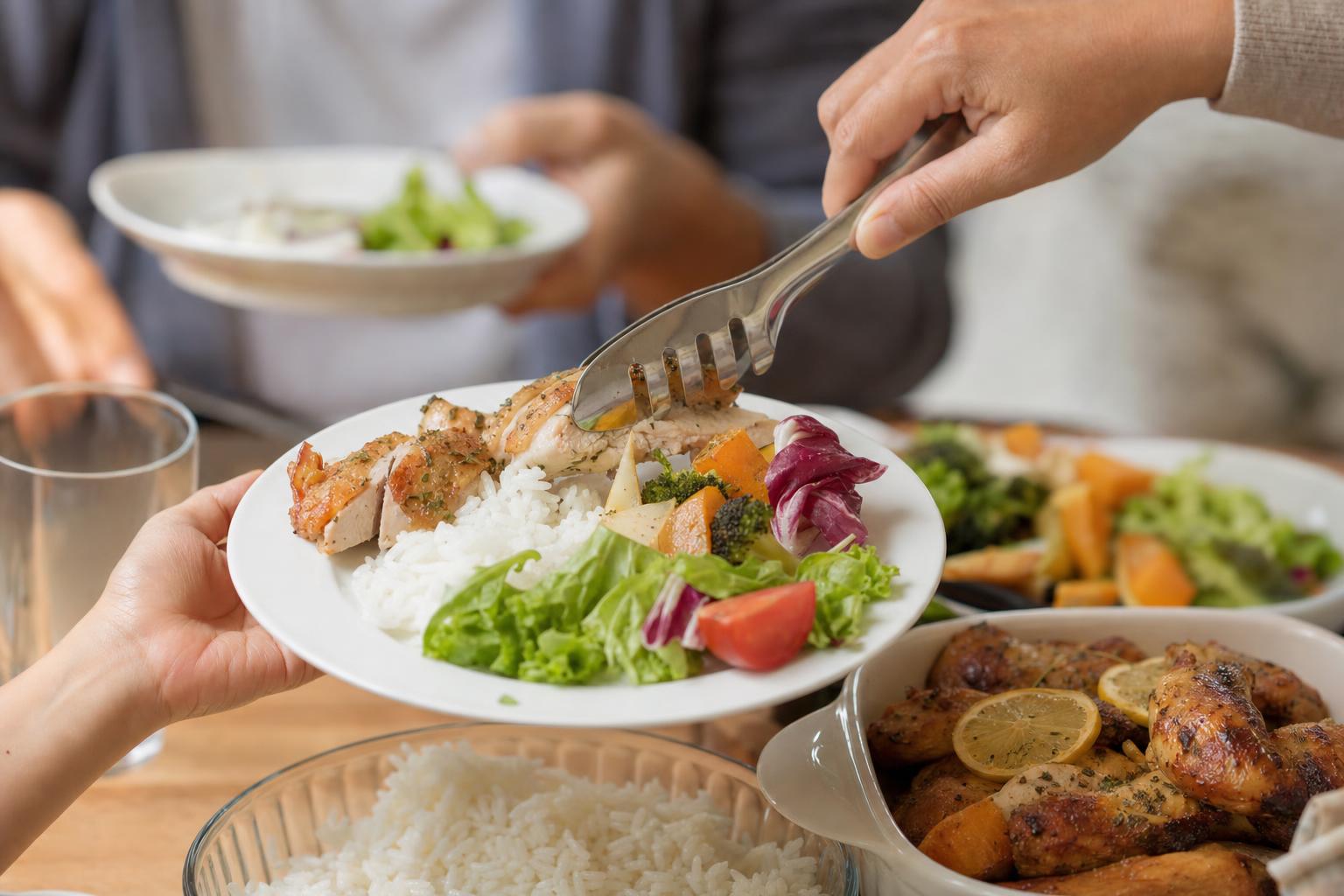
The best thing you can do at a family-style dinner is build your first plate like it matters. Pick the protein you actually want. Add the sides you care about. Stop there and call it dinner. Once the first plate exists, the meal is much easier to estimate because you have a clear starting point.
People usually get into trouble when they keep making the meal bigger before they have even finished the first round. A little rice here. Another spoon of potatoes there. A piece of bread because it is on the table. None of that feels like much until the plate stops looking like a plate and starts looking like a moving target.
If you want dessert later, it helps to keep the dinner honest now. That way the whole evening stays readable in Calory instead of turning into one blurred stretch of food.
Count sauces, butter, cheese, and oil honestly
This is where a lot of family dinners get underestimated. The main food might be reasonable enough, but the sauce on top changes the math fast. Cream sauces, gravy, butter, cheese, sour cream, pesto, and olive oil can all move a plate from light to much richer than it looks.
That does not mean you have to skip flavor. It just means flavor counts. If the meal came with a rich sauce, log it like part of the meal, not a tiny bonus. The same goes for bread brushed with butter, vegetables tossed in oil, and casseroles that hide cheese inside the dish itself.
The simplest rule is this. If it makes the food taste better because it is rich, it probably also changes the calories enough to matter.
Take seconds on purpose, not by drift
Seconds are fine if they are real seconds. The problem is the emotional second helping that happens because the table is still there and the conversation keeps going. That kind of extra serving rarely feels like a decision in the moment, which is exactly why it sneaks by in the log later.
If you think you want more food, pause and ask whether you want another helping or just more time at the table. Sometimes the answer is actually no. Sometimes it is yes, and that is fine too. The point is to name it before you serve it.
If you do take seconds, log them as a separate serving. That keeps the day honest and makes future family dinners easier to estimate because you will know what a normal second plate looks like for you.
Build one repeatable family-style plate
If the same family dinner shows up often, make a repeatable plate for it. Maybe it is roast chicken, rice, vegetables, and one roll. Maybe it is pasta, salad, garlic bread, and a little dessert. The exact mix is less important than the repeat pattern. A familiar dinner is much easier to track than a brand new guess every time.
Repeatable meals also make portion awareness easier. You start to notice when one plate is enough, when the sauce makes a difference, and when the second helping only feels necessary because the table is still active. That kind of pattern recognition is where calorie tracking gets much less annoying.
How Calory helps
Calory makes family dinners easier to repeat. Save your usual shared meal pattern, then log it again the next time the same roast chicken, pasta, or casserole comes back to the table. You do not need to rebuild the estimate from scratch every time.
That keeps the meal practical instead of stressful. Which is the whole point.
Frequently asked questions
Is family-style dinner harder to track than plated food?
Usually, yes, because the portion keeps changing at the table. The fix is to build one real plate first and treat extras as separate decisions.
What should I do if I do not know the recipe?
Estimate from the ingredients you can see. Rich sauces, cheese, butter, and oil matter more than the table talk around them.
Can I still enjoy seconds?
Yes. Just decide before you take them so they are counted as part of the meal instead of a vague extra.
What is the easiest habit to save in Calory?
Your most common family dinner combo. Once that is saved, the same meal becomes much faster to log next time.