A grocery store rotisserie chicken dinner feels like one of the safest ways to eat. It is convenient, familiar, and often sold right next to the prepared sides that make dinner feel complete. That convenience is nice, but it also makes the calories easier to underestimate. The chicken itself is only part of the story. Once you add skin, potatoes, rice, rolls, gravy, salad dressing, or a buttery side, the meal can get much bigger than it looked in the cart.
The easiest way to stay honest is to treat the meal as a set of parts, not one generic dinner. Count the chicken, then count the sides, then count the sauces. When you separate those pieces, a grocery store dinner stops feeling like a guess and starts feeling like a normal meal you can log in a few seconds.
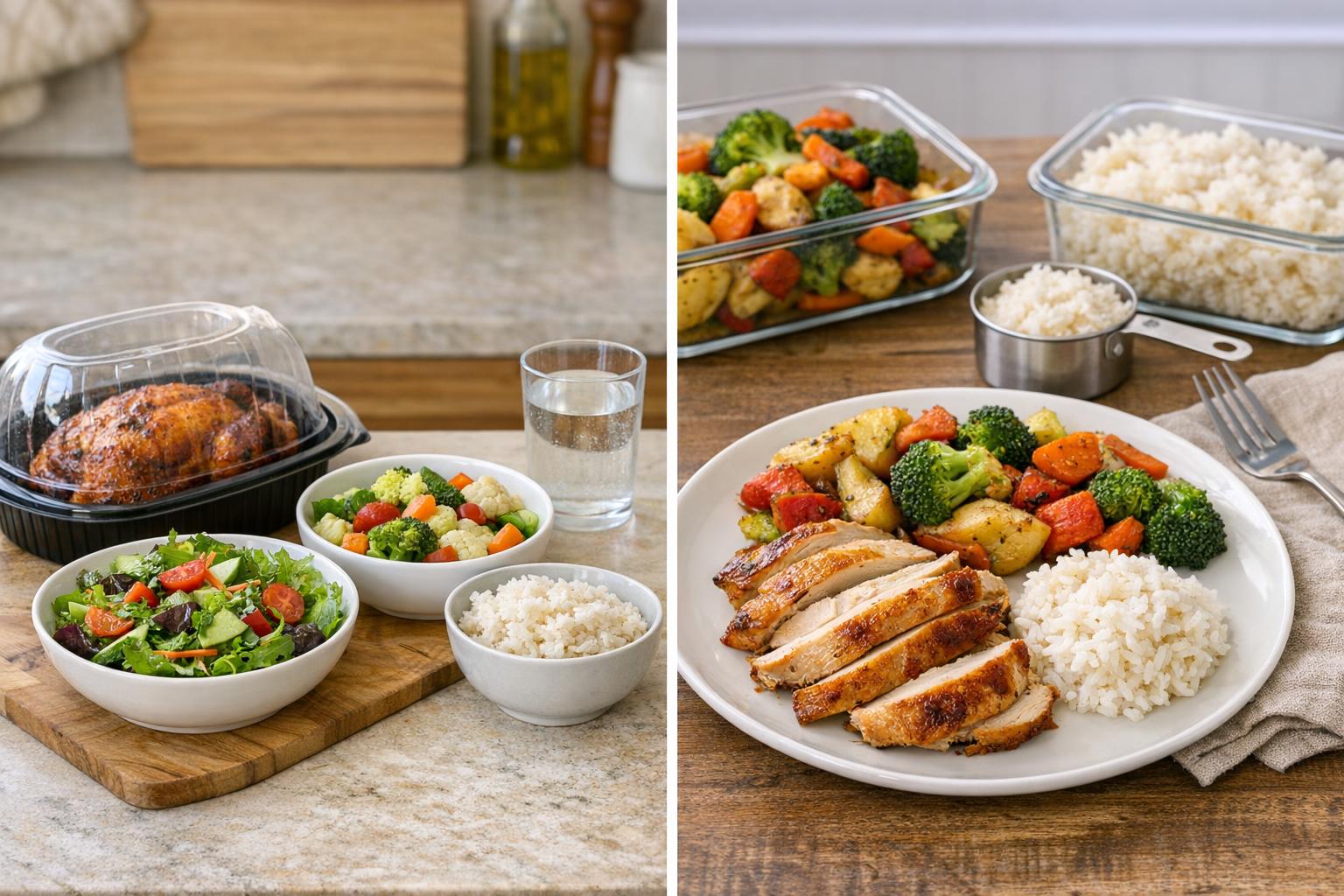
Start with the chicken, but do not stop there
The chicken is the anchor, but it is not the whole dinner. A rotisserie chicken can vary a lot depending on size, seasoning, and how much skin you ate. White meat, dark meat, and skin each shift the total. If you had a generous portion, do not log it like a tiny serving just because it came from a grocery store container.
A good rule is simple. If you ate the skin, count the skin. If you only ate part of the bird, estimate the part you actually ate, not the part that was left behind. Most people make the mistake of logging the chicken like plain grilled breast meat when the dinner was actually juicier, richer, and a little more filling than that.
That does not mean you need perfect precision. It just means you should match the estimate to the meal you really had.
Watch the sides, because that is where the surprise usually lives
Rotisserie chicken is often the thing people worry about, but the sides usually decide the total. A scoop of mashed potatoes, a serving of rice, a buttered roll, mac and cheese, or a creamy salad can add a lot more than a few bites of chicken. Even vegetables can change if they were roasted in oil or topped with sauce.
The simplest habit is to ask, what actually took up space on the plate? If the plate was mostly chicken and broccoli, that is a very different dinner from chicken, potatoes, bread, and a creamy slaw. The grocery store label may not help much here, so the visual of the meal matters more than the name on the package.
If you build the same kind of dinner often, save a default estimate for the version you actually buy, not the ideal version you imagine in your head.
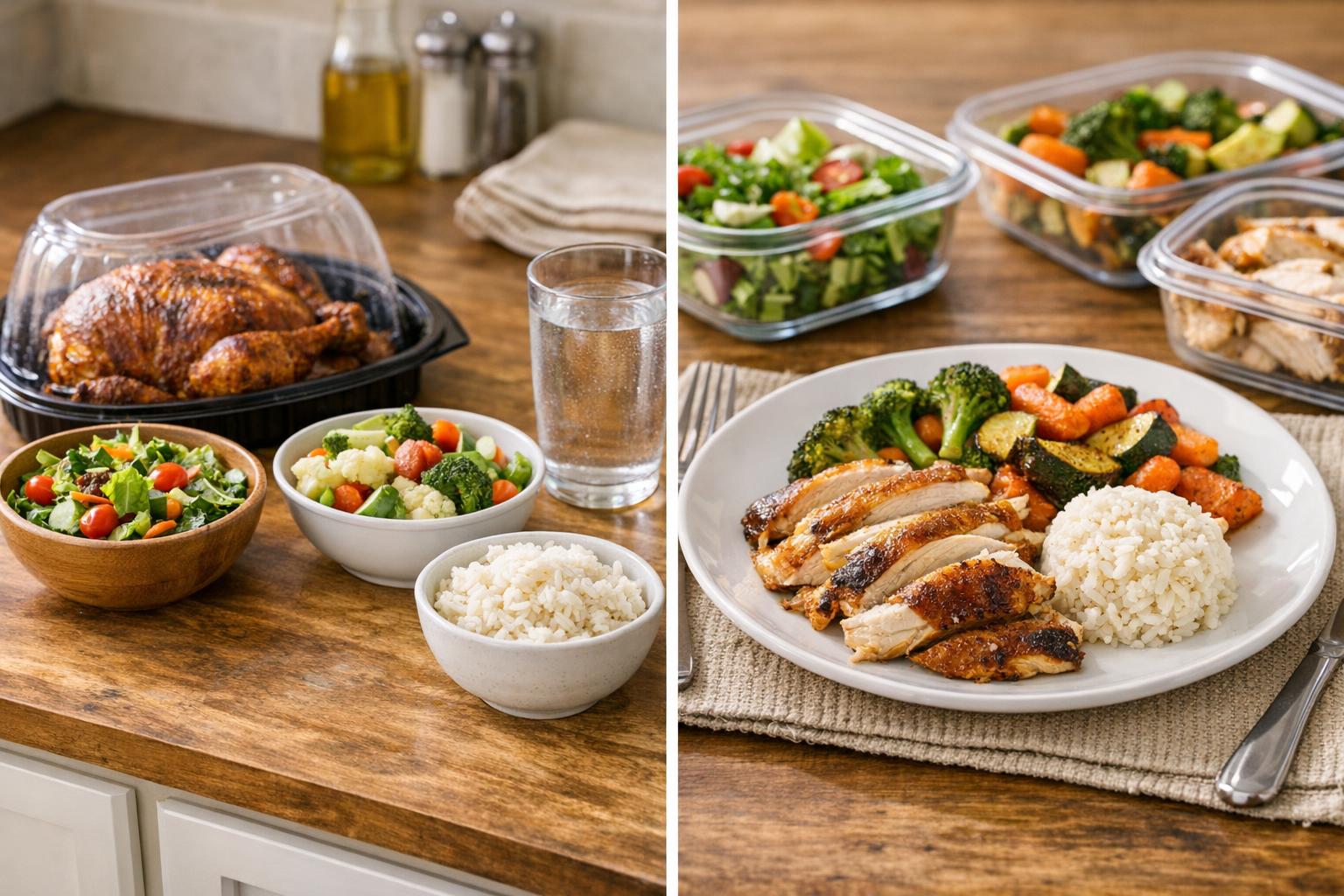
Count sauces, bread, and add-ons separately
Most grocery store dinners are not just chicken and a side. There is usually something extra on the plate. Gravy. Ranch. Butter. Salsa. Dressing. A roll. A drizzle of oil. Those extras can be easy to ignore because they look small, but they are often the part that changes the total from reasonable to richer than expected.
The fix is simple. Log them like they are separate choices. If you put butter on the roll, count the butter. If you poured dressing over the salad, count the dressing. If the chicken came with a sticky seasoning or glaze, do not pretend it was plain and dry. A realistic estimate is more useful than a tidy fake one.
This is especially true with grocery prepared foods because the portions can look homemade while still being built with enough fat and salt to taste good fast.
Make leftovers work for you
One nice thing about rotisserie chicken is that it usually leaves leftovers. That can make the next meal easier if you use it on purpose. The leftover chicken can become a second dinner, a salad topper, or a lunch bowl the next day. The key is to log the leftover portion as its own thing instead of guessing all over again.
If you know the chicken you bought tends to last two meals, that is a huge advantage. You can plan the first dinner, save the rest, and reuse the estimate when the leftovers show up again. That is exactly the kind of real-world repeatability that makes calorie tracking less annoying.
Leftovers are not a problem. They are just a chance to make dinner cheaper, faster, and easier the next day.
Build one default dinner you can reuse
If you buy rotisserie chicken often, create a default dinner and stop re-solving it every time. Maybe your usual plate is chicken, a small scoop of rice, and vegetables. Maybe it is chicken, roasted potatoes, and salad with dressing on the side. Maybe it is chicken with a roll and green beans. The exact combo does not matter nearly as much as the fact that it is repeatable.
Repeatable dinners are easier to log, and easier logging leads to better consistency. Instead of trying to remember whether the grocery store chicken was 380 calories or 430 calories, you just pick your saved default and move on. Calory is useful for that because repeat dinners can be saved once and reused whenever the same grocery run happens again.
That saves time, keeps your estimate honest, and makes the week feel less chaotic.
When the dinner is bigger than you planned
Sometimes the grocery store dinner is not a clean plate at all. It becomes chicken, potatoes, bread, a big salad, dessert, and a drink because everything was already in the kitchen. That is fine. The point is not to eat perfectly. The point is to know what happened.
When the meal gets bigger, use the higher estimate. Do not average it down just because it was still made at home. A rich grocery store dinner can absolutely be a full calorie event, especially if you added a lot of sides. If you log it honestly, the rest of the day still makes sense and you do not have to play catch-up with a mystery number.
Once you do this a few times, you will start spotting the meal patterns that matter most. That is where the real progress comes from.
Frequently asked questions
What is the easiest way to log a rotisserie chicken dinner?
Start with the chicken, then add the sides and sauces separately. That keeps the estimate honest without turning dinner into a project.
Should I count the skin on rotisserie chicken?
Yes, if you ate it. The skin can add a noticeable amount of calories, especially on a richer grocery store chicken.
How do I keep the side dishes from becoming a surprise?
Log them one by one. Rice, potatoes, bread, dressing, and butter all matter more than most people expect.
How can Calory help with repeat grocery dinners?
Calory lets you save a default estimate for your usual rotisserie chicken dinner, so the next grocery store meal is fast to log.