An Italian restaurant dinner feels easy to trust because the food is familiar. Pasta, chicken parm, salad, bread, wine, maybe tiramisu. That familiarity is exactly what makes calorie estimates drift. The meal sounds simple, but the portions, oil, cheese, and extras can make the total much higher than the menu name suggests.
The good news is that Italian food is very pattern-based. Once you know what usually carries the calories, you can log the meal with a lot less guessing. The goal is not to turn dinner into homework. It is to stop letting a comfortable meal become an accidental surprise.
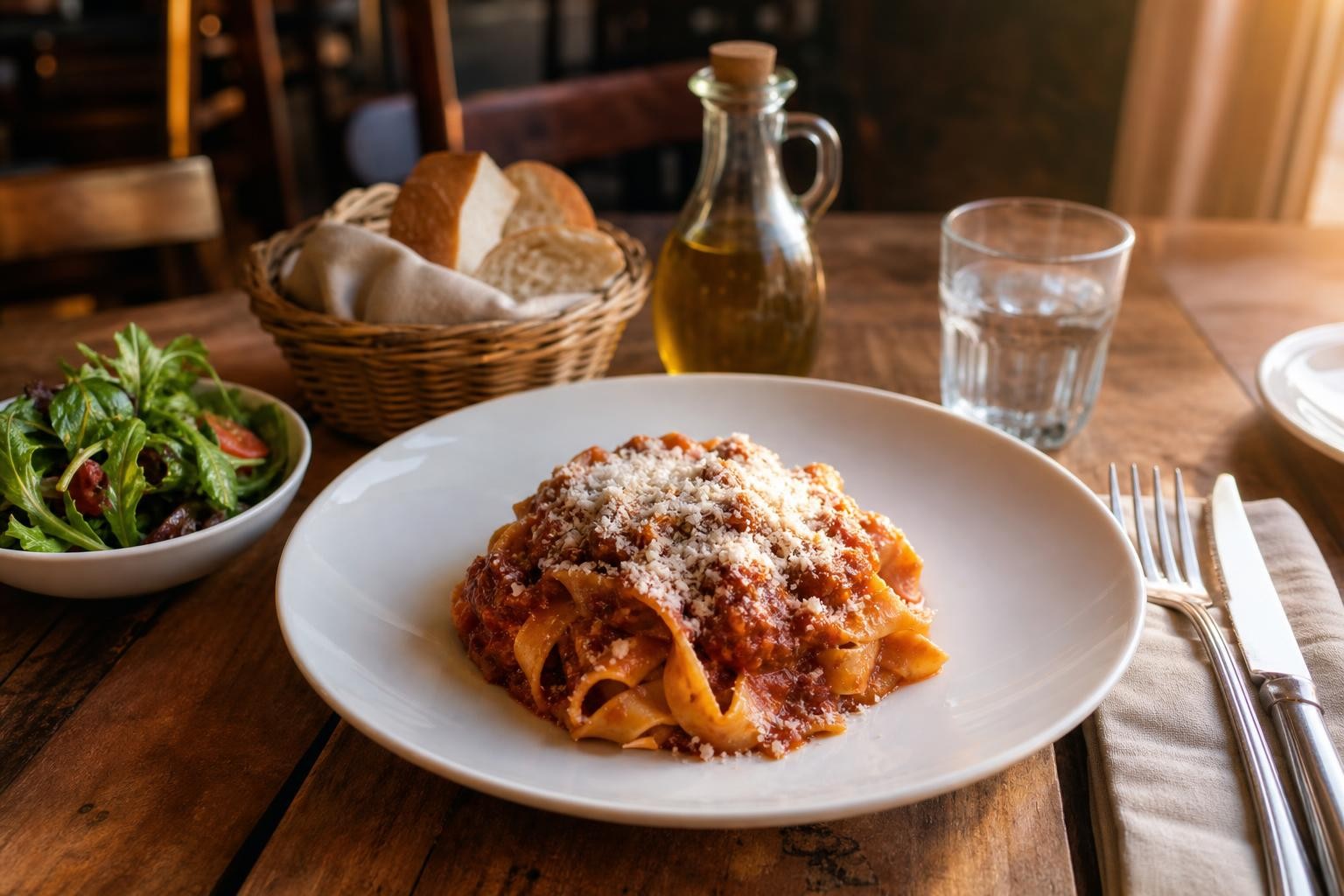
Name the meal before you order
The first step is to describe the dinner in plain language. Is it pasta with sauce, chicken parm with spaghetti, grilled fish with vegetables, lasagna, or a shared family-style spread? That answer matters more than the restaurant branding on the menu.
Italian restaurants often make everything sound equally inviting, which is great for eating and bad for estimating. A light-sounding pasta can still be heavy in oil and cheese. A chicken entree can come with a large side of pasta. A starter salad can become a calorie load if the dressing and bread basket keep coming back to the table.
When you name the meal first, you stop trying to guess from the menu description alone. You start from the food in front of you, which is the only part that really matters.
Count bread, salad, and antipasti
Bread baskets are one of the easiest things to forget because they show up before the main course and disappear one piece at a time. Garlic bread, focaccia, breadsticks, and rolls can add more than people expect, especially if oil or butter is involved.
Salad is another place where the estimate can drift. A basic side salad is one thing. A salad with parmesan, croutons, creamy dressing, and olives is another. The same goes for antipasti plates, fried appetizers, stuffed mushrooms, or mozzarella sticks. They all sound like small shared bites, but those bites often stack up quickly.
If you shared the appetizer, log your share honestly. If you kept reaching for bread while waiting for the entree, count that too. The meal starts before the main plate lands on the table.
Pasta is the anchor
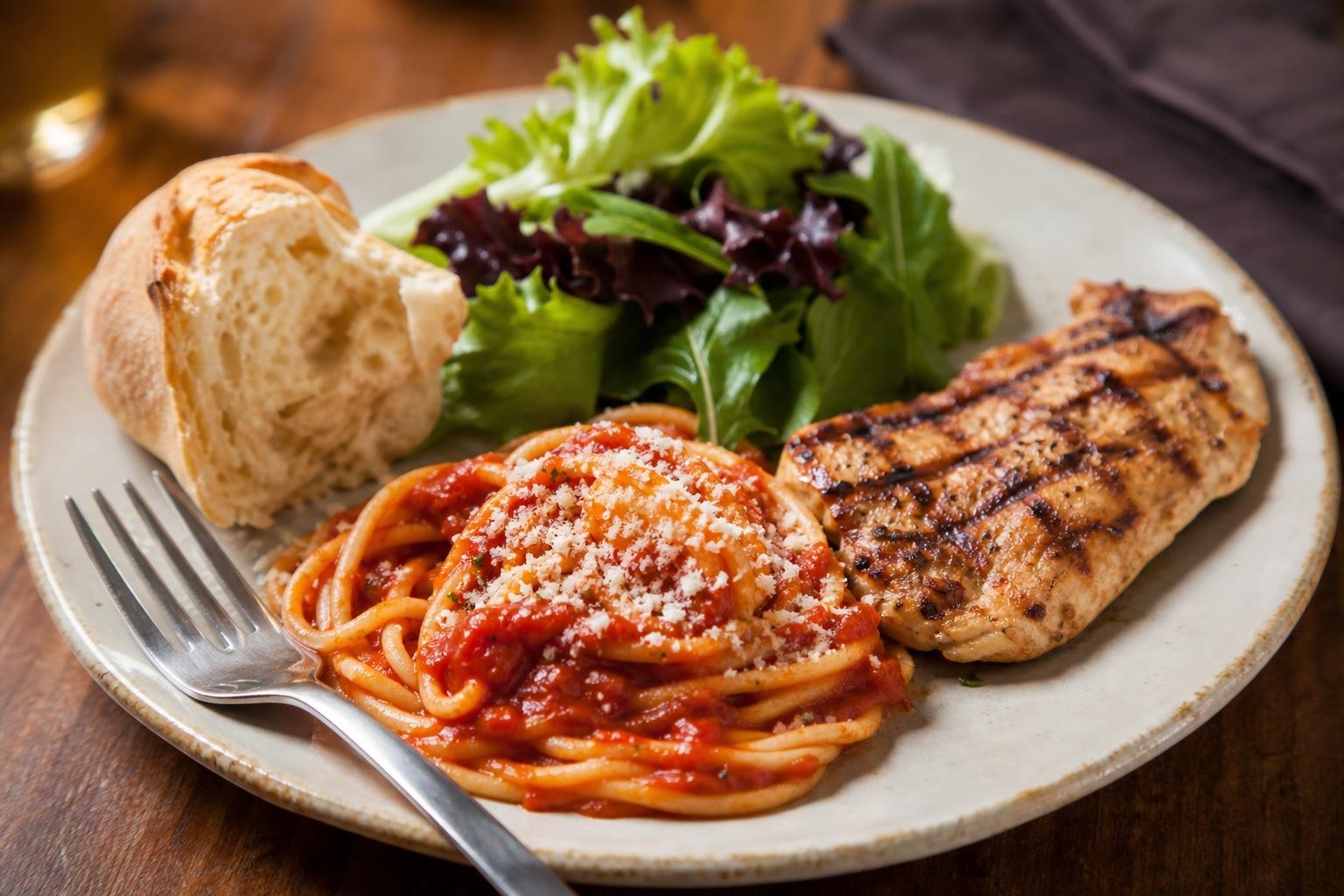
If pasta is on the table, it usually becomes the anchor of the meal. That does not mean pasta is bad. It just means the bowl or plate usually decides most of the calorie total.
Tomato sauce is usually easier to estimate than creamy Alfredo or vodka sauce. Meat sauces can vary based on oil and portion size. Baked pasta dishes can be even trickier because cheese and layered noodles hide a lot of density in a small-looking piece.
A useful way to think about it is this: the pasta shape matters less than the portion and the sauce. Spaghetti, rigatoni, ravioli, and penne can all fit the same dinner pattern once you account for how much is actually on the plate.
If you want a cleaner log, choose one anchor dish and build around it instead of stacking multiple starches. Pasta plus bread plus dessert is not impossible to track, but it is definitely more calories than the phrase “just Italian food” usually implies.
Watch sauces, oil, and cheese
Sauces and toppings are where Italian dinners quietly change character. Olive oil, butter, pesto, cream sauces, parmesan, ricotta, and extra cheese can all bump the total without changing the visual size of the plate very much.
That is why two pasta dishes that look almost identical can land very differently in your log. One might be a lighter tomato-based plate with modest cheese. The other might be slick with oil, layered with cream, and topped with multiple handfuls of parmesan.
None of this means you need to be paranoid. It just means your estimate should include the stuff that makes the meal taste good. Italian restaurants are generous with those extras for a reason.
Drinks and dessert matter too
Wine is common with Italian dinners, and it is easy to treat it like part of the vibe instead of part of the log. If you drink, include it. The same goes for cocktails, soda, sweet tea, or a second glass you forgot about while talking.
Dessert can be the last hidden bump. Tiramisu, cannoli, gelato, cheesecake, and chocolate cake are all normal restaurant choices, but they still need calories assigned to them. If dessert is likely, leave a little room in the budget instead of pretending it will not matter.
The nice thing is that once you make room for these items ahead of time, the meal feels less like a test. You already decided what matters, so you are not scrambling after the fact.
Build a repeatable Italian order
The easiest Italian dinner to track is the one you can order again. Maybe that means grilled chicken with marinara and vegetables. Maybe it means one pasta dish, half the bread, and no dessert most nights. Maybe it means splitting an entree and keeping the starter simple.
Repeatable orders are useful because restaurants can be inconsistent, but your habits do not have to be. If you know your default order, logging gets much faster and you stop reinventing the estimate every time you go out.
That predictability is where calorie tracking starts to feel sustainable. You are not trying to become the person who never enjoys Italian food. You are just making it easier to enjoy it without guessing.
How Calory helps
Calory makes restaurant dinners easier to repeat. Save your usual Italian order, then pull it up next time so you are not rebuilding the same estimate while the bread basket keeps disappearing.
That is especially helpful for meals you love but eat often. Once the default is saved, the restaurant stops feeling random and starts feeling manageable.
FAQ
What should I do if the table shares everything family-style?
Log your share as honestly as you can. If you had two pieces of bread, half the pasta, and a couple of bites of dessert, count what ended up on your plate, not what the table ordered.
Is tomato sauce always a better choice than cream sauce?
Usually it is easier to estimate and often lighter, but portion size still matters. A huge plate of tomato pasta can still be a big meal.
How do I keep Italian dinners from blowing my week?
Pick a repeatable order, keep the extras honest, and leave room in your daily budget if you know dessert or wine is part of the plan.
What is the simplest way to track the meal in Calory?
Save your usual Italian dinner as a default meal. Next time, reuse it and only adjust the parts that changed, like bread, wine, or dessert.