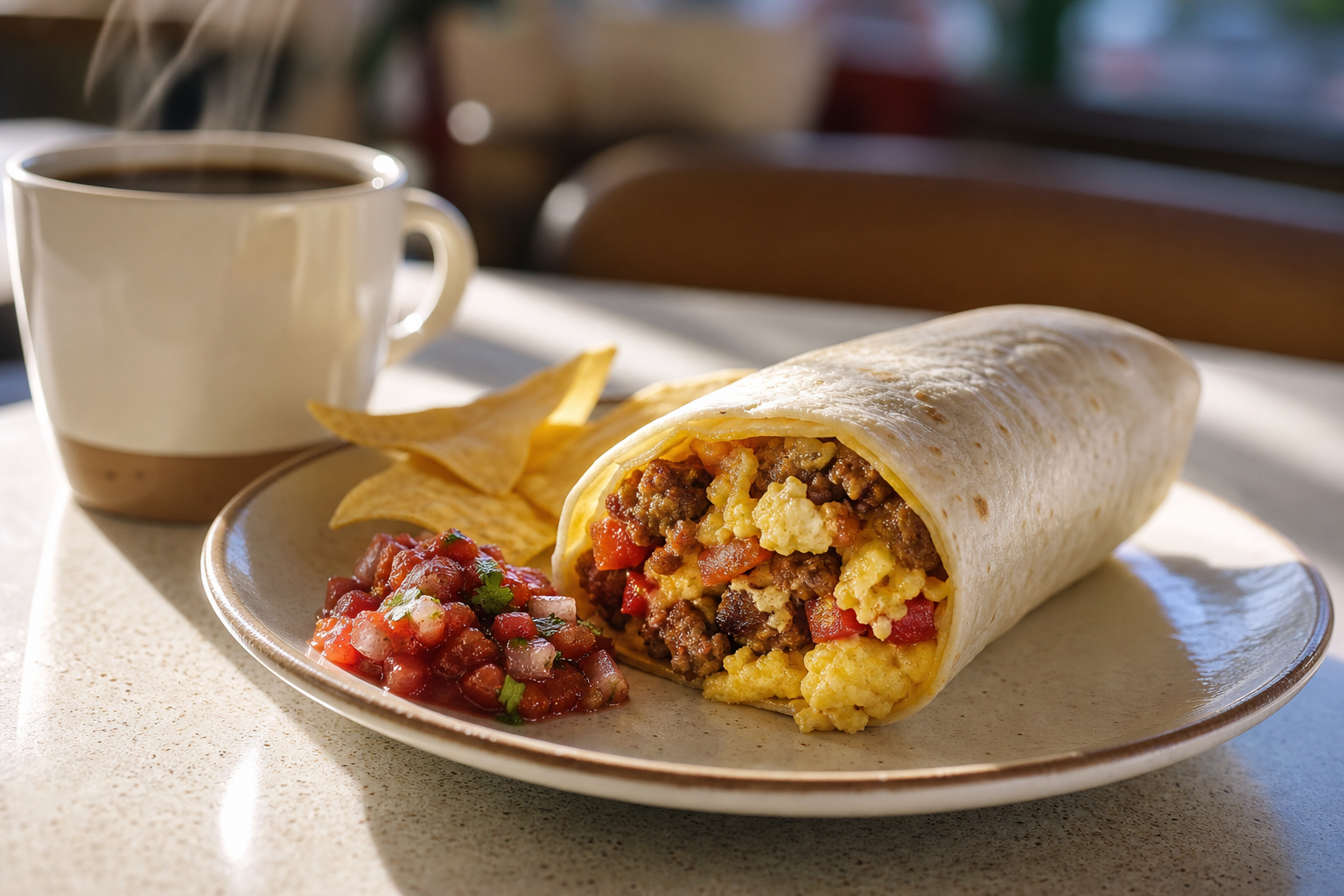
Breakfast burritos are convenient because they compress a full breakfast into one thing you can hold with one hand. That same convenience is what makes them easy to underestimate. The tortilla hides the filling, the plate is usually small or absent, and the meal can be gone before you really think about what was inside it.
The good news is that breakfast burritos are usually simpler to estimate than they look. You do not need the exact recipe. You just need to know the main ingredients, whether the tortilla was large or medium, and whether the burrito came with a lot of cheese, potatoes, or sauce. That is enough to get a practical calorie estimate that still means something.
Why breakfast burritos are easy to miss
The biggest issue is that burritos look smaller than the calories inside them. A dense breakfast burrito can hold eggs, cheese, potatoes, meat, oil, and sauce in a package that still feels casual and portable. It is easy to tell yourself it was "just a burrito" and stop there, even though the ingredients may be doing a lot of work.
The second issue is that burritos often show up in rushed settings. You grab one on the way to work, order it from a counter, or pick it up before a trip. Because the setting is fast, the meal gets logged later from memory, and memory is bad at separating tortilla from filling once the burrito is gone.
The fix is simple: break the burrito back into parts before you estimate it.
Count the parts separately
Start with the tortilla. A large flour tortilla can add a surprising amount of calories all by itself. Then count the filling. Eggs are not the problem; the extras inside the eggs often are. Cheese, potatoes, sausage, bacon, chorizo, and oily cooking methods are the pieces that usually move the number up.
If the burrito had beans, avocado, or crema, include those too. They are all reasonable foods, but they still count. A burrito that looks simple on the outside can be a much richer meal once all the layers are added up.
A practical way to estimate it is to think in chunks:
- Tortilla: small, medium, or large wrap.
- Protein: eggs only, eggs plus meat, or eggs plus multiple fillings.
- Carb add-ons: potatoes, rice, beans, or hash browns inside the wrap.
- Rich extras: cheese, sauces, oil, crema, avocado, or sour cream.

Watch the add-ons
The burrito itself is only part of the story. The add-ons can change the meal more than people expect. Salsa is usually light. But a creamy sauce, queso, extra cheese, or a side of potatoes can push the total much higher. Coffee drinks are another common surprise if the burrito comes with breakfast on the go.
Another sneaky detail is that burritos are often cooked with some oil or butter on the grill. That is not a reason to panic, but it is a good reason not to assume the lower end of the range if the burrito tasted rich or looked greasy. A lightly grilled burrito and a heavily loaded, cheese-forward burrito do not live in the same calorie neighborhood.
If you want to keep the meal calmer, choose one rich element instead of three. For example, keep the cheese but skip the potatoes. Or keep the potatoes and keep the sauce simple. That way the burrito still feels satisfying without quietly becoming a much bigger breakfast than you planned.
Cafe, drive-thru, and diner orders all need slightly different guesses
A cafe burrito is often more customizable, which makes it easier to judge ingredient by ingredient. A drive-thru burrito is usually more standardized, so you can lean on the menu description and the size. A diner burrito can be the trickiest because it may be bigger than it sounds and can arrive with a lot more cheese, potatoes, or oil than a home-style version.
If the burrito came with a side, count the side separately. Salsa is usually minor. Hash browns or home fries are not. And if the burrito was wrapped around a full breakfast plate worth of ingredients, do not use a tiny homemade-burrito estimate just because it was technically handheld.
When the menu is vague, use the food itself as the clue. Big, dense, cheesy, and greasy usually means higher. Smaller, simpler, and leaner usually means lower.
Make it repeatable in Calory
The best estimate is the one you can reuse. If you have one burrito you order a lot, save it in Calory as a default breakfast. Then make a second version if you sometimes add potatoes or a sweet coffee drink. That gives you a realistic range without forcing you to rebuild the same guess every morning.
Repeatable estimates are especially useful for breakfast because mornings are already busy. You do not want to spend extra time rethinking the same order you already know works. Once you have a default burrito logged, you can stay honest about your calories and still keep breakfast fast.
That is the sweet spot: a breakfast that feels convenient, tastes good, and still fits the day you are trying to build.
FAQ
What usually makes a breakfast burrito higher in calories?
The tortilla size, cheese, potatoes, meat, and sauces usually drive the total up faster than the eggs themselves.
Is a breakfast burrito always a bad choice for weight management?
No. A breakfast burrito can fit fine if you choose a reasonable portion, keep the fillings simple, and count the extras honestly.
How should I log a burrito when the menu is vague?
Estimate by the main drivers first. Tortilla, eggs, potato, cheese, meat, and sauce explain most of the calories even when the exact recipe is unknown.
How can Calory help with breakfast burritos?
Calory makes it easy to save a repeat burrito estimate, so the next time you order the same breakfast you can log it in seconds instead of guessing again.