A diner breakfast is one of those meals that feels familiar enough to trust too quickly. Eggs, toast, potatoes, bacon, maybe pancakes, maybe coffee. It looks like the kind of order that should be easy to estimate, which is exactly why people underestimate it. The portions are bigger than they seem, the cooking fat is easy to miss, and the extras often arrive in small containers that disappear from your memory almost immediately.
The good news is that diner breakfasts are also very predictable. Once you learn the few places where calories usually hide, it gets much easier to log the meal without turning breakfast into a puzzle. The trick is to think about the diner plate as a complete order, not just a pile of breakfast items sitting next to each other.
Name the meal before you order
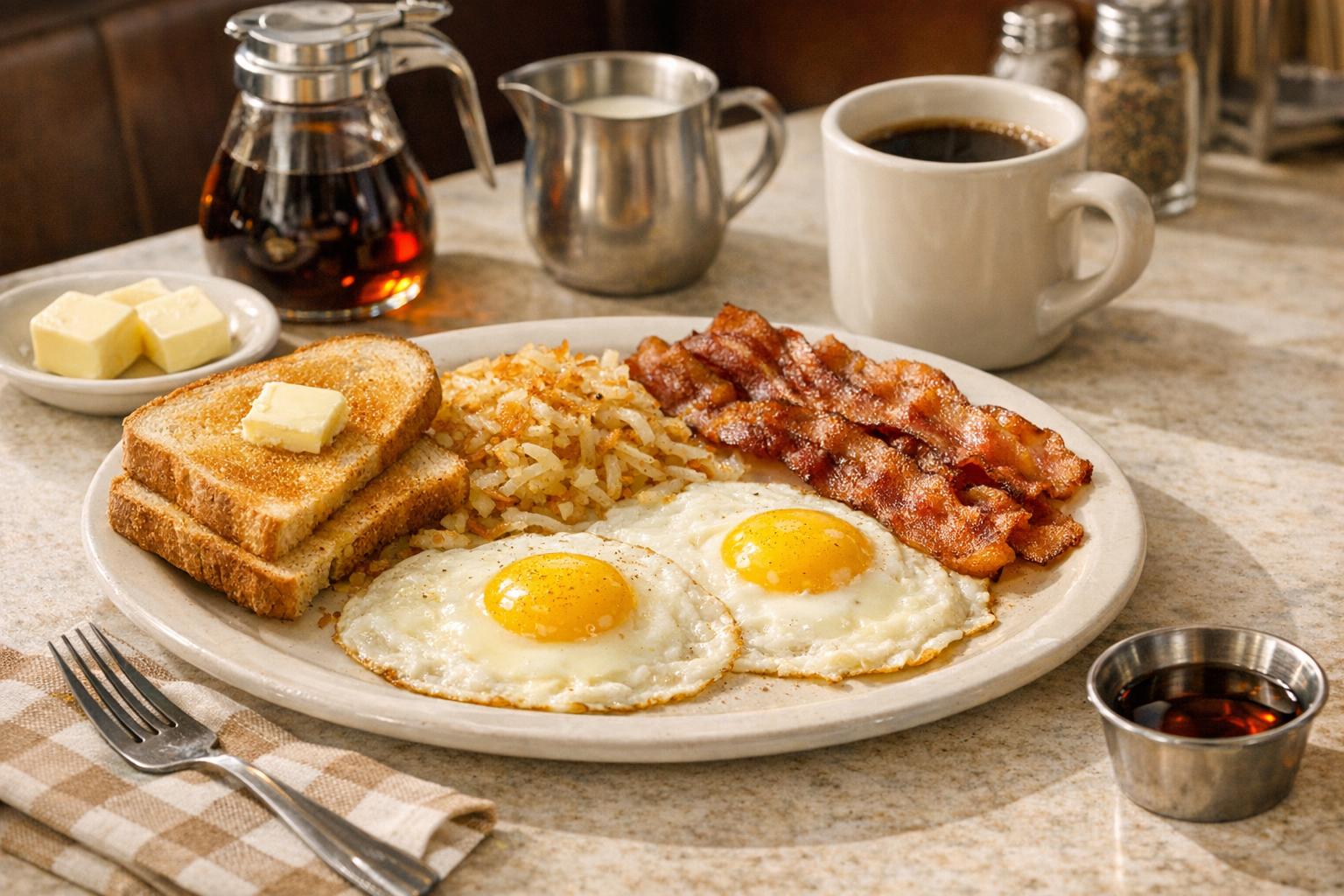
The biggest calorie-tracking mistake with diner food is treating every breakfast like a loose collection of items. In reality, most diner orders fall into a few patterns. There is the eggs-and-toast plate. There is the meat-and-eggs plate. There is the pancake stack. There is the skillet or omelet with potatoes. There is the full breakfast combo that quietly becomes lunch before you even leave the booth.
Once you name the meal, the estimate gets much easier. An eggs-and-toast plate behaves differently from a three-pancake stack with syrup. A skillet with cheese and potatoes behaves differently from a plain omelet. If you know the shape of the meal first, you stop trying to guess from the menu copy and start estimating from the actual food.
That small mental step matters because diner menus are built to sound friendly, not to help you log calories. The words are comforting, but the calories live in the portions.
Count the sides, not just the center of the plate
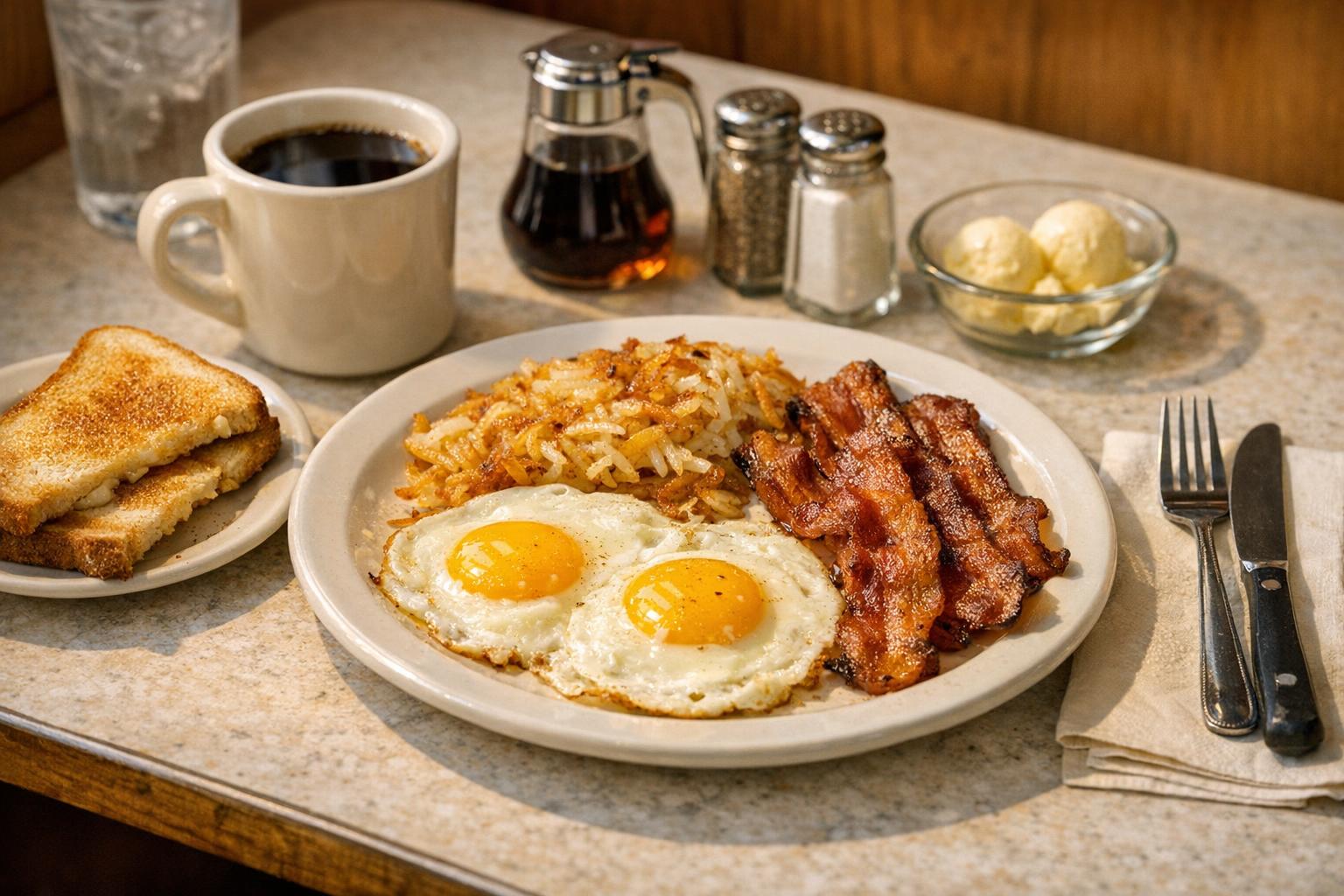
Eggs usually get all the attention because they sit in the center of the plate. But the sides often matter just as much. Toast is easy to dismiss. Hash browns and home fries are easy to treat like decoration. Bacon and sausage look small enough to ignore. In a diner setting, those extras are not background noise. They are part of the meal.
A common mistake is to log the eggs and forget the toast plus butter. Or to log the omelet and forget the potatoes plus toast. Or to count the pancakes and ignore the syrup refill that showed up with the coffee. Diner food works best when you count the whole plate at once, because that is how the meal is actually served.
If you want the estimate to stay honest, ask yourself what came with the plate, not just what was listed first on the menu. That keeps the hidden calories from sneaking in through the sides.
Pancakes and waffles are the main event
If the meal includes pancakes or waffles, count them as the anchor, not the side. They are usually the part that changes the calorie total the most. A stack with butter and syrup can be a very different breakfast from eggs and toast, even if both orders sound equally normal when spoken out loud.
Pancakes also create a quiet tracking problem because the calories do not arrive all at once in your mind. First you see the stack. Then you add butter. Then you add syrup. Then you remember the sausage or bacon that came with it. Then you realize the coffee was not plain after all. None of those pieces is unusual, but together they can turn a casual breakfast into a pretty big meal.
The easiest fix is to decide whether the pancake stack is the meal or just a side. If it is the meal, log it that way and keep the rest of the plate simple. If it is not the meal, pick the simpler breakfast and skip the stack. That decision alone can save a lot of guesswork.
Do not forget the butter, syrup, and coffee
Butter and syrup are the classic diner trap because they show up in small amounts and disappear from memory fast. A pat of butter is not huge, but it still counts. Syrup is the same way. A few pours on pancakes or waffles can add more than people expect, especially when the meal is already built around a dense base like potatoes and bread.
Coffee can also change the total if it comes with cream, flavored creamer, or sugar. That does not mean coffee is a problem. It just means the drink deserves the same honest treatment as the food. A plain black coffee is easy. A sweetened diner coffee with cream and refills is a different story.
The point is not to make breakfast joyless. It is to make the estimate match the actual plate. If the butter and syrup made the meal better, they were still part of the meal.
Use a repeatable diner order
The smartest diner breakfast is the one you can repeat. Maybe that means two eggs, toast, and hash browns. Maybe it means an omelet with one side item. Maybe it means pancakes on weekends and something simpler on weekdays. A repeatable order turns breakfast into a known quantity instead of a fresh guessing game every time.
Repeatability matters because diner meals are often social or habitual. You may go with family, stop after a workout, or grab breakfast while traveling. If you already know your usual breakfast shape, you do not have to renegotiate the whole plate every time. You just order your default, log your default, and move on.
That is where calorie tracking gets easier in real life. Not when you become perfect, but when you stop making the same meal a new problem every week.
If you split food or order too much, log your share honestly
Diner portions are often bigger than necessary, which makes sharing tempting. If you split a plate, a stack of pancakes, or a side of hash browns, log the part you actually ate, not the part that looked fair in theory. Shared food gets messy quickly because the butter, syrup, and potato portions are rarely split evenly.
The same goes for ordering too much. It is common to plan on a lighter meal, then end up with toast, potatoes, meat, and pancakes all at once because the menu made everything sound reasonable. If that happens, just log the full meal honestly. Under-counting because the order was bigger than planned is how a diner breakfast becomes a surprise later in the day.
How Calory helps
Calory makes diner breakfasts easier to repeat. Save the version you usually order, then pull it up next time instead of rebuilding the estimate from scratch while the coffee gets cold.
That is especially helpful for the meals you eat often but never think too hard about. Once the diner default is in your log, breakfast stops being vague and starts being predictable.
FAQ
What is the easiest diner breakfast to track?
An eggs-and-toast plate is usually easier than a big skillet or a pancake stack because there are fewer rich add-ons to remember.
Why do diner breakfasts get undercounted so often?
Because the meal feels familiar. People count the obvious item, then forget the potatoes, butter, syrup, or coffee add-ins that were part of the real order.
Should I skip pancakes if I am trying to lose weight?
Not necessarily. It is better to decide whether pancakes are the main event that day and log them honestly than to eat them and pretend they were tiny.
What is the simplest way to stay consistent?
Pick one default diner breakfast and reuse it. A repeatable order is much easier to track than a brand-new combination every time.