Stir-fry night looks easy to log because the food is right there in front of you. The vegetables are visible, the protein is obvious, and the whole meal feels cleaner than a takeout box or a loaded restaurant plate. That is exactly why it is so easy to undercount. A little extra oil, a heavier sauce, a bigger scoop of rice, or a second handful of noodles can change the meal more than it seems at the stove.
The good news is that stir-fry is one of the easiest meals to make predictable once you know what actually drives the calories. You do not need to measure every carrot. You just need to be honest about the base, the oil, the sauce, and the portion size. That is enough to make the meal fit your plan without turning dinner into homework.
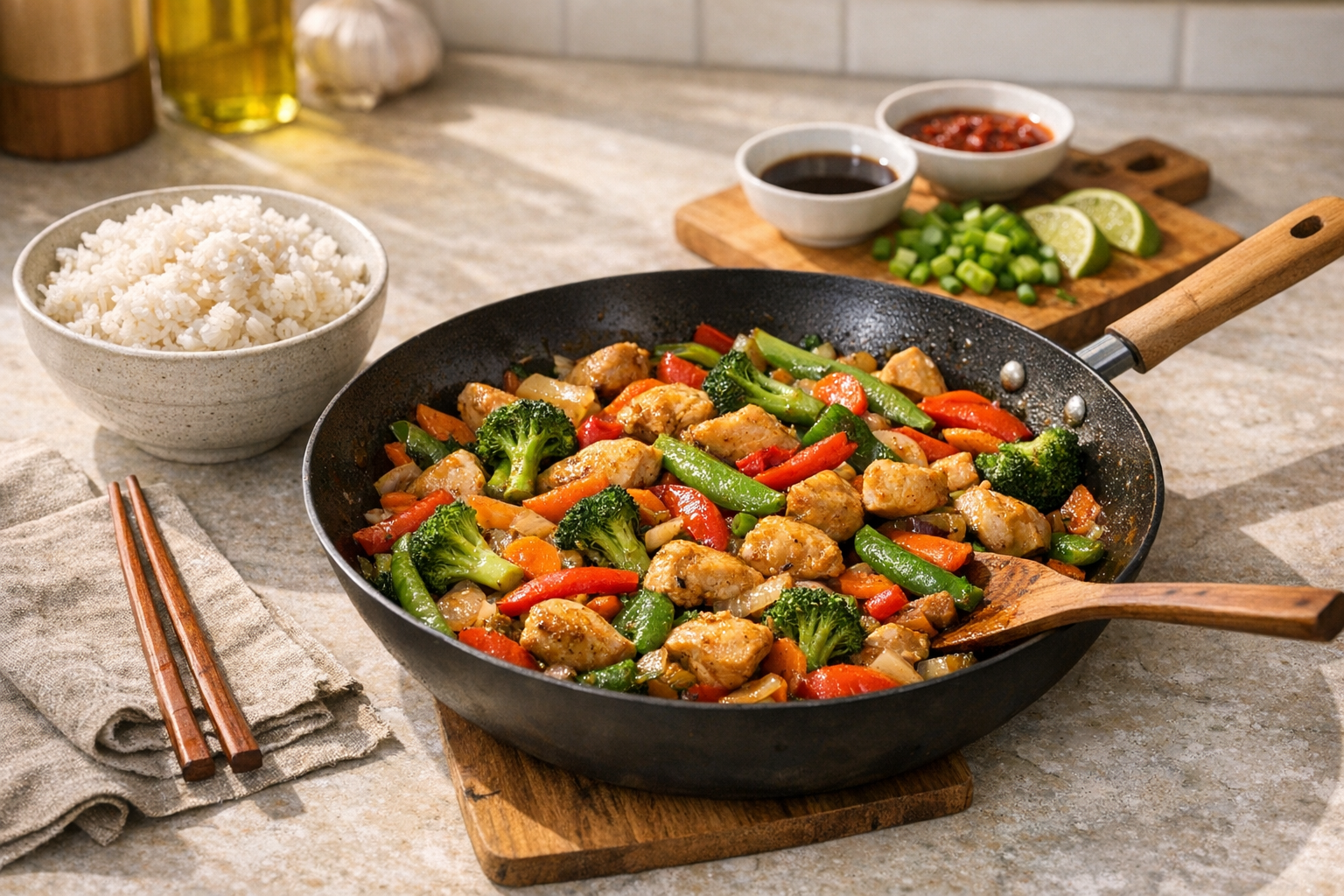
Why stir-fry calories are easy to underestimate
People often assume stir-fry is automatically light because it starts with vegetables. But vegetables are only one part of the pan. The calories usually come from the things that make the meal taste good and feel satisfying: cooking oil, noodles or rice, sauce, and sometimes a richer protein or garnish. A meal can look colorful and still be more calorie dense than expected.
Another reason stir-fry gets underestimated is that the pan hides volume changes. A tablespoon of oil disappears quickly across the surface. Sauces thin out and coat everything. Noodles settle into the bottom of the bowl. What looked like a modest skillet can become a very different plate once it is served.
If you want a useful rule, think of stir-fry as a meal with a visible base and invisible add-ons. The visible part is the easiest to admire. The invisible part is what usually changes the number.
Start with the base first
The base is where most people get vague. Is it rice, noodles, a mix of both, or mostly vegetables? That question matters because the base sets the calorie floor for the meal. A stir-fry over white rice behaves differently from a noodle stir-fry, and both behave differently from a vegetable-heavy pan served with only a small starch portion on the side.
If you are cooking at home, decide on the base before anything goes into the pan. Measure the rice or noodles the same way you would measure any other carb source. If you are ordering takeout, ask yourself what the default base probably was. Many restaurant stir-fries come with more starch and more oil than people realize, so it is safer to log the higher side if the portion looks generous.
Here is the simplest way to think about it: the base is not garnish. It is the frame that holds the rest of the meal together, so it deserves its own estimate.
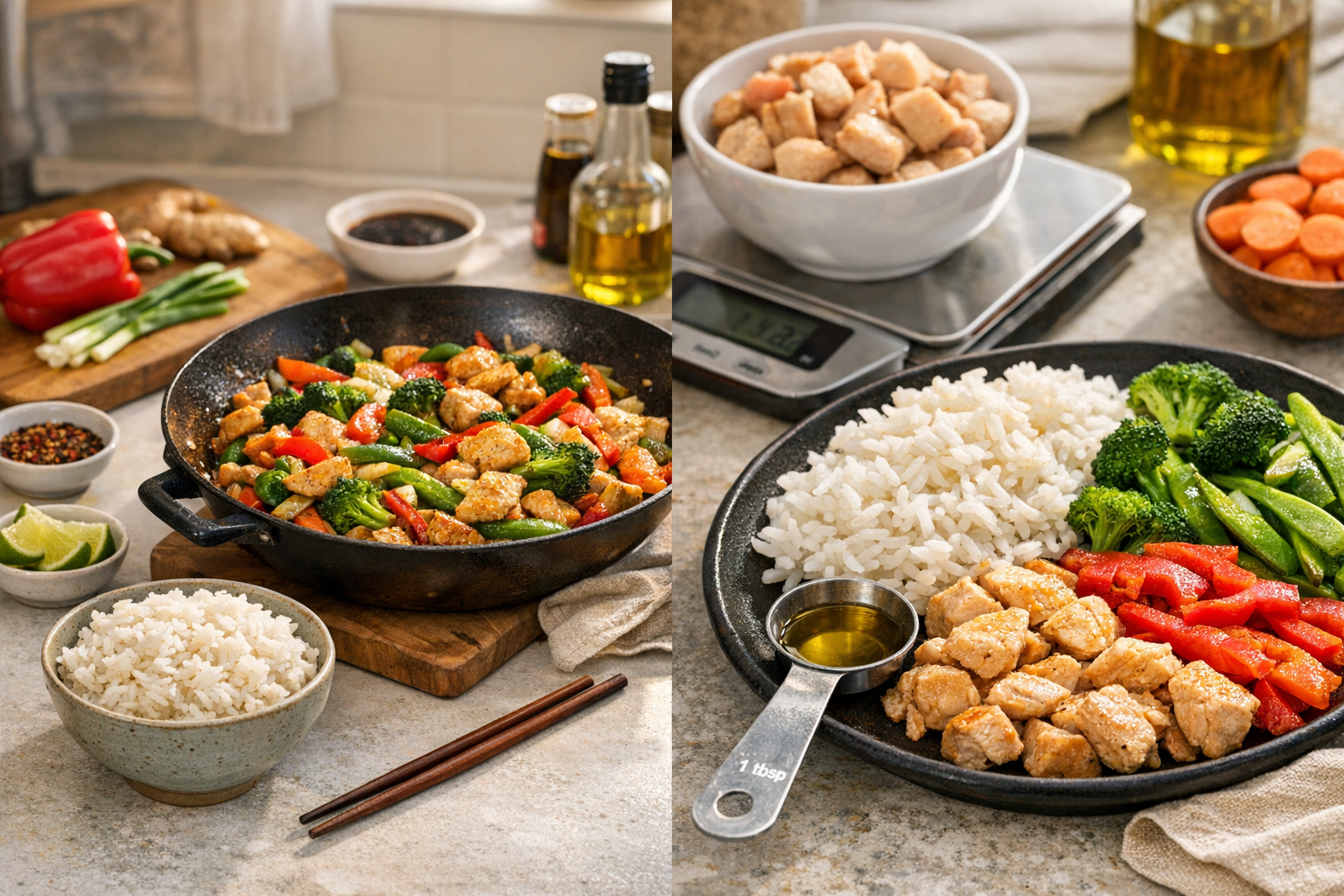
Count oil and sauce honestly
This is the part that usually matters most. A pan can go from reasonable to rich very quickly when oil and sauce stack up. Oil is especially sneaky because it looks like cooking technique, not a topping. But calories do not care whether the fat came from a skillet, a spoon, or a bottle. It still counts.
Sauce deserves the same honesty. Soy-based sauces, teriyaki, sweet chili, hoisin, garlic sauces, peanut sauces, and stir-fry glazes all taste different, but they have one thing in common: they can add up fast if you pour generously. A light coating is one thing. A glossy, restaurant-style glaze is another.
If you are cooking at home, a good habit is to decide on the oil before the pan gets hot. That makes it easier to stay consistent. If you are eating out, assume the kitchen used more oil than you would at home. That single adjustment usually makes the estimate more realistic.
Choose protein and vegetables with portion awareness
Chicken, shrimp, tofu, beef, eggs, and edamame all change the calorie profile in different ways. Lean protein can make the meal more filling without a huge calorie jump. Richer cuts or breaded protein can push the meal higher. That does not make them bad choices, it just means they should be estimated like the real food they are.
Vegetables are the easy part, but even vegetables have a role in the total. Broccoli, bell peppers, mushrooms, onions, carrots, snap peas, and cabbage are all great in stir-fry because they add volume and texture. Still, the pan is only low-calorie if the sauce and oil stay under control. A mountain of vegetables cooked in a rich sauce is not the same thing as steamed vegetables on the side.
One useful habit is to build the plate around a protein target first, then let vegetables fill the rest of the space. That makes the meal feel complete without becoming accidental overkill.
Rice, noodles, and serving size matter more than you think
Stir-fry calories change a lot depending on whether you are looking at a modest bowl or a deep takeout container. A few extra forkfuls of noodles or rice are easy to miss in the moment, especially when the meal is hot and satisfying. That is why portion size matters as much as ingredients.
When you cook at home, serve the starch on a plate or in a bowl before the stir-fry is added. That makes the portion obvious. When you eat takeout, use the container shape as a clue. A flat, narrow container usually signals less food than a deep, packed one. If the meal looks like it could feed more than one person, log it like it could.
You do not need perfect precision. You just need a habit of noticing whether the serving looks small, normal, or large. That one question saves a lot of guesswork.
Build a default stir-fry you can repeat
The best stir-fry is usually the one you can make the same way on a busy weeknight. A repeatable default removes the mental load. For example, you might settle on one protein, two or three vegetables, one measured scoop of rice, one tablespoon of oil, and one sauce you like enough to use every time. That turns dinner into a pattern instead of a surprise.
A default also makes calorie tracking less annoying. Once the meal is familiar, you are not starting from zero every time. You know what the pan usually looks like, how much rice you used, and whether the sauce stays light or leans rich. That kind of repetition is what makes calorie tracking sustainable.
If you cook stir-fry often, save the meal once in Calory and reuse it. Then you can tweak the oil or starch the next time instead of rebuilding the whole entry from scratch.
Home-cooked vs takeout stir-fry
Home-cooked stir-fry gives you more control, which usually means the estimate can be more accurate. Takeout stir-fry is the opposite. The portions are often larger, the oil is less visible, and the sauce can be heavier than expected. If you are not sure, log the takeout version a little higher than your home version.
That is not pessimism, it is realism. Most tracking problems come from pretending restaurant food matches the lighter version in your head. It usually does not.
FAQ
What is the biggest calorie source in stir-fry?
Usually the oil, sauce, and starch portion matter more than the vegetables. Protein can matter too, but the hidden extras are what usually change the total fastest.
Is stir-fry good for weight loss?
It can be. Stir-fry works well when the vegetables are generous, the protein is reasonable, and the oil and sauce stay measured instead of floating free.
How do I log restaurant stir-fry?
Use the higher side of your estimate if the container is large or glossy with sauce. Restaurant stir-fry often has more oil and more starch than a home version.
Can Calory help with repeat stir-fry meals?
Yes. Save your default stir-fry once and reuse it next time. That makes tracking faster and keeps the meal easier to compare from week to week.