Curry night can feel friendly to calorie tracking because the meal usually arrives as one bowl, one plate, or one takeout container. The problem is that the things that make curry taste good are also the things that can make the estimate drift. A rich sauce, a big scoop of rice, a few pieces of naan, or a heavier restaurant portion can move the number much more than people expect.
The fix is not to overthink every spice. It is to separate the meal into the parts that actually matter. Once you know how to judge the base, the sauce, the protein, and the extras, curry stops being a guessing game and starts being just another dinner you can log with confidence.
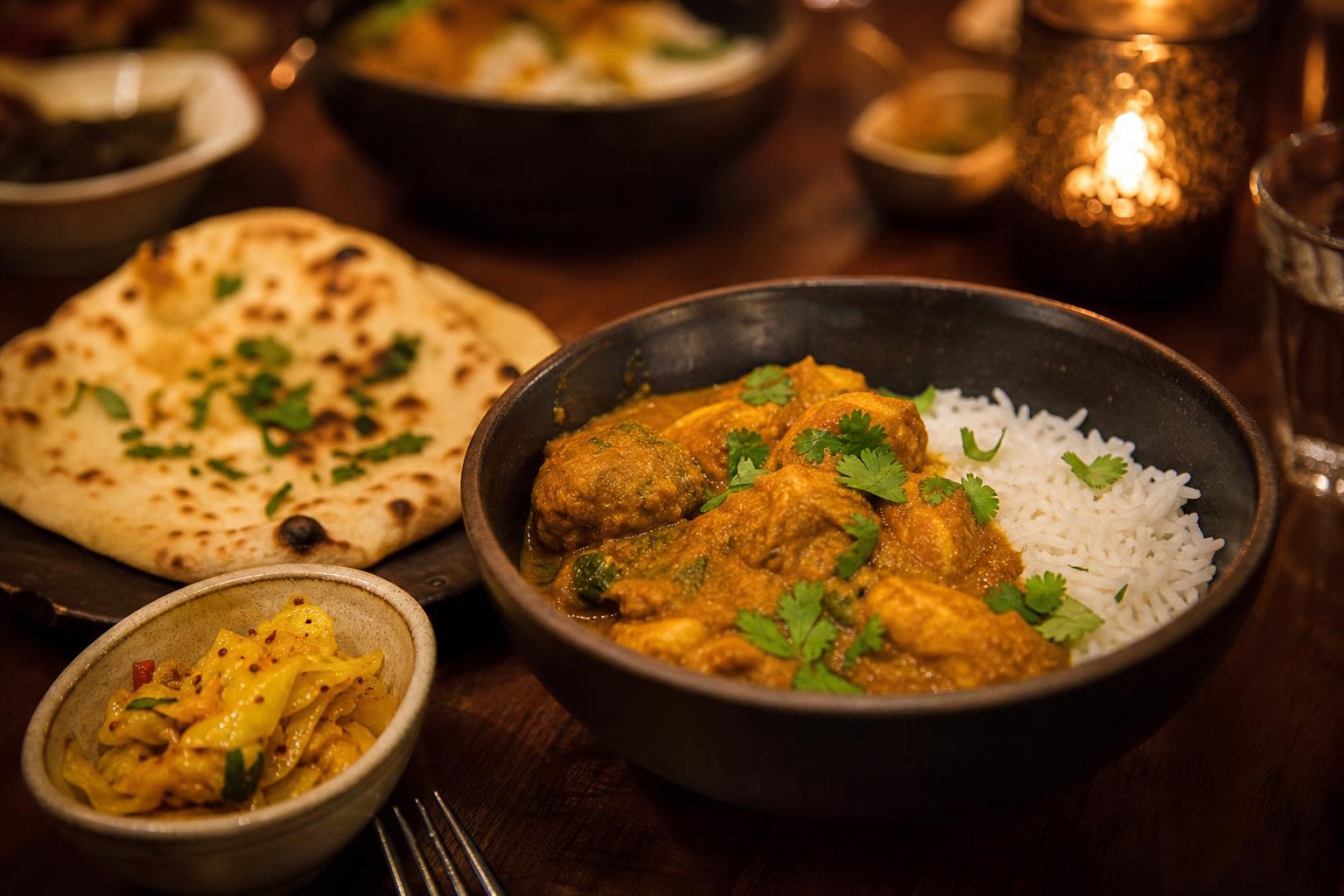
Why curry calories get underestimated
Curry often looks lighter than it is because the most important ingredients are mixed together. The vegetables are visible, the protein is visible, and the sauce covers everything else. That makes the meal feel tidy, but the calories are often hiding in the background. Coconut milk, cream, butter, oil, sugar, and nut-based sauces can make a dish much richer than the photo suggests.
Another problem is that curry is usually served with a starch, not by itself. Rice and naan are easy to treat like a small extra, but they can add a meaningful amount to the total. If you are eating out, the portions are usually generous enough that the meal can become much more calorie dense than a home version would be.
So the first rule is simple. Do not estimate curry from the color alone. Estimate it from the sauce and the sides.
Start with the base first
The base is usually rice, naan, or both. That base sets the floor for the meal. A bowl of curry over a light scoop of rice is one thing. A full container of curry with a pile of naan on the side is something else entirely. If you skip the base, the estimate usually comes in too low.
At home, decide how much rice you want before the curry hits the bowl. That makes the portion visible instead of improvised. At a restaurant, notice whether the curry is meant to be eaten mostly with rice, mostly with bread, or both. If the meal comes with a large serving of rice and a full naan, assume the total is higher than a modest home plate.
A good mental shortcut is to think of the starch as part of the meal, not an optional add-on. That one change makes tracking much more accurate.
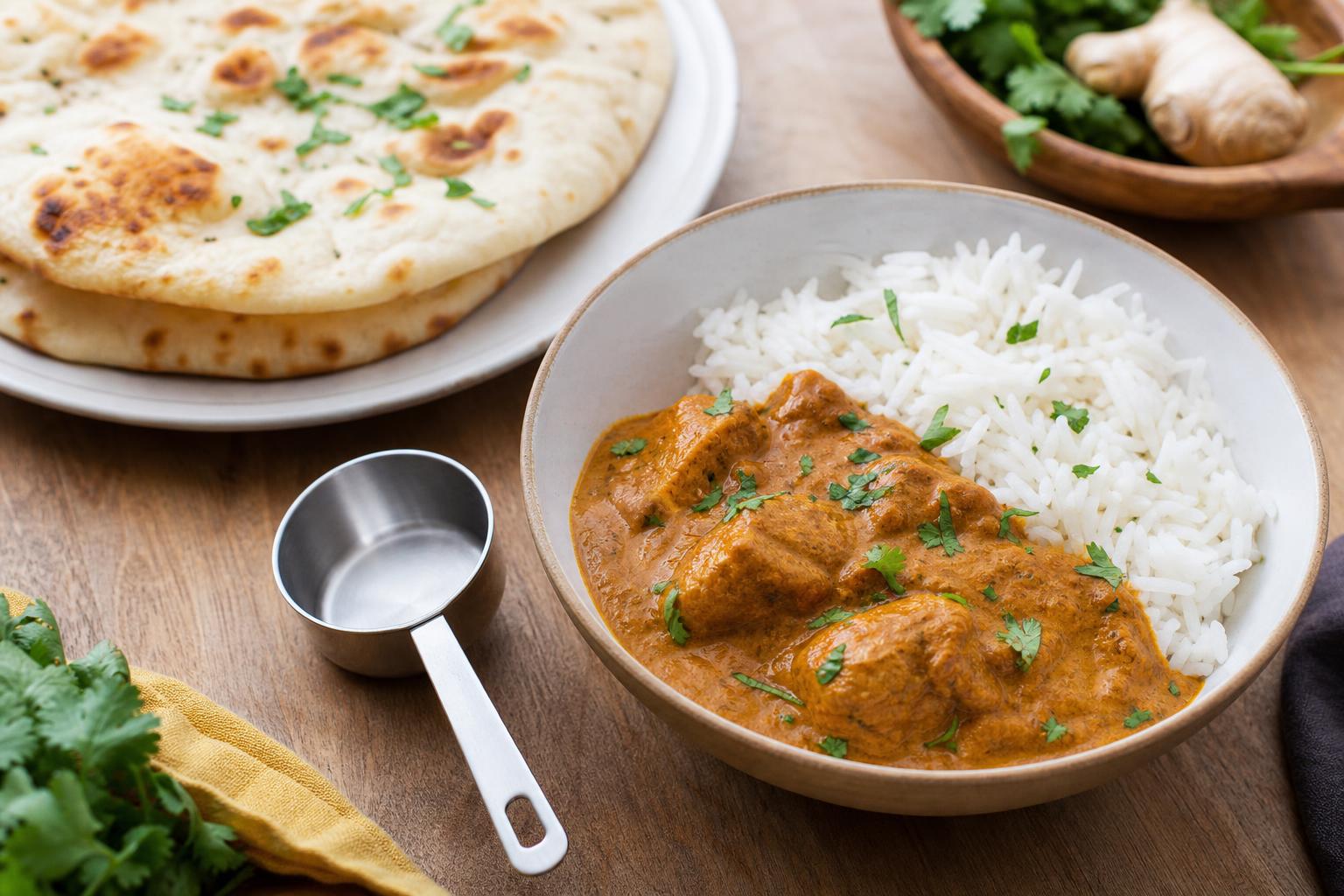
Count the sauce and fat honestly
This is where curry usually changes the most. A light tomato-based curry behaves differently from a cream-heavy tikka masala or a coconut curry with a richer body. None of those are bad choices. They just are not the same calorie profile. If the sauce is glossy, creamy, or thick enough to coat the spoon, it probably matters more than the rice side.
Cooking fat matters too. Oil or butter used in the pan does not disappear just because it is mixed into the sauce. It still counts. If you cook curry at home, try to be consistent with how much fat goes in from the start. If you are eating takeout, assume the kitchen used a little more richness than you would at home unless the dish clearly looks very light.
The easiest habit is to estimate curry by style, not by vibe. Creamy, coconut-heavy, or nut-heavy sauces belong on the higher side. Lighter broth-style curries can be estimated a bit lower. That small distinction helps a lot.
Protein and vegetables still matter
Chicken, paneer, beef, shrimp, tofu, lentils, and chickpeas all change the meal in different ways. Protein helps with fullness, but the type of protein still matters. Paneer and richer meat cuts usually bring more calories than lean chicken or shrimp. Lentils and chickpeas can be very useful in a tracking plan because they are filling and predictable when the portions stay reasonable.
Vegetables are the part most people feel good about, and that is fair. They add volume, texture, and balance. But vegetables do not cancel out a heavy sauce. A curry can be loaded with vegetables and still be calorie dense if the sauce is rich and the portion is large.
If you want a stable routine, build the meal around one protein choice and let the vegetables stay consistent. That way the only moving parts are the sauce and the starch, which are the parts that matter most anyway.
Watch the extras
Naan is the obvious one, but the small extras can matter too. Samosas, pakoras, papad, chutney, raita, dessert, sweet drinks, and extra rice can easily push the meal upward. None of these need to be banned. They just need to be counted like real food instead of treated like background noise.
If you are trying to keep curry night manageable, pick one or two extras instead of all of them. Maybe you keep the naan and skip the fried appetizer. Maybe you get the appetizer and keep the rice small. That kind of tradeoff is usually easier than trying to track a perfect plate that never actually happens.
One practical trick is to decide your extras before you order. Once the food is on the table, it is much harder to be honest about the totals.
Home-cooked vs takeout curry
Home-cooked curry usually gives you the most control. You know how much rice you made, how much oil went in, and whether the sauce stayed light or rich. Takeout curry is less predictable. The bowl is often deeper than it looks, the sauce is richer than expected, and the rice portion can be much larger than a home scoop.
That means the safe move is usually to log takeout curry a little higher than your home version. If the container is deep, the sauce is thick, or the meal came with both rice and naan, the conservative estimate is usually the better estimate.
That is not being overly cautious. It is just respecting how restaurant portions work.
Build a default curry dinner you can repeat
The best tracking setup is a dinner you can repeat without thinking too hard. For example, you might settle on one favorite curry style, one standard rice portion, one naan piece or half piece, and one usual protein. Once that becomes your default, tracking gets much faster. You are no longer rebuilding the meal every time you eat it.
That also makes it easier to compare one curry night to the next. If you notice the portion grew or the sauce got richer, you will catch it. If the meal stayed the same, you can log it quickly and move on.
If curry is a regular dinner for you, save the meal once in Calory and reuse it. Then the next order or home dinner is just a small adjustment instead of a fresh estimate.
FAQ
What calorie source matters most in curry?
Usually the sauce, the cooking fat, the rice or naan, and the portion size matter more than the vegetables. Those are the pieces that can change the total fastest.
Is curry good for weight loss?
It can be. Curry works well when you keep the starch portion reasonable, choose a solid protein, and treat rich sauces as part of the estimate instead of an afterthought.
How do I log restaurant curry?
Assume the restaurant version is richer than a simple home version unless you know otherwise. Use the higher side of your estimate if the sauce looks glossy, the portion is deep, or naan and rice are both included.
Can Calory help with repeat curry meals?
Yes. Save your usual curry dinner once, then reuse it next time. That makes tracking faster and helps you compare meals instead of starting from scratch every time.