A food truck lunch can look light and casual right up until you try to log it. The order is usually fast, the menu is short, and the food is built to be eaten on the move. That makes it easy to focus on the convenience and ignore the calories hiding in the tortilla, bun, fries, sauce, cheese, and drink that came with it.
The easiest way to stay honest is to decide what kind of meal you are actually buying before you order. Is this a taco lunch, a rice bowl, a sandwich, or a loaded combo with sides? Once you name the shape of the meal, the estimate gets much easier to keep realistic.
Choose the meal type first
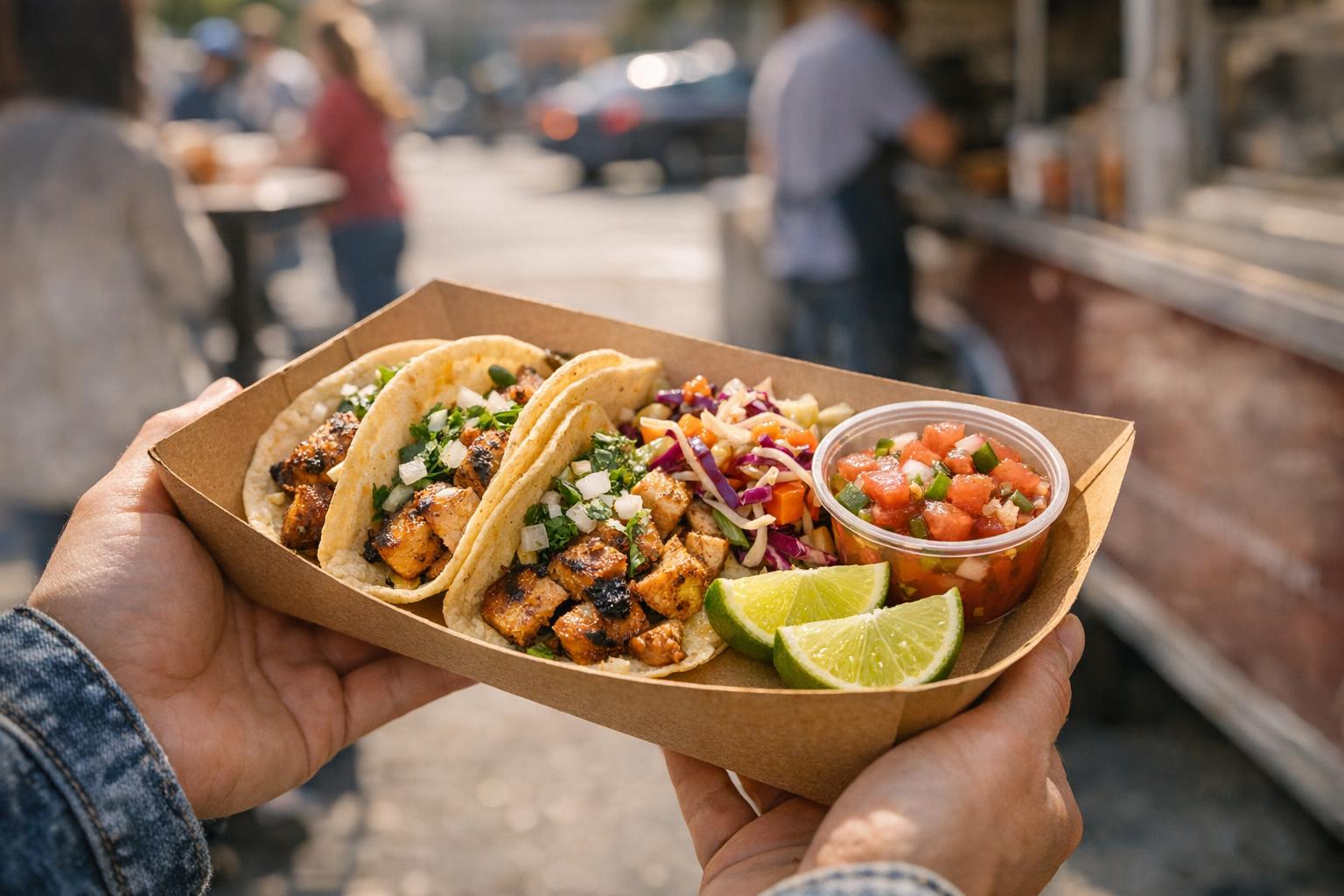
Food trucks usually fall into a few predictable buckets. Some are taco heavy. Some do rice bowls or burritos. Some sell burgers, grilled sandwiches, fries, or loaded wraps. Each one has a different calorie shape, even when the portion looks similar from across the curb.
If you know the meal type before you order, you can estimate the base instead of treating the whole plate like a mystery. Tacos bring tortillas. Bowls bring rice or beans. Sandwiches bring bread and sauces. Fries bring a side that is easy to ignore but not easy to forget once you log it honestly.
That one decision keeps you from turning lunch into a guess-and-hope situation.
Count the base, not just the toppings
The base is where a lot of the calories live. Tortillas, buns, rice, noodles, and fries matter because they are doing real work. A truck taco with corn tortillas is not the same as a loaded burrito with a flour tortilla and extra rice. A sandwich on a large roll is not the same as a small wrap with the same filling.
That is why the visual part of the order can be misleading. The toppings may look colorful and the protein may look healthy, but the bread or starch underneath often decides how big the meal really is. If the food truck meal includes two tortillas per taco or a large bun plus fries, count that as part of the meal, not as background noise.
If the truck gives you options, the simplest move is usually to choose the smaller base you actually like. The meal still works, and the estimate gets easier immediately.
Watch the sauces and rich add-ons
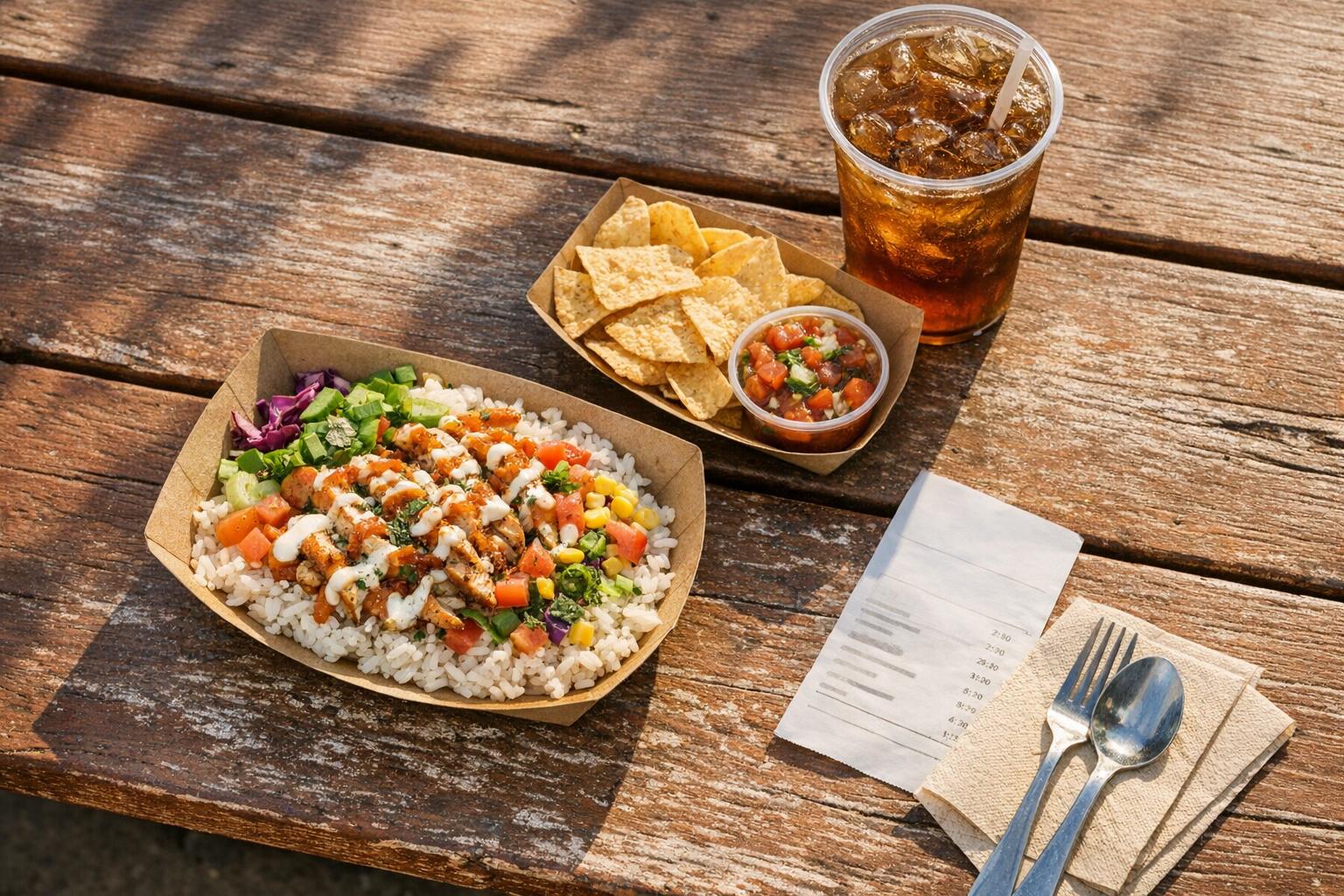
Sauces are one of the biggest reasons food truck lunches get undercounted. Aioli, crema, queso, chipotle sauce, ranch, spicy mayo, and drizzle-heavy specials can add a lot without changing the look of the meal much. They are small, but they are not free.
The same is true for cheese, avocado, bacon, fried onions, and crunchy toppings. They are easy to treat like decoration, especially when the food is wrapped up or stacked in a paper tray. But those extras can move the meal from reasonable to very calorie dense faster than people expect.
A good rule is to count anything that makes the meal richer, creamier, or crunchier as a real ingredient. If you would notice it on purpose while eating, it probably belongs in the log.
Do not forget the side and drink
Food truck lunches often come with fries, chips, or a sweet drink because that is the easiest way to build a full order. The problem is that the side feels optional in the moment, then quietly becomes part of the meal. A handful of fries is still fries. A sugary lemonade is still sugar. A canned soda is still a drink that counts.
If you want the lunch to stay easier to track, decide in advance whether the side is part of the plan or just something you will skip. It is much easier to log one clear side than to pretend a few fries do not matter. If the meal already includes a loaded sandwich or a rich rice bowl, a lighter side or water can keep the total much more manageable.
You do not need to make the truck lunch boring. You just need to decide what is actually in it.
Use a repeatable default order
The best food truck lunch for calorie tracking is the one you can repeat without thinking too hard. Maybe that is two chicken tacos and water. Maybe it is a grilled chicken rice bowl with salsa on the side. Maybe it is a burger with no fries. Maybe it is a wrap you order once a week on purpose.
Repeatable orders are powerful because they make the meal boring in the best way. Once you know your usual truck order, you stop rebuilding the estimate from scratch. You already know the rough number, the likely toppings, and the parts that usually show up with it.
That is the difference between a one-off guess and a real habit.
How Calory helps
Calory makes a food truck lunch easier to repeat. Save the order you keep buying, then pull it up next time instead of redoing the math in the parking lot.
That turns a fast lunch into a predictable one, which is exactly what you want when you are trying to stay on track without overthinking every detail.
FAQ
What should I count first in a food truck lunch?
Start with the base, like tortillas, bread, rice, or fries, then count the protein, sauce, and any side or drink you had.
Are food truck meals usually higher calorie than they look?
Often yes, because the portions are portable and the sauce, cheese, and sides can add up fast without looking huge.
What is the easiest way to avoid undercounting?
Log the meal type first, then add the rich parts separately. Sauces, fries, cheese, avocado, and drinks are the usual trouble spots.
How can Calory help with repeat food truck orders?
Calory lets you save a default lunch so the next truck stop takes a few taps instead of another guess.