A barbecue cookout looks relaxed, which is why it can be tricky for calorie tracking. You may not be sitting at a formal table, but the food still adds up. A burger with cheese and sauce, a scoop of potato salad, a handful of chips, and a sugary drink can become a much bigger meal than it feels like in the moment.
The goal is not to skip the fun stuff. The goal is to build a plate that actually matches what you want, then log it in a way that feels clear instead of fuzzy.
Decide your plate first
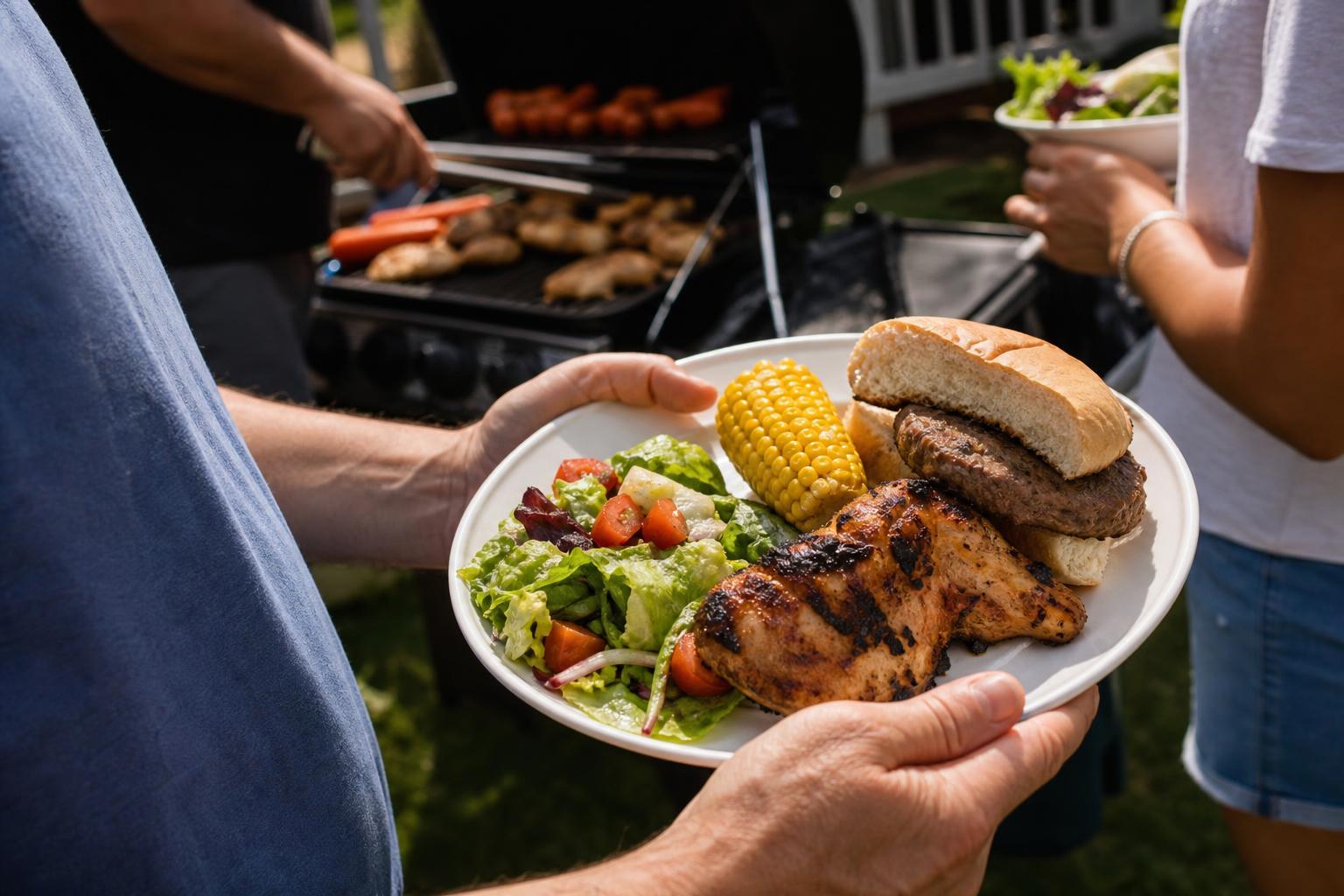
Before you fill a plate, decide whether this is a burger meal, a grilled chicken meal, or a lighter snack plate. That sounds simple, but it keeps you from doing the sneaky in-between version where you take a little of everything and then wonder why the meal got so big.
If you are genuinely hungry, make the meal real. A clear plate with protein, a side, and maybe one extra is easier to track than a scattered plate with five different tastes. If you already ate earlier, it may make more sense to treat the cookout like a snack stop and keep the portions smaller.
That choice up front does more for calorie tracking than trying to estimate every bite later.
Build the burger or grill plate like a real meal
Grilled meat is usually the easiest part to estimate. The harder part is everything wrapped around it. Burger buns, cheese, bacon, mayo, barbecue sauce, and second helpings of meat can push the total up fast. A grilled chicken breast is simpler. A cheeseburger with a large bun and extras is not.
When you are serving yourself, start with protein first. Then add one carb or side you actually want. A bun, corn on the cob, or a scoop of beans can fit fine. You do not need to stack bread, chips, potato salad, and dessert all on the same plate just because they are available.
If the cookout has hot dogs too, treat them like their own item rather than a free side. One hot dog with toppings is a meal choice, not a tiny extra.
Watch the sauces and condiments
This is where barbecue meals often get undercounted. Sauce looks harmless, but barbecue sauce, ranch, mayo, aioli, and creamy slaw can add up quickly. A little squeeze can be fine. Three different sauces with repeated dips is where the estimate starts drifting.
Use the same rule for cheese and bacon. They are not huge on their own, but they are easy to forget because they sit on top of the main food. If the burger or sandwich has extras, log the extras too. That keeps your estimate honest without making the meal feel complicated.
If you want a lower-calorie version, go for mustard, salsa, or a lighter sauce whenever the cookout spread has one. That one swap often saves more than people expect.
Choose drinks on purpose
Barbecue drinks are easy to ignore because they are not sitting on the plate. But soda, beer, sweet tea, lemonade, and mixed drinks can all move the total more than people realize. If you want to keep the meal lighter, water is the easiest default.
If you do want a drink, decide that first and count it separately. One beer is not the same as three. A sweet tea is not the same as unsweetened tea. You do not need to ban drinks, just log them like they count, because they do.
Handle sides and dessert without the pile-on
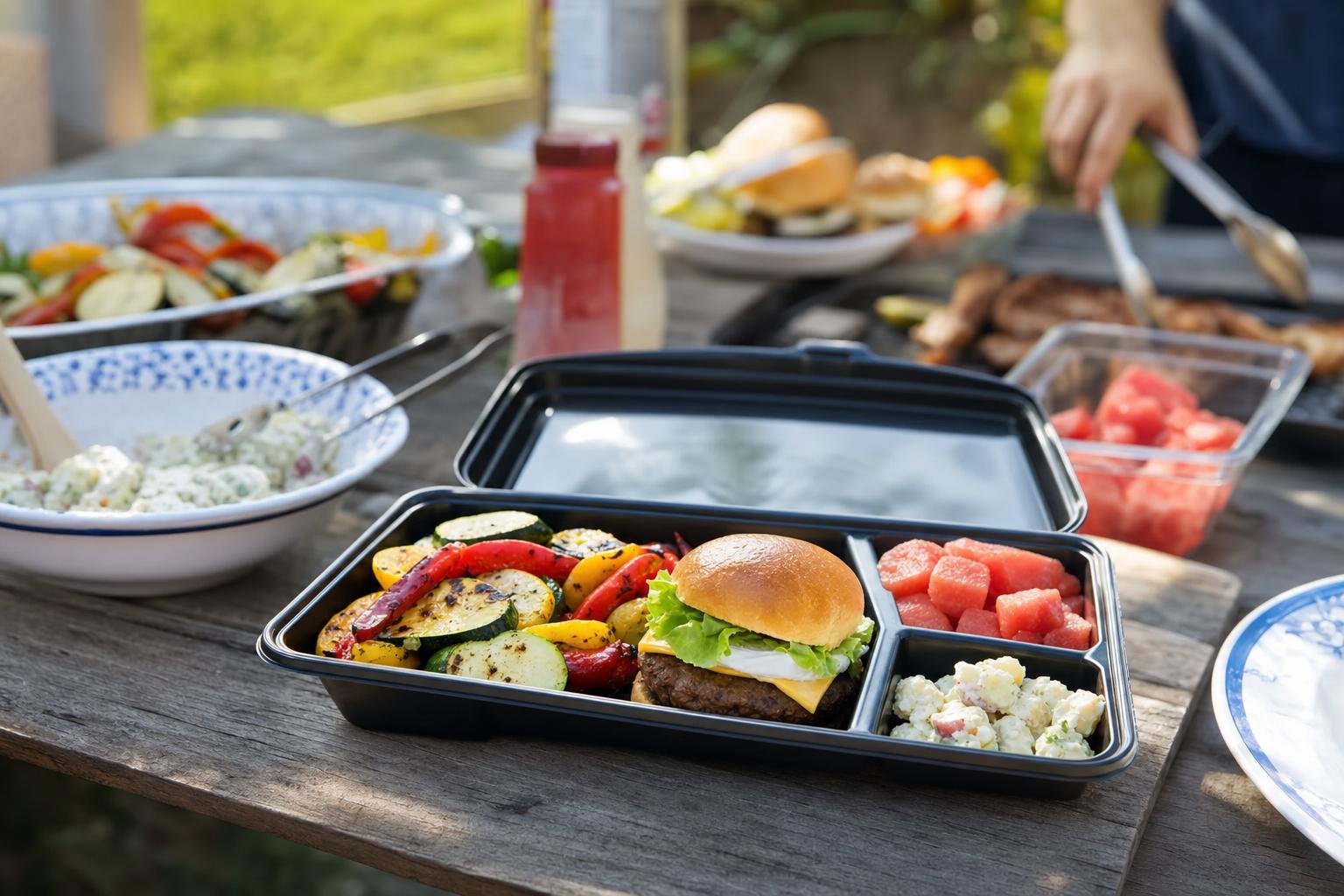
Sides are where cookouts get fun and messy at the same time. Potato salad, macaroni salad, baked beans, chips, coleslaw, rolls, and corn on the cob are all reasonable. The issue is that people often take several of them at once, then finish with dessert on top.
A better move is to pick one side you care about most, then keep the rest simple. If you really want the potato salad, take the potato salad and skip the chips. If you want chips and salsa, keep the other sides smaller. The same thing goes for dessert. Take the slice of pie or the cookie you actually want, not a little bit of everything on the dessert table.
That is not restriction. That is just choosing the part of the cookout that matters most.
If you are bringing food, choose one reliable item
Bringing food to the cookout can make tracking easier. A simple grilled chicken tray, a fruit platter, a bean salad, or a vegetable dish gives you one thing you already know how to estimate. If you bring the side, you do not have to guess as hard about the whole table.
This also helps if you are trying to stay on target while still being social. You can load your plate around the one item you brought, then keep the rest of the plate balanced instead of starting from scratch in the middle of a crowded buffet.
Make a default barbecue log in Calory
If cookouts happen every summer, save your usual barbecue meal as a default entry in Calory. Maybe yours is a burger, small scoop of potato salad, corn, and a beer. Maybe it is grilled chicken, beans, slaw, and water. Maybe it is two hot dogs and chips. The point is not to nail every perfect detail. The point is to make the next cookout easy to log in a few taps.
Once you have a default, the whole meal stops being a guess. You already know the pattern, so logging it becomes quick and boring in the best possible way.
How Calory helps
Calory makes barbecue meals easier to repeat. Save your normal cookout plate once, then use it again the next time you see burgers, grilled chicken, potato salad, and dessert on a picnic table.
That keeps summer food simple enough to enjoy without losing track of the bigger picture.